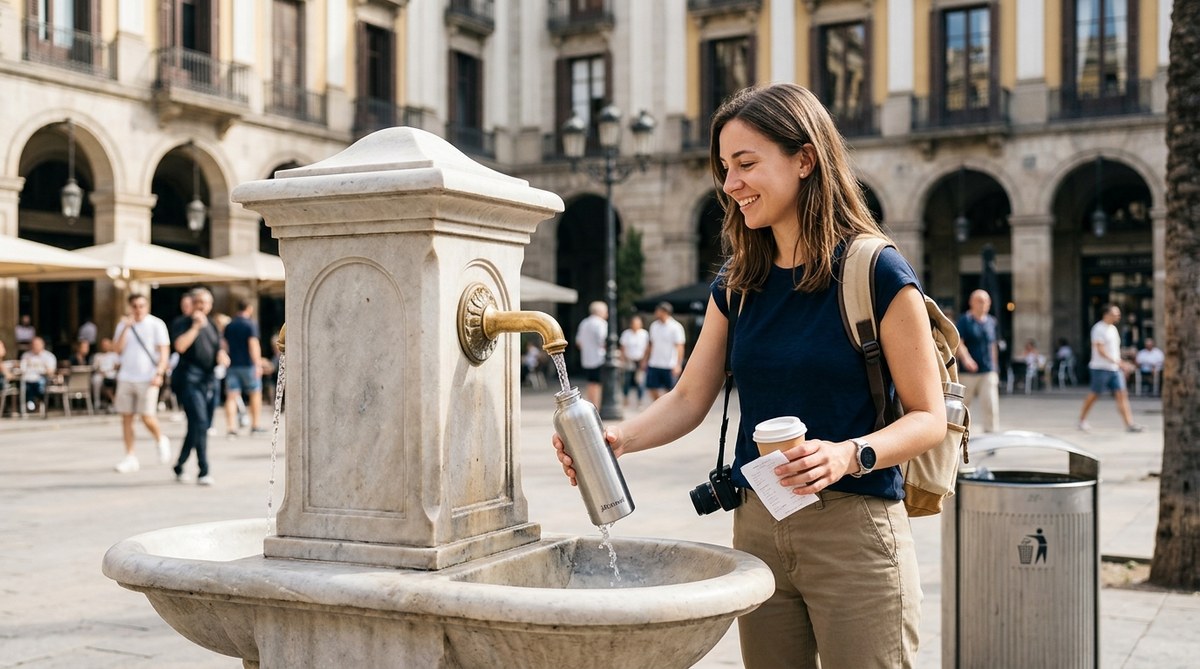
You land in a new city, jet-lagged and thirsty. The first thing you see is a convenience store selling a tiny plastic bottle for three dollars. You buy it. Then you buy another one at lunch. By dinner, you have spent ten dollars on something that comes out of a tap. This is not a small expense. Over a week long trip, buying bottled water can cost more than a nice meal out. For digital nomads, daily commuters, and budget travelers, those dollars add up fast. The good news is that free water refill locations exist in almost every city. You just need to know where to look.
Free water refill locations are everywhere once you learn the signs. Public fountains, library restrooms, cafe water stations, and airport hydration stations all offer free water. A reusable bottle pays for itself in under three uses. Apps like refill map and google maps can pinpoint spots near you. This guide shows you exactly how to find them in any city, saving you hundreds of dollars per year.
Why You Should Stop Buying Bottled Water
The average American spends over one hundred dollars per year on bottled water. If you travel often, that number climbs much higher. A single airport bottle can cost four dollars. A coffee shop refill of tap water costs nothing. The math is simple. Carry a reusable bottle and you can save enough money to cover a night in a hostel or a nice dinner.
There is also the environmental angle. Plastic bottles are a major source of waste. By using free water refill locations, you keep plastic out of landfills and oceans. It is a small habit change with a big impact.
Where to Find Free Water Refill Locations
Not all water is behind a counter. Many places offer free water as a courtesy. Here are the most reliable spots to check in any city.
Public Water Fountains
Parks, plazas, and transit hubs almost always have a public fountain. Look for them near restrooms or information kiosks. In older cities like Rome or Paris, these fountains are historic and plentiful. Rome has hundreds of public fountains called “nasoni” that run fresh water 24/7. In Tokyo, you will find fountains in most train stations and parks.
Libraries and Museums
Public libraries are a goldmine for free water. Walk in, find the restroom, and fill your bottle. Museums often have water fountains near the entrance or in the cafe area. Many museums allow re-entry with a ticket, so you can step out, fill up, and come back.
Airports and Train Stations
Airports have caught on to the hydration trend. Most major airports now have dedicated water bottle filling stations past security. Look for them near restrooms or gate areas. Train stations in Europe and Asia almost always have a fountain or a drinking tap. In the United States, Amtrak stations and major bus terminals are adding refill stations too.
Coffee Shops and Fast Food Restaurants
This is the most underrated trick. Walk into any Starbucks, Dunkin, or local cafe and ask for a cup of tap water. In the United States, this is almost always free. In Europe, many cafes will give you water for free if you ask politely. Some places might charge a small fee, but it is still cheaper than buying a bottle. Just be respectful and do not take advantage. Buy a small item every few refills to keep the goodwill going.
Hotel Lobbies and Hostel Kitchens
If you are staying at a hotel or hostel, use the lobby water station. Many hotels have a water dispenser near the front desk or in the fitness center. Hostels almost always have a filtered water tap in the kitchen. If you are just passing through, walk into a hotel lobby like you belong there. Head to the restroom or look for a water cooler. Most staff will not question a guest filling a bottle.
Grocery Stores and Supermarkets
Some grocery stores have water refill stations near the entrance. Whole Foods, for example, often has a self-serve water dispenser. In Europe, many supermarkets have a machine where you can fill a bottle for a few cents. In some countries, the water is free. Check the store map or ask an employee.
The Best Apps and Tools to Find Free Water
Technology makes this easier than ever. Use these tools to find free water refill locations near you.
Refill Apps
Apps like “Refill” and “Tap” crowdsource locations of free water stations. Users add spots they find, and the map grows over time. These apps work well in major cities but can be sparse in rural areas. Download them before your trip.
Google Maps
Google Maps is your best friend. Search for “water fountain” or “drinking water” in any city. The results will show nearby public fountains and refill stations. You can also search for “library”, “museum”, or “cafe” and then check the photos to see if they have a water fountain.
City Tourism Websites
Many city tourism boards list public water fountains on their website. For example, Paris has a map of all its public fountains. London has a similar resource. A quick search for “[city name] public water fountains” will often return a useful map.
How to Ask for Free Water in Any Language
Sometimes you need to ask. Here is a simple script that works in English and can be adapted.
- Walk in with confidence.
- Smile and say, “Excuse me, could I please have a cup of tap water?”
- If they look confused, add, “Just water from the tap is fine.”
- If they charge, thank them and decide if it is worth it.
In non-English speaking countries, learn the phrase “May I have tap water please” in the local language. A translation app works too. Most people are happy to help a polite traveler.
Common Mistakes to Avoid
Not all water is created equal. Here is a table to help you avoid bad water and wasted effort.
| Mistake | Why It Is a Problem | Better Approach |
|---|---|---|
| Using a fountain that looks rusty | Water may taste metallic or contain sediment | Look for newer stainless steel fountains |
| Filling up at a gas station restroom | Water quality is often poor | Use a grocery store or library instead |
| Asking for water at a sit-down restaurant without ordering | Staff may refuse or charge you | Order a small item like a pastry first |
| Using a refill station that has a “not for drinking” sign | Water is non-potable | Obey the sign and find another spot |
| Forgetting to check the fountain before you need it | You waste time searching when thirsty | Scout locations during your morning walk |
“The best travel hack is the one that saves you money and keeps you healthy. Free water refills do both. Always carry a reusable bottle and a backup filter. You will never pay for overpriced plastic again.” * Travel blogger and author of the budget travel newsletter “Thirsty Wanderer”
How to Make Free Water Refills Part of Your Daily Routine
This is not just for travelers. Daily commuters can use these same tricks to save money every day.
For the Commuter
Keep a reusable bottle in your bag. Fill it at the office water cooler before you leave. If you run out during the day, stop by a library or a coffee shop on your way home. Many office buildings have public water fountains in the lobby.
For the Digital Nomad
Coworking spaces almost always have free filtered water. If you are working from a cafe, ask for a glass of water with your order. Most baristas will give it to you without a second thought. Use the refill apps to find coworking spaces with free water day passes.
For the Budget Traveler
Plan your day around water refill locations. If you know you will be in a park for a few hours, fill up at the fountain there. If you are walking through a museum, top off your bottle before you leave. This habit keeps you hydrated and saves you money.
What to Do When You Cannot Find Free Water
Sometimes you are in a place where free water is not available. An airport without a filling station. A remote hiking trail. A city with unreliable tap water. In those cases, carry a portable water filter. A simple filter bottle or a straw filter lets you drink from almost any tap safely. This is especially useful in countries where tap water is not safe to drink. You can fill up at a hotel lobby or a restaurant restroom and filter the water yourself.
A Step by Step Process to Never Pay for Water Again
Follow these steps to make free water refills your default.
- Buy a reusable bottle. Stainless steel is best. It keeps water cold and does not leach chemicals.
- Download two refill apps on your phone before you travel.
- Before you leave your accommodation, fill your bottle completely.
- When you pass a public fountain, top off even if you are not thirsty.
- If you enter a building for any reason (library, museum, shop), look for a water fountain or restroom.
- At restaurants and cafes, always ask for tap water with your order.
- At airports and train stations, locate the water filling station before you sit down.
The Real Cost of Not Refilling
Let us do the math. One bottle of water costs about two dollars on average. If you buy three bottles per day during a two week trip, that is forty two dollars. Over a year of travel, that could be several hundred dollars. A reusable bottle costs fifteen to thirty dollars. It pays for itself in less than a week. The only thing standing between you and free water is a little bit of planning.
Why This Matters More in 2026
Cities around the world are installing more public water fountains and refill stations. In 2026, many European cities have pledged to reduce single use plastic. Paris, London, and Berlin have added hundreds of new fountains. The United States is following suit with hydration stations in airports and public parks. The infrastructure is there. You just need to use it.
If you are planning a trip to a city with great public water access, check out our guide on how to spend 48 hours in Tokyo without breaking the bank. Tokyo has some of the best public fountains in the world. For European adventures, our budget backpacker’s two week Europe itinerary includes tips on staying hydrated for free.
Make Hydration a Habit, Not a Hassle
Free water refill locations are everywhere. You just have to look. Start carrying a reusable bottle today. Use the apps. Ask politely. Scout ahead. Within a week, it will become second nature. You will save money, drink more water, and feel better. Next time you are in a new city and you feel thirsty, skip the store. Head to the nearest library, park, or cafe. Fill up for free. Your wallet and the planet will thank you.