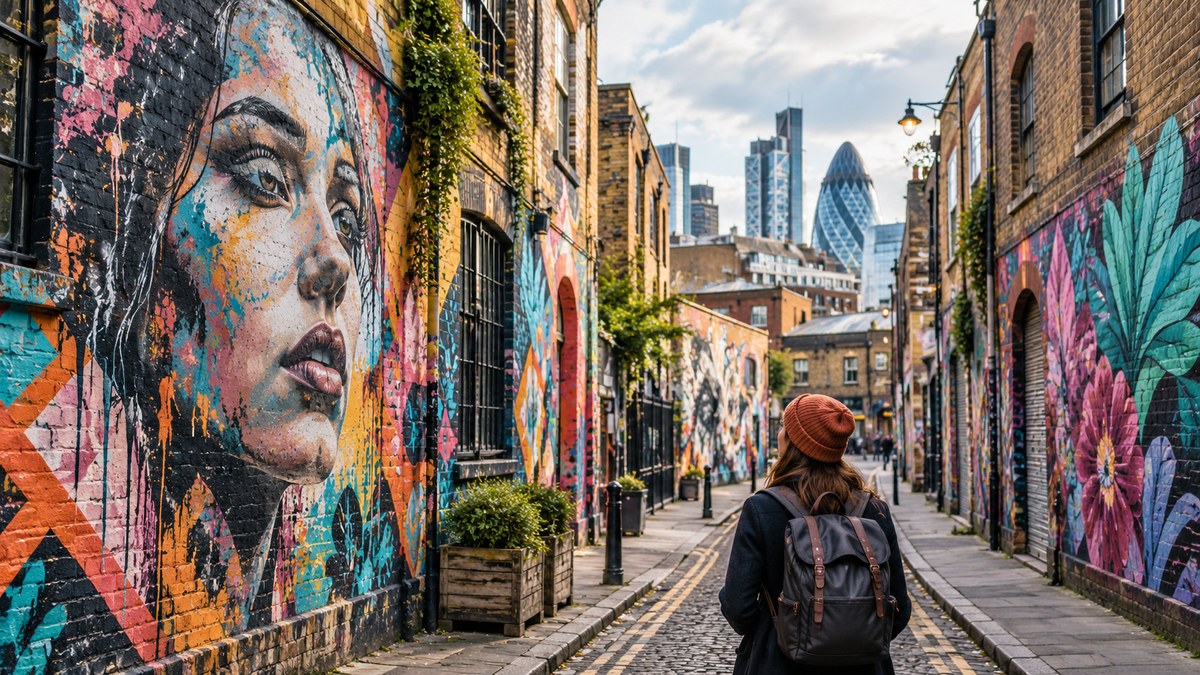
London’s East End doesn’t hide its art behind velvet ropes or ticket booths. The walls themselves are the gallery. Walking through Shoreditch, Bethnal Green, and Spitalfields feels like flipping through a living sketchbook that changes every season. The best part? It costs nothing to see. This London East End street art guide will show you exactly where to look, what to expect, and how to navigate the rotating collection of murals without spending a single pound.
This self-guided walk covers roughly two miles of the East End’s best free street art. Start at Old Street station, head south through Shoreditch, cut across to Brick Lane, and finish near Whitechapel Gallery. Most murals sit on side streets and permanent hoardings, not main roads. Bring a fully charged phone and comfortable shoes. No tour guide needed.
Why the East End Became London’s Outdoor Gallery
The East End has always been a landing pad for newcomers. Immigrants, artists, and squatters filled these streets for centuries. Cheap rent and empty warehouses made it a natural home for creatives. In the 1980s and 1990s, graffiti culture from New York crossed the Atlantic and found fertile ground here. Banksy, Stik, and other now-famous names cut their teeth on these walls.
Today the area is more polished, but the art remains. Property developers learned that a giant mural on a hoarding adds value. Brands pay artists to paint entire buildings. The result is a constantly shifting outdoor exhibition that rewards repeat visits.
Your Self-Guided Route: Where the Best Murals Live
This route takes about two to three hours at a casual pace. You can stretch it into a half day if you stop for coffee or lunch.
Start at Old Street Roundabout
Exit Old Street station and walk south down City Road. Turn onto Rivington Street. This is where the density of street art really starts. Look for the large hoardings around building sites. They change often. In early 2026, expect to see large format works by international artists like Phlegm and the ever present Rob Lowe style caricatures by local legends.
Shoreditch Side Streets
Shoreditch is the heart of the scene. The side streets between Rivington and Great Eastern Street hold the highest concentration of pieces.
- Bacon Street: A small lane that often features new paste ups and wheatpastes. Check the metal shutters.
- Redchurch Street: This is a key corridor. The Shop at 17 Redchurch Street has a permanent wall that rotates every few months.
- Ebor Street: A dead end that feels like a tunnel of art. Both sides are covered.
Brick Lane and the Surrounds
Brick Lane itself has some pieces, but the real finds are on the streets that feed into it.
- Hanbury Street: Walk east from Brick Lane. Look for the massive mural on the side of the Ten Bells pub.
- Princelet Street: A quieter stretch with smaller, more personal works.
- Sclater Street: Under the railway bridge. This spot has been a canvas for decades.
Finish at Whitechapel
End your walk at the Whitechapel Gallery. The area around the station has several large scale murals, including a notable piece by the street artist known as “D*Face.” From here, you can grab the District or Hammersmith line back to central London.
A Practical Checklist for Your Walk
Use this list to make sure you are ready.
- A fully charged phone for photos and maps
- Comfortable walking shoes (you will cover two to three miles)
- A portable charger (your camera battery will drain fast)
- Rain gear (London weather changes in minutes)
- A small notebook or notes app to jot down artist names
- Cash for a coffee or snack at a Brick Lane market stall
How to Spot the Best Pieces (And Avoid Tourist Traps)
Not all street art is created equal. Some pieces are commissioned by brands and feel sterile. Others are raw, illegal, and full of energy. Here is how to tell the difference.
| Type of Art | What to Look For | What to Skip |
|---|---|---|
| Commissioned mural | Large, polished, often on a wall that was painted white first. Has a spray paint can credit nearby. | Avoid walls with obvious brand logos unless you like the piece. |
| Illegal paste up | Paper or thin plastic glued to a wall. Often political or funny. These peel away in rain. | Skip anything that looks like a mass produced sticker for a clothing brand. |
| Legal graffiti | Bright colors, bubble letters, tags. Found on railway arches and dedicated walls. | Ignore gang tags or scribbles that lack form. |
| Stencil art | Sharp edges, repeated patterns. Often political. | Skip anything that looks like a generic silhouette sold on Etsy. |
“The best street art is the stuff that makes you stop mid stride. If you walk past it without looking twice, it was probably a commission. The real gems are the ones that feel like a secret.” Local street art curator, Shoreditch Walking Tours
Three Mistakes Most Visitors Make
-
Only walking the main streets. The best pieces are on side streets, alleyways, and behind parking lots. Rivington Street is great, but Bacon Street is where the surprises live.
-
Not checking for fresh work. Street art is ephemeral. A mural you saw on Instagram last month might be gone. Use the tag #ShoreditchStreetArt on Instagram to see what appeared in the last week. The account @eastendwalls posts weekly updates.
-
Visiting at the wrong time. Weekends are packed. Go on a Tuesday or Wednesday morning. The light is better for photos, and you will have the streets mostly to yourself.
When to Go for the Best Light and Fewest Crowds
The East End gets busy. Here is the best schedule.
- Best time of day: 9:00 AM to 11:00 AM. The sun hits the south facing walls on Rivington Street. Crowds are thin.
- Best day of the week: Tuesday or Wednesday. Avoid Saturday entirely unless you enjoy shoulder to shoulder crowds.
- Best season: Late spring (May) and early autumn (September). The light is warm, and the weather is stable. Winter days are short, so start early.
What to Do After Your Walk
You have seen the art. Now make a day of it.
- Grab a bagel at Beigel Bake on Brick Lane. It is open 24 hours. The salt beef bagel is a London institution.
- Visit the Sunday UpMarket on Brick Lane if you are there on a weekend. Vintage clothes, street food, and local crafts fill the space.
- Walk to Columbia Road Flower Market if it is Sunday. The market runs until 2:00 PM. The street art on the way there is excellent.
- Stop for a pint at The Owl and Pussycat on Redchurch Street. It is a quiet pub with a rotating selection of local ales.
For another free walking experience, check out our guide to free walking tours that reveal the soul of Lisbon. The same do it yourself spirit applies.
How to Photograph Street Art Without Getting in the Way
Street art is meant to be seen, but you are sharing the sidewalk with locals going about their day. Follow these rules.
- Stand to the side of the piece. Do not block the entire wall.
- Use a wide angle lens or your phone’s standard lens. Do not zoom in so much that you lose the context of the building.
- Wait for people to pass. A pedestrian walking through the frame can ruin a shot.
- Do not touch the art. The paint might be wet, or the piece might be fragile.
- Tag the artist on social media if you know their name. It helps them get commissions.
The Changing Canvas: Why the Art Disappears
Street art does not last forever. A piece might survive for years or vanish overnight. Here is why.
- Weather: Rain and sun fade paint. Paste ups peel away in a few weeks.
- New art: Another artist paints over the wall. This is part of the culture.
- Construction: Buildings get renovated. Hoardings come down.
- Removal: The council or property owner paints over the wall.
This impermanence is what makes the East End exciting. Every visit is different. If you see a piece you love, photograph it immediately. It might not be there next month.
Planning Your Visit Around East End Events
The street art scene ties into larger neighborhood events. Time your visit around these.
- First Thursday of the month: Many galleries in the area stay open late. The Whitechapel Gallery and the nearby galleries on Vyner Street offer free entry.
- Brick Lane Festival (usually September): Street food, music, and art stalls fill the area. The street art is still there, but the crowds are intense.
- London Mural Festival (usually August): New murals appear across the city. The East End gets several new pieces during this event.
If you are visiting from out of town, consider reading our guide to experiencing London like a local in 72 hours. It pairs well with this walk.
The Best Resources for Finding New Art
You do not need a tour guide. You need good sources.
- Instagram: Follow @shoreditchstreetart and @eastendwalls. They post new pieces weekly.
- Google Maps: Save a custom map. Search for “Shoreditch street art” and drop pins on spots you find online.
- Local blogs: Sites like Street Art London and Londonist update their East End pages regularly.
- The artists themselves: Follow Banksy, Stik, Phlegm, and ROA on social media. They often post location clues for new pieces.
Your East End Street Art Walk in Summary
Start at Old Street. Walk south on Rivington. Hit the side streets between Rivington and Great Eastern. Cut to Brick Lane via Hanbury. Finish at Whitechapel. That is the route. It is simple, free, and always changing.
The London East End street art guide you just read will serve you well on your first visit. But the real joy comes from returning. Bring a friend. Bring a camera. Bring a sense of curiosity. The walls will do the rest.
If you want another free urban adventure, read our guide to 15 hidden gems locals don’t want tourists to know about. Many of those spots are within walking distance of this route.
One Last Thing Before You Go
Street art is public art. It belongs to the neighborhood. Be respectful. Do not leave trash. Do not block doorways. Do not climb on anything to get a better angle. The people who live and work here are not props for your photos.
And if you see an artist working on a new piece? Stop and watch from a distance. Say thank you if they look your way. They are the reason this guide exists.
Now put on your walking shoes and get out there. The East End is waiting.