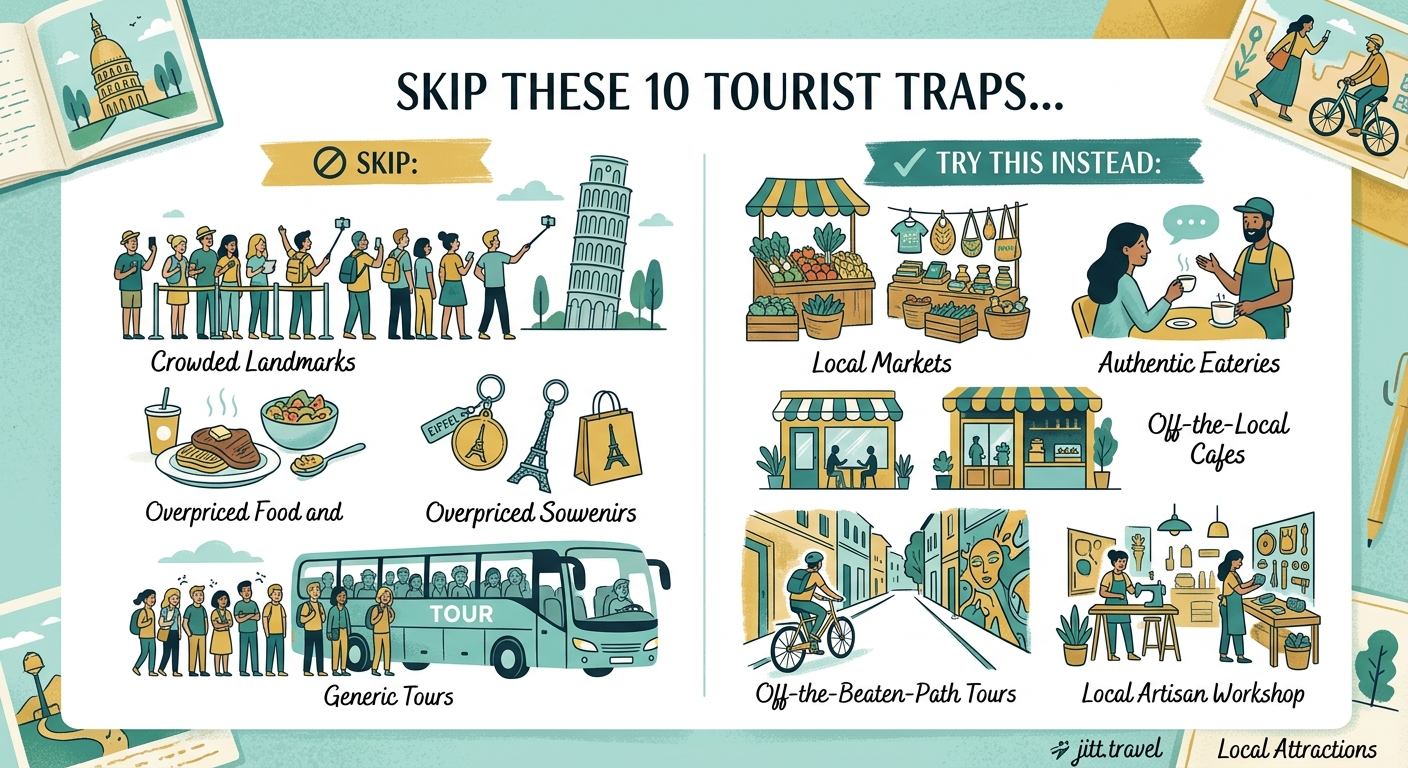
10 Overrated Tourist Traps You Should Skip (And What to Do Instead)

You’ve saved for months, planned your itinerary, and finally booked that dream vacation. But when you arrive at that famous landmark everyone raves about, you’re met with shoulder-to-shoulder crowds, …

You’ve saved for months, planned your itinerary, and finally booked that dream vacation. But when you arrive at that famous landmark everyone raves about, you’re met with shoulder-to-shoulder crowds, inflated prices, and a nagging feeling that you’re missing the real destination. Sound familiar? Many of the world’s most hyped attractions deliver disappointment instead of the magical experience you imagined. The good news is that better alternatives exist just around the corner, often at a fraction of the cost and with none of the tourist chaos.

Key Takeaway

Many famous attractions disappoint with overcrowding, high prices, and manufactured experiences. Smart travelers skip these overrated spots for authentic alternatives that cost less and provide genuine cultural immersion. By choosing lesser-known neighborhoods, local markets, and regional attractions, you’ll save money while experiencing destinations the way locals actually live. This guide reveals which popular tourist traps deserve your skip and what to visit instead.

Why Popular Attractions Often Disappoint

Tourist traps thrive on reputation, not reality. They became famous decades ago, and that fame perpetuates itself through guidebooks, social media, and word of mouth. But popularity doesn’t equal quality.

These spots know they have a captive audience. They can charge premium prices, cut corners on service, and still pack in visitors every single day. You’ll pay $30 for a mediocre meal because the restaurant sits next to a famous fountain. You’ll wait two hours to take a photo at a viewpoint that looks identical to a dozen other spots nearby.

The experience becomes about checking a box rather than creating memories. You snap your obligatory photo, fight through the crowds, and leave wondering what all the fuss was about.

Budget travelers feel the sting most acutely. When you’re watching every dollar, dropping $50 on entrance fees and overpriced snacks at a disappointing attraction hurts. That money could fund an entire day of authentic experiences elsewhere.

The Real Cost of Tourist Traps

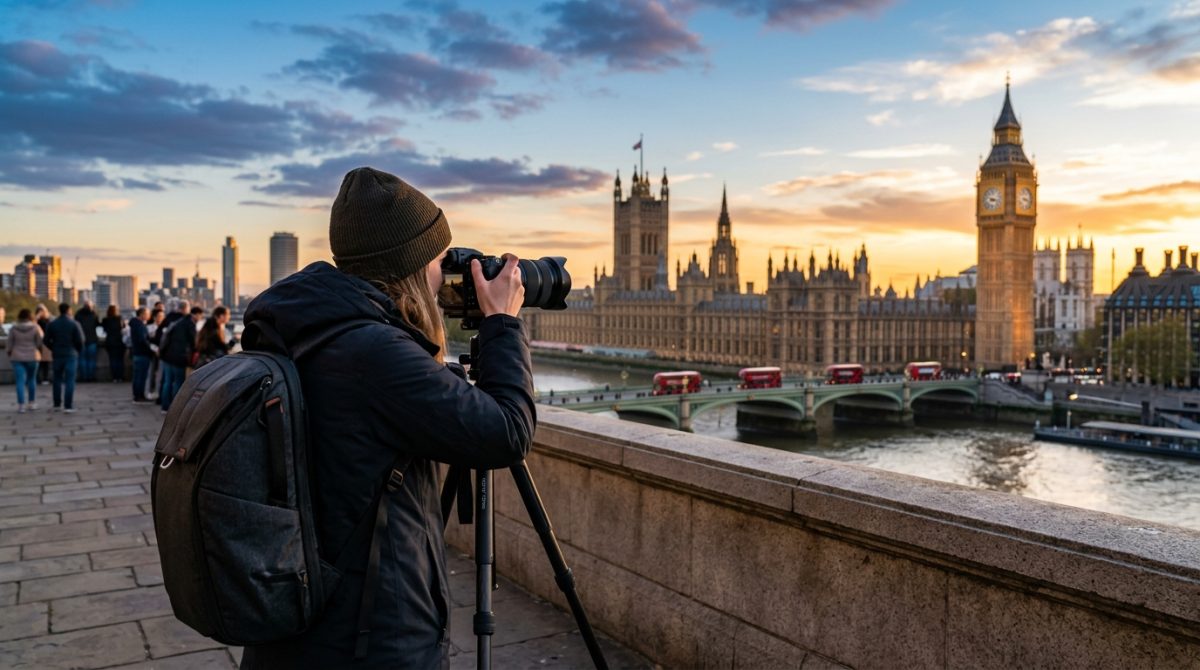
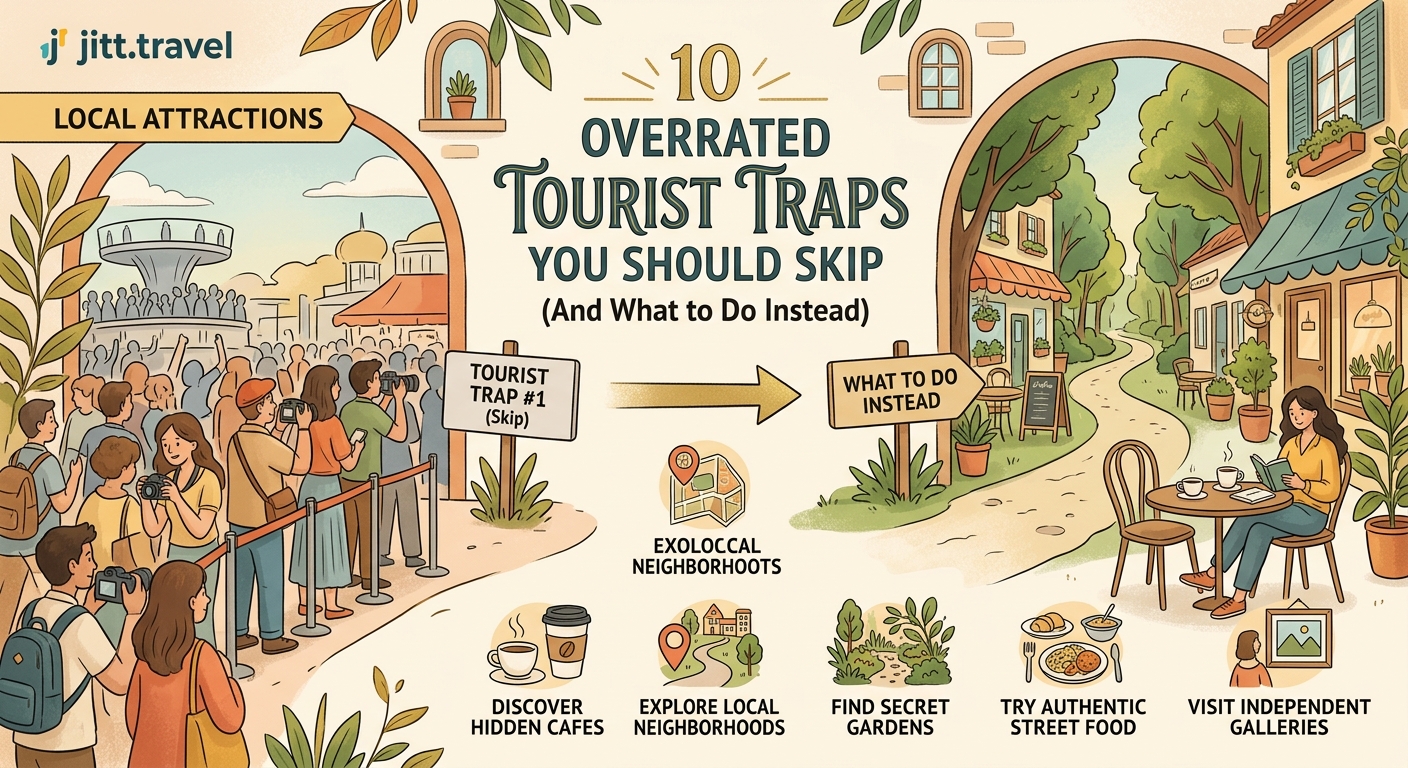
10 Overrated Tourist Traps You Should Skip (And What to Do Instead) — image 1

Let’s break down what you actually pay at these overrated destinations:

Expense Category Tourist Trap Price Alternative Price Savings
Entrance fees $25-50 per person Free to $10 $15-40
Meals nearby $20-35 per person $8-15 $12-20
Souvenirs $15-30 $5-10 $10-20
Photos/experiences $10-25 Free $10-25
Transportation Premium rates Standard rates $5-15

For a couple spending just one day at a major tourist trap, you’re looking at $150 to $300. Multiply that across a week-long trip, and you’ve spent your entire accommodation budget on inflated experiences.

The time cost matters too. Waiting in lines, navigating crowds, and dealing with tourist-focused scams eats hours you could spend actually experiencing your destination.

Overrated Spots You Should Skip

Times Square in New York City

This intersection of billboards and chain restaurants offers nothing you can’t see better elsewhere in Manhattan. The crowds make walking difficult. The restaurants serve mediocre food at inflated prices. Street performers aggressively demand tips for photos.

Do this instead: Walk through Central Park’s Ramble, visit the High Line, or spend an afternoon in Greenwich Village. These spots give you actual New York culture without the manufactured chaos.

The Hollywood Walk of Fame

Dirty sidewalks, aggressive costumed characters demanding payment, and underwhelming stars embedded in concrete. This is what you traveled to Los Angeles for? The stars are just names on the ground, and the surrounding area feels more depressing than glamorous.

Do this instead: Hike Runyon Canyon for actual Hollywood sign views, visit the Getty Center for world-class art and architecture, or spend time in Silver Lake and Los Feliz neighborhoods where LA’s creative culture actually thrives.

The Mona Lisa at the Louvre

You’ll stand behind velvet ropes with hundreds of other people, craning to see a surprisingly small painting behind bulletproof glass. Most visitors spend more time photographing it than actually looking at it. The Louvre contains thousands of masterpieces you can actually see up close.

Do this instead: Spend your Louvre time in the less-crowded wings. The French Romantic paintings, Islamic art collection, and Napoleon III apartments offer stunning art without the crush. Or visit the Musée d’Orsay for Impressionist masterpieces in a more manageable setting.

Pisa’s Leaning Tower

The tower leans. That’s it. The surrounding square is packed with tourists doing the same forced perspective photos. The nearby restaurants serve overpriced, mediocre Italian food because they know you’re a captive audience.

Do this instead: Spend your Tuscany time in Lucca, just 30 minutes away. This walled city offers authentic medieval architecture, excellent local restaurants, and bike-friendly streets with a fraction of Pisa’s crowds.

Dubai’s Burj Khalifa

Yes, it’s tall. But you’ll pay premium prices for timed entry tickets, wait in multiple queues, and get views that aren’t significantly better than what you’d see from many other Dubai high-rises. The surrounding Dubai Mall is just another shopping center.

Do this instead: Visit the observation deck at The View at The Palm for better value and equally impressive views. Or skip the tall buildings entirely and spend time at the Al Fahidi Historical District for actual Emirati culture.

London’s Changing of the Guard

Crowds gather hours early for prime viewing spots. The ceremony itself lasts about 45 minutes but feels repetitive. You’re watching from a distance, and unless you arrive extremely early, you’ll mostly see the backs of other tourists’ heads.

Do this instead: Visit the Churchill War Rooms for actual British history, walk along Regent’s Canal through Little Venice, or spend an afternoon in Borough Market sampling local food.

How to Spot Tourist Traps Before You Go

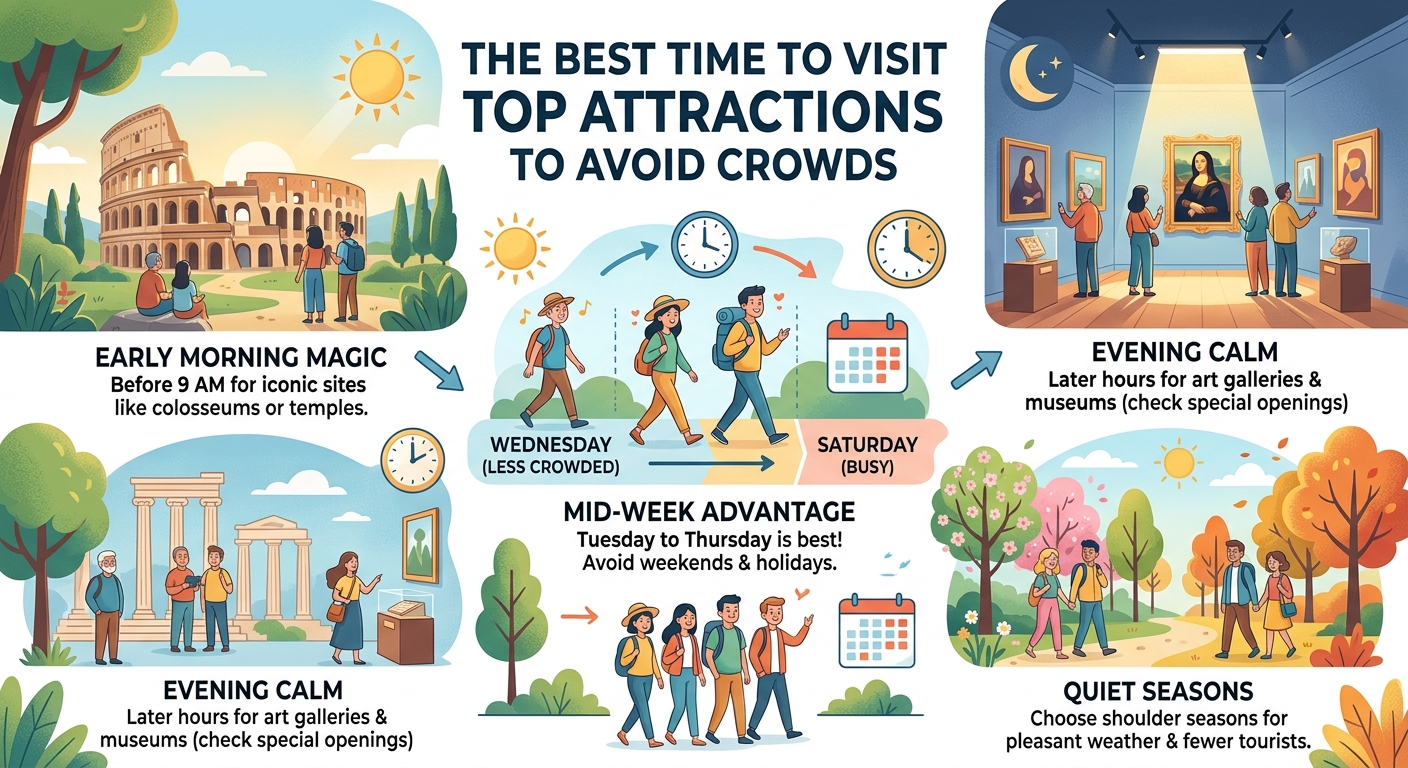
10 Overrated Tourist Traps You Should Skip (And What to Do Instead) — image 2

Certain red flags signal that an attraction might disappoint:

  • Aggressive marketing everywhere: If every tour company, hotel, and guidebook pushes the same spot, question whether it’s genuinely good or just pays the best commissions.

  • No locals in sight: When an area is 100% tourists, you’re in manufactured territory. Authentic experiences attract both visitors and residents.

  • Prices jump dramatically: If restaurants and shops within two blocks of an attraction charge double what similar establishments cost elsewhere, you’re paying a tourist tax.

  • Timed entry and advance booking required: Popular doesn’t always mean good. Sometimes it just means effective marketing.

  • Souvenir shops outnumber everything else: When an area’s primary purpose is separating tourists from money, the experience suffers.

“The best travel experiences happen when you wander away from the main tourist corridor. That’s where you find the family-run restaurant that’s been serving the same recipes for three generations, the neighborhood park where locals actually spend time, and the small museum curated by someone who genuinely loves the subject. These places don’t need aggressive marketing because they offer real value.”

Finding Better Alternatives

Here’s how to identify worthwhile alternatives to overrated attractions:

  1. Research where locals actually go: Food blogs, local subreddits, and neighborhood-specific Instagram accounts reveal the spots residents frequent. If locals eat there, shop there, or spend leisure time there, it’s probably authentic.

  2. Look one neighborhood over: The area immediately adjacent to major tourist zones often offers similar architecture, culture, and atmosphere without the crowds and markup. In Rome, Trastevere beats the Trevi Fountain area. In Paris, the 10th arrondissement offers better value than the 1st.

  3. Choose regional attractions over international ones: Every destination has lesser-known sites that locals consider special. These rarely appear in international guidebooks but offer richer experiences.

Smart Planning Strategies

Budget-conscious travelers can avoid tourist traps with these approaches:

  • Book accommodations away from major attractions: Staying in residential neighborhoods costs less and puts you near authentic restaurants and shops. You’ll take a 15-minute metro ride to see the famous stuff, but you’ll save $50 to $100 per night.

  • Eat where you see construction workers and office employees: These folks eat out regularly and know which spots offer good value. Tourist restaurants don’t need to compete on quality or price.

  • Visit famous sites early or late: If you must see a popular attraction, go at opening time or during the last entry slot. Crowds thin dramatically, and you’ll get better photos and more space.

  • Free walking tours reveal hidden gems: Many cities offer tip-based walking tours led by knowledgeable locals. These guides know which famous spots disappoint and which alternatives deliver.

What Makes an Experience Worth Your Time

Not every popular attraction is a trap. Some famous sites genuinely deserve their reputation. Here’s how to tell the difference:

Worth it:
– Offers something you can’t experience elsewhere
– Provides educational value or unique perspective
– Allows actual interaction, not just observation
– Prices reflect real operational costs, not tourist markup
– Locals recommend it alongside visitors

Skip it:
– Exists primarily for photo opportunities
– Offers nothing unique to the location
– Feels manufactured or theme-park-like
– Prices seem disconnected from the actual experience
– Only tourists recommend it

Making the Most of Your Travel Budget

Every dollar you don’t spend on overpriced tourist traps extends your trip or improves your experiences elsewhere. That $40 you save by skipping the Leaning Tower funds a fantastic dinner in Lucca. The $100 you don’t spend on Burj Khalifa tickets pays for a desert safari or a day trip to Abu Dhabi.

Budget travel isn’t about deprivation. It’s about spending money on experiences that deliver value. A $15 cooking class with a local chef beats a $50 meal at a tourist-trap restaurant. A $5 metro pass that lets you explore residential neighborhoods offers more authentic culture than a $100 hop-on-hop-off bus tour.

Track where your money goes during the first few days of your trip. You’ll quickly notice patterns. Tourist-zone purchases feel regrettable. Experiences in local areas feel like discoveries.

Your Travel Experience Deserves Better

You work hard for your vacation time and money. Spending either on overcrowded, overpriced attractions that deliver manufactured experiences doesn’t make sense. The world offers too many genuine alternatives.

Next time you plan a trip, research beyond the top 10 lists. Ask locals what they love about their city. Wander into neighborhoods that don’t appear in guidebooks. Eat at restaurants where you can’t read the menu. These moments create the stories you’ll actually remember and the experiences worth your investment.

Skip the tourist traps. Your budget, your schedule, and your travel memories will all improve dramatically.

The Best Time to Visit Top Attractions to Avoid Crowds

Visiting famous landmarks should feel magical, not like standing in an endless line while elbows bump into you from every direction. The difference between a memorable experience and a frustrating one…

Visiting famous landmarks should feel magical, not like standing in an endless line while elbows bump into you from every direction. The difference between a memorable experience and a frustrating one often comes down to timing. Most travelers book trips around holidays and summer breaks, creating predictable waves of congestion at popular sites. But if you understand when crowds thin out and why, you can see the same attractions with breathing room.

Key Takeaway

The best time to visit attractions without crowds is during shoulder seasons, weekday mornings, and off-peak hours when schools are in session. Avoid summer vacations, major holidays, and weekends. Arrive at opening time or late afternoon, check local event calendars, and use weather to your advantage. Strategic timing transforms crowded landmarks into peaceful experiences worth remembering.

Understanding Peak Season Patterns

Tourist attractions follow predictable rhythms tied to school calendars, weather, and cultural holidays. Summer months from June through August see the highest visitor numbers at most destinations worldwide. Families travel when kids are out of school, creating massive spikes at theme parks, museums, and historical sites.

Spring break in March and April brings another wave. College students and families flood warm-weather destinations and major cities. Fall break in October creates smaller but noticeable increases.

Winter holidays around Christmas and New Year pack attractions despite cold weather in many regions. People use vacation days and travel to celebrate, filling hotels and tourist sites.

Understanding these patterns helps you identify gaps. The periods between these peaks offer significantly better experiences.

Shoulder Season Advantages

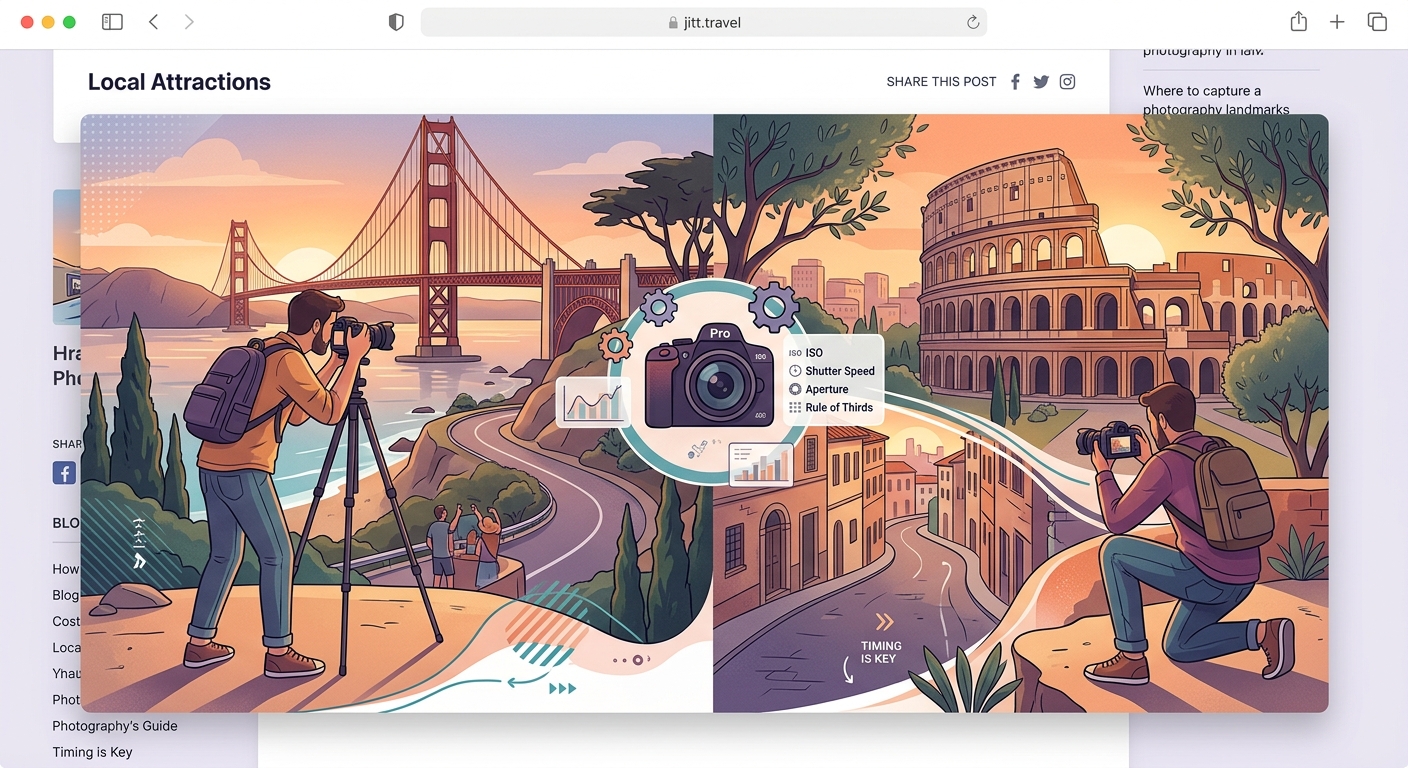
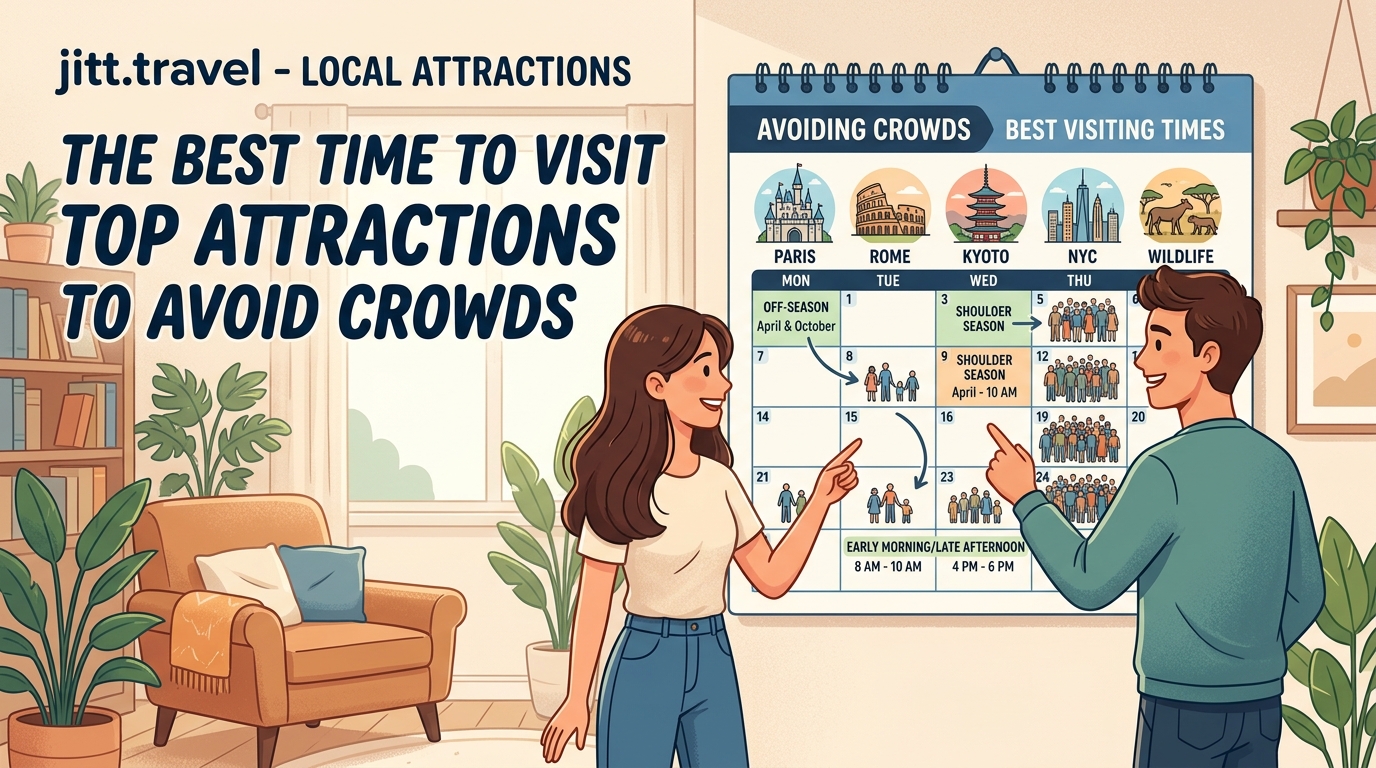
The Best Time to Visit Top Attractions to Avoid Crowds — image 1

Shoulder seasons fall between peak and off-peak periods. For most destinations, this means late April to early June and September to early November.

Weather remains pleasant during these months in many locations. You avoid extreme summer heat or winter cold while enjoying comfortable conditions for sightseeing.

Prices drop noticeably. Hotels, flights, and tour packages cost less when demand decreases. Your budget stretches further, allowing longer stays or nicer accommodations.

Local businesses are less rushed. Restaurant staff, tour guides, and museum workers have more time to engage with visitors. You get better service and more personalized attention.

Attractions feel more authentic. When you can actually see artwork without craning your neck over someone’s selfie stick, museums become places of contemplation rather than obstacle courses.

Weekday vs Weekend Timing

Weekends bring local crowds on top of tourists. Residents visit attractions in their own cities on Saturdays and Sundays, doubling the congestion.

Tuesday through Thursday typically see the lightest foot traffic. Mondays can be busy as people extend weekend trips or start vacations.

This pattern holds especially true for urban attractions. Art museums, observation decks, and historic neighborhoods fill up on weekends but quiet down midweek.

Some attractions close on specific weekdays. Always verify operating hours before planning around a particular day. Museums often close Mondays or Tuesdays for maintenance.

Business districts reverse this pattern. Areas that thrive on office workers feel empty on weekends, making them perfect for peaceful exploration.

Daily Timing Strategies

The Best Time to Visit Top Attractions to Avoid Crowds — image 2

Opening hours matter enormously. The first 90 minutes after gates open see the smallest crowds. Most visitors sleep in or take their time over breakfast.

Arrive 15 minutes before official opening time. You’ll be among the first inside when doors open. Popular attractions like the Louvre or Sistine Chapel feel completely different when you’re in the first wave.

Late afternoon creates another window. Many tourists leave by 3 or 4 PM to rest, eat dinner, or move to their next activity. If an attraction stays open until 6 or 7 PM, those final hours offer unexpected calm.

Lunchtime from noon to 2 PM sees moderate dips at some sites. People leave to eat, creating temporary breathing room. This works better at outdoor attractions than museums with cafeterias.

The best photographs come from the best timing, not the best camera. Empty backgrounds make your travel photos look professional and let the architecture shine through without distractions.

Seasonal Weather as Your Ally

Rain keeps casual tourists away but doesn’t ruin all experiences. Indoor museums become perfect rainy day destinations with fewer visitors than sunny days bring.

Extreme heat in July and August drives people indoors during midday. Outdoor archaeological sites and gardens see dramatic drops in foot traffic between 11 AM and 3 PM.

Cold winter months thin crowds at outdoor attractions significantly. Bundle up and you’ll have castle grounds, sculpture gardens, and historic districts nearly to yourself.

Shoulder season weather unpredictability works in your favor. The possibility of rain or cool temperatures deters fair-weather travelers but often delivers perfectly pleasant days.

School Calendar Intelligence

Track school schedules in major tourist-generating regions. American schools typically run late August through early June. European schools often break in July and August.

When schools are in session, family travel drops dramatically. Theme parks, zoos, and interactive museums become accessible again.

Teacher planning days and conference days create unexpected mini-peaks. A random Thursday in October might bring local school groups on field trips.

University breaks differ from K-12 schedules. Spring break for colleges happens in March, while high schools might break in April. Stagger your visit between these periods.

International school calendars vary widely. Research patterns from countries that send many tourists to your destination. Chinese New Year, for example, creates massive travel waves in Asia.

Holiday and Event Awareness

Major holidays crush popular destinations. Christmas markets, New Year celebrations, and national holidays bring both tourists and locals.

Religious holidays affect different regions uniquely. Easter week in Europe fills churches and historic sites. Ramadan changes patterns in Muslim-majority countries.

Local festivals and events create surprise crowds. A city might host a marathon, concert series, or cultural celebration that doubles hotel prices and fills streets.

Check event calendars three months before booking. City tourism websites list major happenings. This research prevents you from accidentally arriving during the busiest weekend of the year.

Some events are worth the crowds. Decide whether you’re traveling to participate in a specific festival or to see attractions peacefully. Don’t accidentally do both.

Practical Steps for Crowd-Free Visits

Follow this process to time your attraction visits perfectly:

  1. Identify your must-see destinations and create a prioritized list of attractions.
  2. Research each attraction’s peak season, typical daily patterns, and special events that draw crowds.
  3. Build your itinerary around shoulder season dates, selecting weekdays over weekends whenever possible.
  4. Book accommodations near your top attractions to maximize early morning arrival opportunities.
  5. Set alarms to arrive at opening time for your highest-priority sites.
  6. Monitor weather forecasts and adjust plans to take advantage of rainy days at indoor venues.
  7. Purchase timed entry tickets in advance to guarantee access during less crowded time slots.

Booking and Reservation Tactics

Timed entry tickets control crowd flow at popular attractions. Book the earliest available slot, typically 9 or 10 AM.

Skip-the-line passes cost extra but save hours at major sites. When you factor in your vacation time value, they often make financial sense.

Some attractions offer special early access tours. These VIP experiences let you enter before general admission opens. The premium price buys you empty galleries and better photos.

Reserve restaurants for off-peak dining times. Eat lunch at 11 AM or 2 PM, dinner at 5 PM or 9 PM. You’ll get tables easily and enjoy faster service.

Crowd Indicators and Real-Time Tools

Google Maps shows live crowd data for many attractions. The “Popular Times” feature displays typical busy periods and current activity levels.

Social media location tags reveal real-time conditions. Check Instagram or Twitter posts from the past hour to see how packed a site looks.

Official attraction apps sometimes display current wait times or capacity warnings. Download these before your trip.

Webcams provide direct visual confirmation. Many famous landmarks have public webcams showing current conditions.

Ask hotel concierges for local insight. They know which days and times see lighter traffic based on years of guest feedback.

Common Timing Mistakes to Avoid

Mistake Why It Backfires Better Approach
Visiting on free admission days Everyone else has the same idea Pay regular admission for a better experience
Sleeping in on vacation You miss the calmest hours Set an alarm and arrive at opening time
Following the same schedule as tour groups You encounter buses of tourists everywhere Ask hotels when tour groups typically visit
Assuming winter is always quiet Holiday periods bring massive crowds Check specific dates against school and work holidays
Booking the cheapest travel dates Low prices often indicate peak season Compare crowd calendars with flight prices

Regional Variations in Crowd Patterns

Mediterranean destinations peak in July and August but offer beautiful weather in May, June, September, and October. Summer heat actually makes shoulder season more comfortable.

Tropical locations follow rainy and dry seasons rather than temperature changes. Dry season brings crowds. Light rain during wet season keeps prices low without ruining days.

Northern European cities see summer peaks but winter holiday charm. December markets draw crowds, but January through March stay quiet despite cold.

Asian destinations vary by monsoon patterns and regional holidays. Research specific countries rather than assuming continent-wide patterns.

North American national parks crush capacity in summer. Spring and fall offer wildlife activity, colorful scenery, and accessible trails without the crowds.

Attraction-Specific Strategies

Art museums need opening-hour visits. Blockbuster exhibitions draw lines that stretch around buildings by midday.

Theme parks require rope-drop strategy. Arrive before opening, head to popular rides first, and save shows for afternoon when ride lines peak.

Historical sites often allow sunset visits. Evening light creates beautiful photography conditions with fewer people.

Observation decks work well at sunrise. Early birds get clear views before haze builds and crowds arrive.

Religious sites respect service times. Visit outside worship hours to avoid both crowds and disrupting active congregations.

Budget Benefits of Off-Peak Travel

Flight prices drop 30-50% outside peak season. The same route costs dramatically less in November than July.

Hotels offer better rates and free upgrades when occupancy is low. You might score a suite for the price of a standard room.

Restaurants provide early bird specials and lunch menus that cost half the dinner price for similar food.

Tour operators discount packages during slow periods. Group tours, private guides, and transportation all become more affordable.

Your overall trip budget stretches further, allowing you to stay longer, eat better, or splurge on special experiences.

Making Peace with Imperfect Timing

Sometimes you can’t avoid crowds. Work schedules, family obligations, or special events lock you into specific dates.

Accept this reality and adjust expectations. Focus on less-famous attractions that see lighter traffic even during peak times.

Use crowd management strategies within your constrained dates. Still arrive early, visit on weekdays if possible, and choose less popular hours.

Consider alternative destinations. If Paris feels overwhelming in August, nearby cities offer similar charm with fraction of the tourists.

Remember that even crowded attractions hold value. The Eiffel Tower remains impressive regardless of how many people surround you.

Your Path to Better Travel Experiences

Timing transforms travel from stressful to sublime. The same landmark that frustrates you at noon on a Saturday in July becomes peaceful at 9 AM on a Tuesday in October.

Start planning your next trip with crowd avoidance as a primary factor. Check school calendars, book shoulder season dates, and set those early alarms. Your photos will look better, your stress levels will drop, and you’ll actually remember the attractions instead of just the crowds.

The world’s most famous sites built their reputations on beauty, history, and cultural significance. Experience them the way they deserve to be seen, with space to breathe and time to appreciate what makes them special.

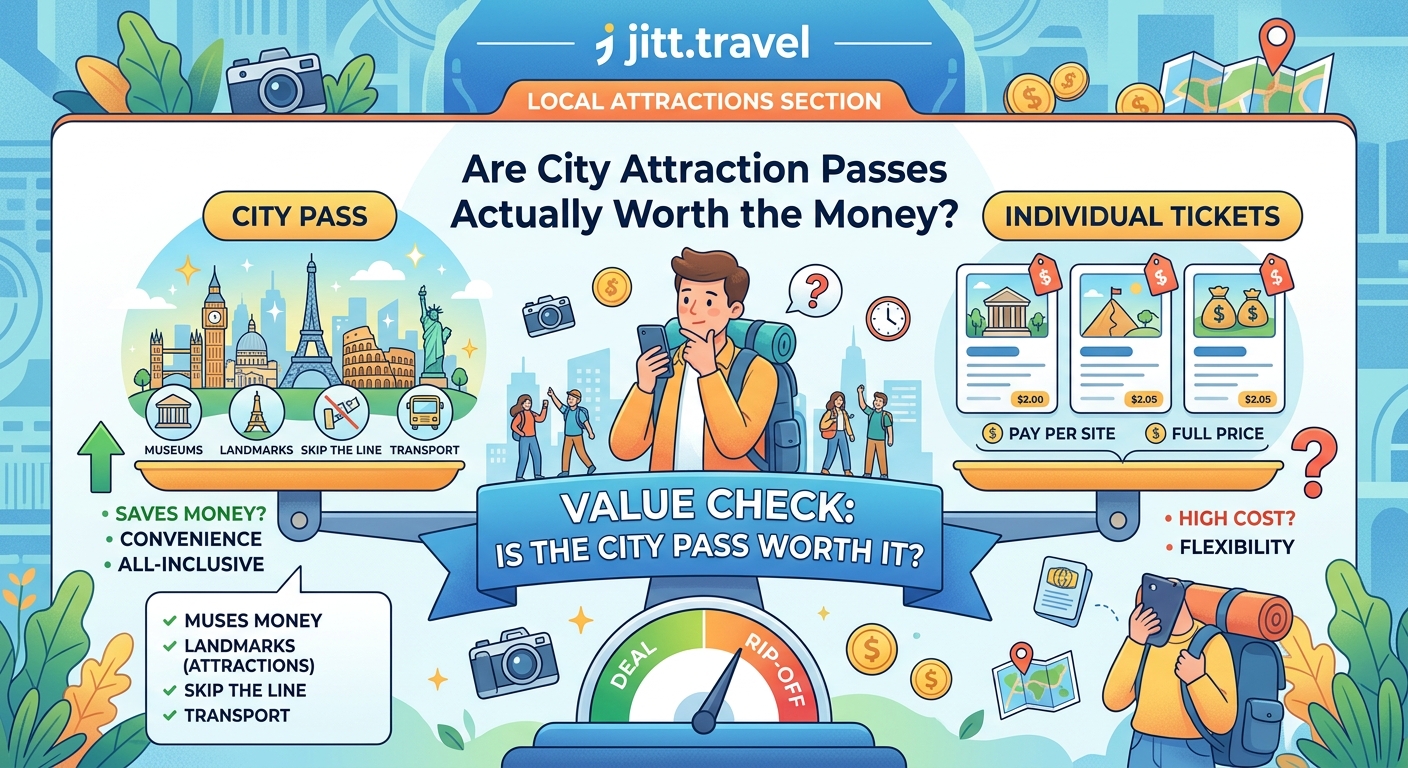
Are City Attraction Passes Actually Worth the Money?

You’re staring at a $129 city pass online, wondering if it’ll actually save you money or just pressure you into a exhausting sightseeing marathon. The marketing says you’ll save 40%, but that assumes …

You’re staring at a $129 city pass online, wondering if it’ll actually save you money or just pressure you into a exhausting sightseeing marathon. The marketing says you’ll save 40%, but that assumes you hit six attractions in three days while somehow finding time to eat and sleep.

Let me help you figure out if these passes make sense for your trip.

Key Takeaway

City attraction passes save money only when you visit enough included sites to exceed the pass cost. Most travelers break even at 3 to 4 major attractions within the validity period. Passes work best for first-time visitors tackling top sights in short trips, but fail when you prefer slower travel, niche museums, or already have specific plans that don’t align with included venues.

How City Passes Actually Work

Most city passes fall into two categories: all-inclusive and credits-based.

All-inclusive passes give you access to a set list of attractions for a fixed number of days. You pay $100 for three days, and you can visit as many included sites as physically possible. The clock starts ticking the moment you scan the pass at your first attraction.

Credits-based passes let you choose a certain number of attractions from a larger menu. A five-choice pass might cost $85, and you pick which five venues to visit over a 30-day window.

The pricing feels designed to confuse you. A three-day pass costs $129, a five-day costs $159, and a seven-day costs $179. The incremental cost drops, nudging you toward longer passes you might not need.

Here’s what most passes include:

  • Major museums and galleries
  • Observation decks and towers
  • Hop-on-hop-off bus tours
  • River or harbor cruises
  • Popular historical sites
  • Zoo or aquarium access

What they often exclude:

  • Special exhibitions requiring separate tickets
  • Guided tours with live experts
  • Seasonal attractions or temporary installations
  • Restaurants, shows, or nightlife venues
  • Transportation beyond tourist buses

Some passes bundle public transit. Others charge extra for it. Always check what’s actually included before you buy.

Running the Numbers on Your Trip

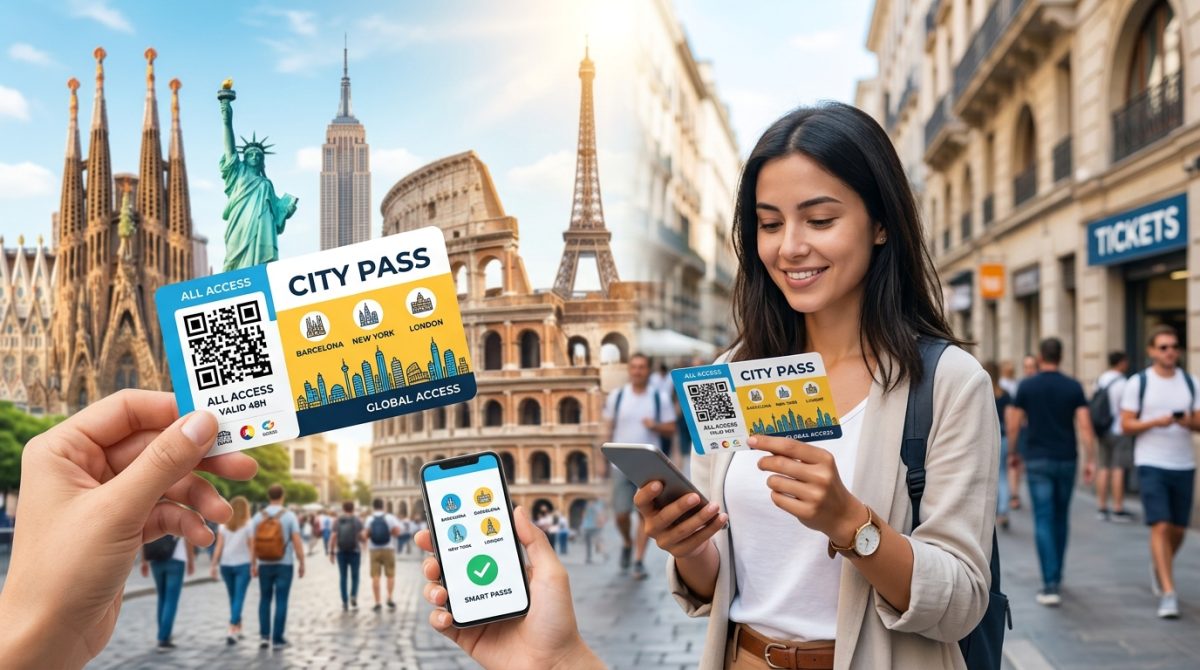
Are City Attraction Passes Actually Worth the Money? — image 1

Let’s use a real example. You’re planning four days in a major city. The attractions you want to see are:

  1. Art museum: $25
  2. Science museum: $28
  3. Observation tower: $35
  4. Historic house tour: $18
  5. Aquarium: $32
  6. River cruise: $30

Total if purchased separately: $168

A three-day all-inclusive pass covering these venues: $129

Looks like a winner, right? You save $39.

But wait. Can you actually visit six attractions in three days? That’s two per day, minimum. Each visit takes 2 to 4 hours when you factor in travel time, lines, and actually seeing things. You’re looking at 8 to 10 hour days of back-to-back sightseeing.

If you skip the aquarium because you’re tired, your savings drop to $9. Skip one more, and you’ve lost money.

The break-even calculation matters more than the theoretical maximum savings.

Attractions Visited Cost Without Pass With $129 Pass Net Savings
2 major sites $60 $129 -$69
3 major sites $90 $129 -$39
4 major sites $120 $129 -$9
5 major sites $150 $129 +$21
6 major sites $180 $129 +$51

You need to hit at least five attractions to see meaningful savings. That’s aggressive touring.

When Passes Make Perfect Sense

City passes shine in specific situations.

First-time visitors with limited time: If you have three days in a city you’ve never seen, you probably want to hit all the famous spots. A pass removes decision fatigue and gets you into the top ten sights without fumbling with tickets at each location.

Families with kids: When you’re buying four tickets to everything, costs multiply fast. A family pass that covers two adults and two children can cut your total spend in half, even if you only visit three or four places.

Bad weather backup plans: Passes with longer validity periods give you flexibility. Rain ruins your walking tour? Pivot to an indoor museum without worrying about wasted tickets.

Cities with expensive flagship attractions: Some observation decks or specialty museums charge $40+ for entry. In these cities, visiting just three sites can justify a pass.

Travelers who love structured itineraries: If you thrive on packed schedules and checking off lists, passes reward that energy. You’ll hit the break-even point easily.

“I bought a five-day pass for London and visited 12 attractions. The pass paid for itself by day three, and everything after that felt free. But I was exhausted. My next trip, I skipped the pass and saw four museums slowly. I enjoyed that more, even though it cost more.” — Sarah, frequent European traveler

When Passes Waste Your Money

Are City Attraction Passes Actually Worth the Money? — image 2

Passes fail in equally clear situations.

Slow travelers: If you prefer spending half a day in one museum, then lingering in cafes and neighborhoods, you won’t visit enough sites to break even.

Return visitors: Already seen the big attractions? Passes rarely cover the quirky small museums or specialized galleries that appeal to repeat visitors.

Off-season trips: Some included attractions close or reduce hours in winter. Your seven-day pass becomes a five-day pass when two venues are shuttered.

Niche interests: Love modern art but hate natural history? A pass that bundles both forces you to pay for access you won’t use.

Short validity windows: Three consecutive days means three consecutive days. If you want a rest day in the middle of your trip, you lose a day of access.

Hidden exclusions: That famous museum might be included, but the blockbuster Van Gogh exhibition requires a separate $25 ticket. You still pay extra for what you actually wanted to see.

Smart Ways to Decide Before You Buy

Follow this process to make an honest assessment:

  1. List every attraction you genuinely want to visit, not what the pass makes available.
  2. Look up individual ticket prices for each one.
  3. Add them up.
  4. Compare that total to the pass price.
  5. Calculate how many days you’d need to visit everything on your list.
  6. Ask yourself if that pace sounds enjoyable or miserable.

Be ruthlessly honest in step one. Don’t add attractions just because they’re included. Add only places you’d pay to see independently.

Check if any of your target attractions offer free days or discounted evening hours. Many major museums have free entry one evening per week. If three of your six targets are free on Thursday night, the pass math changes completely.

Look for combination tickets sold directly by attractions. Some museums partner to offer two-site passes at 30% off. These smaller bundles often beat city-wide passes for travelers with focused interests.

Consider your trip timing. Visiting during a holiday weekend when attractions have reduced hours? A pass wastes money if venues close early or skip days entirely.

Alternative Strategies That Often Work Better

Sometimes the best move is skipping the pass entirely.

Pay as you go: Sounds old-fashioned, but buying individual tickets lets you move at your own pace. You’re not racing a clock or forcing yourself into places that don’t interest you.

Museum memberships: Planning to visit one world-class museum multiple times? An annual membership often costs less than a three-day city pass and includes perks like member previews and gift shop discounts.

Free attractions: Most cities offer incredible free options. Parks, markets, historic neighborhoods, street art, public viewpoints, and free museum days fill itineraries without costing anything.

Discount cards for residents: Some cities offer resident discount cards if you’re staying for a week or more. These aren’t tourist passes, but longer-term visitors can sometimes access them.

Booking direct with combo deals: Attractions often bundle their own tickets. The aquarium plus the science center for $45 instead of $60 when purchased separately, no city pass required.

Reading the Fine Print That Changes Everything

Pass terms hide crucial details.

Validity periods start when you activate the pass, not when you buy it. Purchase three months ahead for flexibility, but know the countdown begins at your first attraction visit.

Some passes require reservations at popular sites, even though you already paid for access. The pass doesn’t guarantee entry, just the right to book a time slot that might be full.

Refund policies range from generous to nonexistent. Bought a pass and got sick? Some companies offer partial refunds or extensions. Others keep your money regardless.

Child age cutoffs vary. One pass defines children as under 12, another as under 16. If you’re traveling with a tall 11-year-old, you might get questioned at entry points.

Mobile vs. physical passes matter for some travelers. Physical passes require pickup at a specific location, eating into your first day. Mobile passes activate instantly but need charged phones and stable internet.

Calculating Your Personal Break-Even Point

Your break-even point is the number of attractions you must visit to save money.

Take the pass price and divide it by the average cost of included attractions you actually want to see. That’s your magic number.

Example: $129 pass, and your target attractions average $30 each. You need to visit 4.3 attractions, so realistically five, to break even.

If those five attractions require three full days of touring, ask if you want to spend three days doing nothing but museums and landmarks. Maybe you do. Maybe you’d rather see three attractions and spend a day wandering neighborhoods.

The pass companies want you to focus on maximum theoretical savings. You should focus on realistic actual savings based on how you like to travel.

Making Peace with Your Decision

Here’s the truth: sometimes you’ll guess wrong, and that’s fine.

You might buy a pass, get food poisoning, and only visit two places. You wasted money, but you also didn’t waste time standing in ticket lines while feeling awful.

You might skip the pass, then discover you loved the city so much you visited eight attractions and spent $240. You could have saved $100 with a pass, but you also moved at your own pace without pressure.

The financial optimization matters less than whether you enjoyed your trip.

Passes work best when they remove friction and decision-making, letting you say yes to opportunities without calculating costs each time. They work worst when they create anxiety about maximizing value and rushing through experiences.

Your Money, Your Pace, Your Trip

City attraction passes aren’t scams, but they’re not automatic bargains either. They’re tools that work brilliantly for some travelers and poorly for others.

Run the real numbers for your specific trip. Be honest about your energy levels and interests. Don’t let marketing pressure you into a pace that turns sightseeing into a forced march.

If the math works and the itinerary excites you, buy the pass and enjoy skipping ticket lines. If the numbers are close or you value flexibility, skip it and pay as you go. Either way, you’ll spend your time and money in ways that match how you actually want to travel.

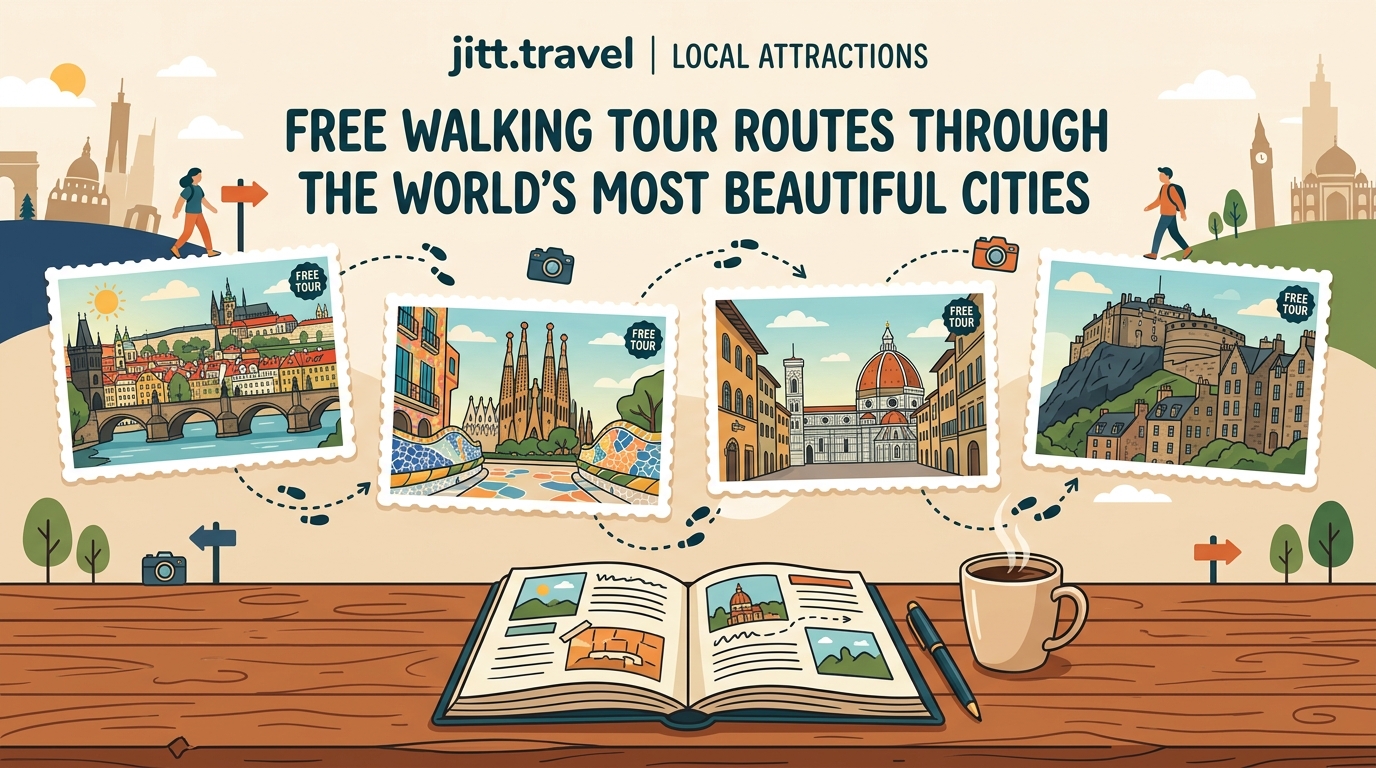
Free Walking Tour Routes Through the World’s Most Beautiful Cities

Walking through a new city costs nothing but time, and that’s exactly what makes it the perfect way to travel. You don’t need a tour guide charging $30 per person when you have a solid route, a charge…

Walking through a new city costs nothing but time, and that’s exactly what makes it the perfect way to travel. You don’t need a tour guide charging $30 per person when you have a solid route, a charged phone, and comfortable shoes.

Key Takeaway

Free walking tours world cities provide let you see major attractions, hidden neighborhoods, and local culture without paying for guides. Download offline maps, start early to beat crowds, bring water and snacks, and follow proven routes that cover 5-8 kilometers in 2-4 hours. Most cities offer free audio guides through apps or tourism websites that enhance your experience at zero cost.

Why Self-Guided Walking Tours Beat Paid Options

Paid walking tours follow rigid schedules. You’re stuck with strangers, waiting for latecomers, and listening to rehearsed scripts. Self-guided routes give you control.

Start when you want. Linger at places you love. Skip what doesn’t interest you. Take a coffee break without holding up a group.

The money you save adds up fast. A family of four spending $120 on a guided tour could use that for a nice dinner instead. Solo travelers banking $25 per city across a month-long trip save $750.

Free doesn’t mean low quality. Cities invest heavily in tourism infrastructure. You’ll find detailed walking route maps at visitor centers, free audio tours through official apps, and well-marked historical plaques at every major site.

How to Plan Your Free City Walking Route

Free Walking Tour Routes Through the World's Most Beautiful Cities — image 1

Planning takes 30 minutes but saves hours of wandering aimlessly.

  1. Research top attractions and mark them on a map app
  2. Group nearby sites into logical clusters
  3. Check opening hours and free entry days
  4. Download offline maps before you leave your accommodation
  5. Screenshot or print your route as backup
  6. Identify rest stops like parks, cafes, or public squares
  7. Note public restroom locations along the way

Most walking routes should cover 5 to 8 kilometers. That’s manageable for average fitness levels and takes 2 to 4 hours at a relaxed pace with photo stops.

Start early. Launching at 8 AM means you’ll see major landmarks before tour buses arrive. Morning light is better for photos too.

The best walking tours happen when you’re not following anyone else’s timeline. You notice street art, smell bakeries, hear street musicians, and stumble into neighborhood festivals that no paid tour would ever include.

Essential Items for All Day Walking

Pack light but smart. Here’s what actually matters:

  • Comfortable broken-in shoes (not new ones)
  • Refillable water bottle
  • Portable phone charger or power bank
  • Small snacks like nuts or energy bars
  • Sunscreen and hat for sunny cities
  • Light rain jacket that folds small
  • Small first aid kit with blister bandages
  • Cash for street food or emergency transport

Your phone does heavy lifting. It’s your map, camera, translator, and research tool. Keep it charged.

Download these free apps before you go:

  • Maps.me for offline navigation
  • Google Translate for restaurant menus and signs
  • City-specific tourism apps with free audio guides
  • AllTrails or similar for scenic walking paths

Top Free Walking Routes Around the World

Free Walking Tour Routes Through the World's Most Beautiful Cities — image 2

Different cities shine in different ways. Here are proven routes that cost nothing.

Paris Classic Loop

Start at Notre-Dame, walk along the Seine to the Louvre, cut through Tuileries Garden, reach Place de la Concorde, stroll up Champs-Élysées to Arc de Triomphe. Return via Pont Alexandre III and Latin Quarter.

Distance: 7 kilometers. Time: 3 hours without museum stops.

Rome Ancient Center

Begin at Colosseum, walk through Roman Forum, climb Capitoline Hill, see Piazza Venezia, throw coins at Trevi Fountain, visit Pantheon, end at Piazza Navona.

Distance: 5 kilometers. Time: 2.5 hours.

London Royal Route

Tower of London to Tower Bridge, walk Thames Path to Shakespeare’s Globe, cross Millennium Bridge to St. Paul’s Cathedral, continue to Trafalgar Square, see Buckingham Palace, finish at Westminster Abbey and Big Ben.

Distance: 8 kilometers. Time: 4 hours.

Barcelona Gaudí Trail

Start at Sagrada Familia, metro to Park Güell, walk down to Casa Batlló and Casa Milà on Passeig de Gràcia, end at Gothic Quarter and Las Ramblas.

Distance: 6 kilometers plus metro. Time: 3 hours.

Tokyo Traditional Meets Modern

Senso-ji Temple in Asakusa, walk to Ueno Park, train to Shibuya Crossing, walk to Meiji Shrine through Harajuku, end at Shinjuku.

Distance: 5 kilometers plus trains. Time: 4 hours.

Common Walking Tour Mistakes and How to Avoid Them

Mistake Why It Hurts Better Approach
Wearing new shoes Blisters ruin your trip Break in shoes two weeks before travel
No offline maps Dead phone means you’re lost Download maps the night before
Starting at noon Crowds and heat make everything worse Begin at 8 AM or start at 4 PM for evening walks
Skipping water Dehydration kills your energy Carry a bottle and refill at fountains
No backup plan Rain or closures waste your day Have indoor alternatives ready
Overpacking route Rushing through 15 sites teaches you nothing Pick 6-8 meaningful stops

The biggest mistake is trying to see everything. You’re not checking boxes. You’re experiencing a place.

Spend 20 minutes sitting in a plaza watching locals. That memory lasts longer than sprinting past 30 landmarks.

Free Audio Guides and Apps That Actually Help

Many cities offer official free audio tours that rival paid options.

Rick Steves Audio Europe provides free walking tours for dozens of European cities. Download episodes for Paris, Rome, London, and more. His conversational style beats robotic tourist information.

GPSmyCity turns your phone into a walking tour guide. Free versions cover major routes. The app works offline once downloaded.

Detour offers immersive audio walks created by locals. Some cities have free options. You’ll hear personal stories instead of Wikipedia facts.

Museum apps often include free audio tours. The Louvre, British Museum, and Metropolitan Museum of Art all have free official apps with detailed commentary.

Local tourism boards publish free PDF walking tour guides. Check the official city tourism website before you arrive. Download and save these guides offline.

Finding Hidden Neighborhoods Beyond Tourist Centers

The best parts of cities hide in residential areas.

Ask your accommodation host for their favorite neighborhood. Tell them you want to see where locals actually live.

Food markets reveal authentic culture. La Boqueria in Barcelona, Borough Market in London, or Tsukiji Outer Market in Tokyo cost nothing to walk through. You’ll see ingredients, cooking styles, and daily life.

University districts have cheap food, street art, and young energy. The Latin Quarter in Paris, Trastevere in Rome, or Shimokitazawa in Tokyo feel completely different from tourist zones.

Follow locals during morning commutes. See where they grab coffee, buy newspapers, or eat breakfast. These spots rarely appear in guidebooks.

Street art tours cost nothing. Cities like Berlin, Melbourne, and Bogotá have incredible murals in non-touristy neighborhoods. Search “street art map” plus your city name for free guides.

Weather and Timing Strategies

Season changes everything about walking tours.

Summer means early starts or evening walks. Midday heat in cities like Athens, Seville, or Dubai makes walking miserable. Start at 7 AM or wait until 5 PM.

Winter shortens daylight. Plan routes that finish before dark. Northern cities like Stockholm or Edinburgh have tiny winter days. Prioritize outdoor sights first, save museums for afternoon.

Rainy cities need flexible plans. London, Amsterdam, and Seattle require backup indoor routes. Museum hopping becomes your walking tour when weather turns bad.

Shoulder seasons (April-May and September-October) offer perfect walking weather for most European cities. Fewer crowds, comfortable temperatures, and longer days than winter.

Check local event calendars. Festivals, marathons, or protests can block your planned route. City tourism websites list major events months ahead.

Staying Safe While Walking Alone or in Groups

Cities are generally safe, but awareness helps.

Keep valuables hidden. Don’t wave your phone around in sketchy areas. Use a cross-body bag that stays in front of you.

Stay in well-lit, populated areas after dark. Your evening walking route should stick to busy streets with shops and restaurants.

Trust your gut. If a street feels wrong, turn around. No landmark is worth feeling unsafe.

Walk with purpose. Even if you’re lost, look like you know where you’re going. Checking your phone constantly screams “tourist target.”

Share your route with someone. Text a friend or family member your planned path and expected return time.

Groups of 2-4 people are ideal. Solo walking is fine during daylight in most cities. Large groups move slowly and attract attention.

Food and Rest Stop Planning

Walking tours burn energy. Plan eating and resting strategically.

Pack substantial snacks. Granola bars, trail mix, or fruit keep you going between meals. Airport security allows solid foods.

Budget one sit-down meal during a 4-hour walk. Find a local spot away from major attractions where prices drop 30-50%.

Public parks offer free rest stops. Retiro Park in Madrid, Tiergarten in Berlin, or Central Park in New York provide benches, shade, and people-watching.

Churches often let you sit quietly for free. It’s a cultural experience and a rest break combined.

Avoid tourist trap restaurants near landmarks. Walk two blocks in any direction and prices improve dramatically.

Water fountains exist in most European cities. Refill your bottle instead of buying plastic bottles every hour.

Making the Most of Free Entry Times

Museums and attractions offer free hours that most tourists miss.

Many museums have free evenings once per week. The Louvre is free on first Saturdays. London’s major museums are always free. Research before you go.

Churches rarely charge entry. Notre-Dame, Sagrada Familia exterior, and St. Peter’s Basilica offer incredible architecture at no cost.

Parks and gardens cost nothing. Versailles charges for the palace but the gardens are free most days.

Viewpoints beat observation deck tickets. Sacré-Cœur in Paris, Gellért Hill in Budapest, or Arthur’s Seat in Edinburgh provide free panoramic views.

Government buildings often have free public areas. The European Parliament, Reichstag dome in Berlin, or U.S. Capitol offer free tours with advance booking.

Photography Tips for Walking Tours

Your photos document the experience. Make them count.

Golden hour (first hour after sunrise, last hour before sunset) creates beautiful light. Schedule your route to hit photogenic spots during these times.

Get low or get high. Shooting from ground level or elevated positions creates more interesting compositions than eye-level snapshots.

Include people for scale and life. Empty landmark photos feel sterile. A street musician, cafe diners, or kids playing add humanity.

Shoot details, not just wide shots. A weathered door handle, colorful tile pattern, or vendor’s hands tell stories that landmark photos miss.

Turn around. The best shot is often behind you while you’re focused on the obvious subject ahead.

Ask permission before photographing locals. A smile and gesture go far. Most people appreciate respectful requests.

Your Next Walk Starts Now

Free walking tours world cities offer work because cities want you to see them. Tourism infrastructure exists to help you navigate, learn, and enjoy without spending money on guides.

The routes are there. The maps are free. The stories are waiting on every corner.

Pick a city, download a map, and start walking tomorrow morning. You’ll see more, learn more, and remember more than any bus tour could ever show you.

How to Skip the Lines at Popular Tourist Attractions Without Paying Extra

Standing in a two-hour line under the blazing sun while your vacation clock ticks away feels like torture. You watch VIP ticket holders breeze past, and you wonder if there’s a middle ground between w…

Standing in a two-hour line under the blazing sun while your vacation clock ticks away feels like torture. You watch VIP ticket holders breeze past, and you wonder if there’s a middle ground between wasting half your day and dropping an extra $100 per person.

Good news: there is.

Key Takeaway

You can bypass long lines at major tourist attractions without purchasing expensive skip-the-line tickets by timing your visits strategically, using free reservation systems, entering through alternate entrances, and taking advantage of off-peak hours. These budget-friendly tactics require planning but can save you hours of waiting and hundreds of dollars per trip.

Arrive at Opening Time or Just Before Closing

Most tourists start their day slowly. They sleep in, have a leisurely breakfast, and arrive at attractions between 10 AM and 2 PM. That’s exactly when lines peak.

Set your alarm early instead. Arrive 30 minutes before the official opening time. You’ll join a much smaller crowd, and once the gates open, you’ll be among the first inside.

The same principle works in reverse. Many attractions stay open until 6 PM or later, but most visitors leave by 4 PM to grab dinner. Arriving two hours before closing means you’ll face minimal lines and often get a bonus: sunset lighting for photos at outdoor attractions.

This strategy works especially well at museums, observation decks, and historical sites. Theme parks require a different approach since rides close for maintenance near closing time.

Use Free Advance Reservation Systems

How to Skip the Lines at Popular Tourist Attractions Without Paying Extra — image 1

Many popular attractions now offer free timed entry reservations. These aren’t skip-the-line tickets. They’re free booking systems that limit capacity and eliminate standby lines entirely.

Here’s how to find them:

  1. Visit the official attraction website directly, not third-party booking sites
  2. Look for sections labeled “Plan Your Visit” or “Book Tickets”
  3. Check if they offer timed entry slots or free reservations
  4. Book your slot weeks in advance, especially for summer and holiday travel

The Louvre, Uffizi Gallery, Anne Frank House, and dozens of other major attractions use this system. You still pay the regular admission price, but you walk straight in at your reserved time while standby visitors wait for hours.

Some attractions hide this option. They promote paid skip-the-line tickets prominently while burying the free reservation system in fine print. Always check the official website carefully before assuming you need to pay extra.

Target Off-Season and Shoulder Season Dates

Peak season exists for a reason. Summer vacation, spring break, and major holidays bring massive crowds. Shifting your travel dates by just a few weeks can cut wait times by 70% or more.

Consider these timing strategies:

  • Visit European cities in November or March instead of July
  • Plan theme park trips for September or early May
  • Schedule museum visits during school term time, not holidays
  • Avoid three-day weekends and the week between Christmas and New Year

Weather might be slightly less perfect, but you’ll spend less time standing still and more time actually experiencing what you came to see.

Shoulder season travel also costs less for flights and hotels, multiplying your savings beyond just skipped line fees.

Enter Through Side or Back Entrances

How to Skip the Lines at Popular Tourist Attractions Without Paying Extra — image 2

Major attractions often have multiple entry points. The main entrance gets 90% of the traffic because it’s obvious and well-marked. Alternative entrances stay nearly empty.

Before your visit, study the attraction’s map online. Look for:

  • Member or annual pass holder entrances (sometimes open to everyone during off-peak hours)
  • Group tour entrances that allow individual visitors during slow periods
  • Exits that also function as entrances at certain times
  • Connected buildings or wings with separate entry points

The Vatican Museums have a perfect example. Most tourists queue at the main entrance on Viale Vaticano. Fewer people know about the entrance near the Vatican Gardens, which often has a fraction of the wait.

Security staff can tell you if alternate entrances are available. Just ask politely: “Is there another entrance with a shorter line?” They’ll often point you in the right direction.

Visit During Meal Times

Tourist behavior follows predictable patterns. Between noon and 1:30 PM, attraction lines shrink noticeably as visitors break for lunch. The same dip happens around 6 PM for dinner.

Flip the script. Eat breakfast at 10 AM or lunch at 2 PM, then hit attractions during traditional meal hours. You’ll find shorter lines and less crowded galleries.

This works best at attractions located in areas with many restaurants nearby. Visitors naturally leave to eat, creating a temporary lull. Museums, observation decks, and monuments see the biggest impact.

Pack snacks if you get hungry outside normal meal times. A granola bar beats standing in a 90-minute line any day.

Take Advantage of Free Days and Extended Hours

Many museums and cultural sites offer free admission on specific days each month. These free days attract huge crowds, right? Sometimes, but not always.

Free evenings work differently. The first Sunday of the month might be free but packed. The first Thursday evening from 5 to 8 PM might also be free but nearly empty because fewer people know about it.

Check the attraction’s website for:

  • Free evening hours on weekdays
  • Free admission during the final hour before closing
  • Pay-what-you-wish time slots
  • Local resident free days (which may include anyone with proof of address in the broader region)

Extended hours during summer or special exhibitions also help. When a museum stays open until 10 PM instead of 6 PM, the crowd spreads across more hours, thinning out the lines.

Use City Tourism Cards Strategically

Most travelers buy city tourism cards for the discounts. The real value is often the line-skipping benefit that comes with them.

Cards like the Paris Museum Pass, Roma Pass, or Barcelona Card include direct entry privileges at dozens of attractions. You’re not buying a skip-the-line ticket. You’re buying a pass that includes admission, and admission holders use a separate, faster entrance.

Do the math before purchasing. If you plan to visit four or five included attractions, the card often pays for itself while saving you hours in lines.

One warning: some tourism cards require you to pick them up at a specific office, which might have its own line. Check pickup locations and hours before you buy. Getting your card from a suburban tourist office with no wait beats collecting it from a crowded central kiosk.

Book Combination Tickets and Bundled Experiences

Attractions sometimes offer combination tickets that include two or three sites for one price. These bundles often come with reserved entry times or separate entrances.

A ticket that combines the Colosseum, Roman Forum, and Palatine Hill might cost the same as buying separately but includes timed entry. You’re getting line-skipping as a side benefit of bundling.

Look for these packages on official attraction websites, not just third-party tour companies. Government-run sites and museum networks frequently offer them at standard prices.

Join Free Walking Tours That Include Skip Access

Free walking tours operate on a tip-based model. You pay what you think the tour was worth at the end. Many people don’t realize these tours sometimes include attractions with separate entry lines for tour groups.

The tour itself is free. The attraction admission still costs money, but you enter through the group entrance, which moves faster than the individual visitor line.

This works at cathedrals, government buildings, and some museums. The tour guide has pre-arranged access, and you benefit from their coordination.

Not every free walking tour includes interior visits. Check the itinerary description carefully. Look for phrases like “includes interior visit” or “entry to [specific attraction].”

Monitor Real-Time Wait Time Apps and Websites

Several apps and websites track current wait times at major attractions. They work like traffic apps but for tourist lines.

Check these resources the morning of your visit:

  • Official attraction apps (Disney, Universal, and major museums often have them)
  • Google Maps “Popular Times” feature for each location
  • Tourism forum posts from people visiting that same day
  • Webcams pointed at attraction entrances

If you see wait times spike at your planned destination, pivot to a backup plan. Visit a different attraction now and return to your first choice during an off-peak window.

Flexibility beats rigid itineraries when you’re trying to avoid lines without paying premium prices.

Understand the Difference Between Strategies and Scams

Strategy How It Works Cost Reliability
Early arrival Beat the crowds by arriving first Free Very high
Free reservations Book timed entry slots in advance Free Very high
Off-peak timing Visit during low-traffic hours Free High
Alternate entrances Use less-known entry points Free Medium
City tourism cards Bundled admission with fast entry $50-$100 High
Meal-time visits Visit when others are eating Free Medium

Avoid these common mistakes that waste time or money:

  • Buying “skip-the-line” tickets from unofficial resellers at 3x the price
  • Joining tour groups you don’t want just for line access
  • Assuming all paid tickets include line-skipping (many don’t)
  • Skipping research and hoping for the best on arrival

“The best skip-the-line strategy is information. Spend 20 minutes researching each attraction before your trip. Check official websites, recent visitor reviews, and current entry procedures. That small time investment saves hours of standing in the wrong line.” — Seasoned budget traveler

Handle Special Cases and Seasonal Attractions

Some attractions require different approaches:

Theme parks: Arrive at rope drop (official opening), head to the most popular ride first, then work backward through the park as crowds spread out. Single rider lines cut wait times by 60% or more if you don’t mind splitting up your group temporarily.

Observation decks: Sunset is the worst time for lines. Visit at noon or just after opening instead. The view changes, but the wait time drops dramatically.

Religious sites during services: Many cathedrals and churches have separate entrances for worshippers. If you’re comfortable attending a service, you can often enter this way and stay to look around afterward. Be respectful and follow all rules about photography and movement during services.

Seasonal attractions: Christmas markets, Halloween events, and summer festivals get slammed on weekends. Weekday evenings offer the same experience with a fraction of the crowd.

Temporary exhibitions: These draw huge crowds initially, then taper off. If you can wait three or four weeks after opening, you’ll face much shorter lines for the same exhibit.

Combine Multiple Tactics for Maximum Impact

The real magic happens when you stack strategies. Here’s a real example:

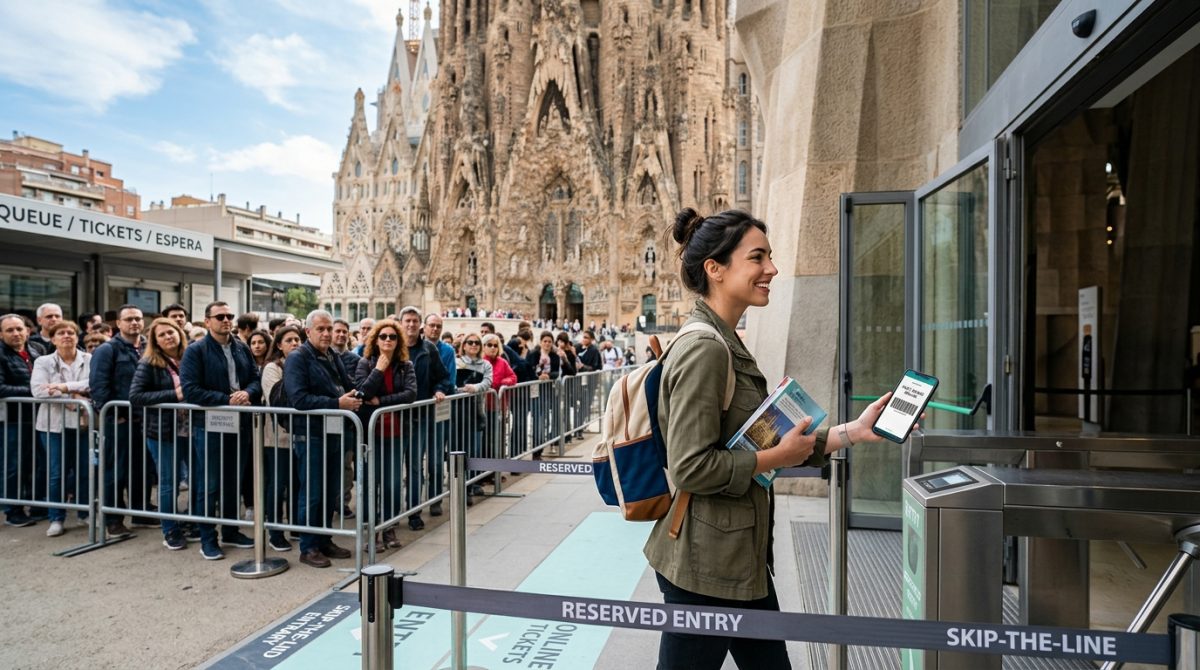
You want to visit the Sagrada Familia in Barcelona. Instead of showing up at 11 AM on a Saturday in July and waiting two hours, you:

  1. Book a free timed entry reservation for 9 AM on a Wednesday in May
  2. Use a Barcelona Card you already planned to buy for museum discounts
  3. Arrive 20 minutes early to be first in your time slot
  4. Enter through the Nativity facade entrance, which sees less traffic than the Passion facade

Result: you walk straight in while the standby line stretches around the block. Total extra cost: zero, because you already wanted the Barcelona Card for other reasons.

This approach works at almost any major attraction. Pick two or three compatible strategies, plan ahead, and execute on the day.

Make Smart Decisions on the Ground

Even with perfect planning, situations change. Lines might be shorter or longer than expected. Weather might affect crowd patterns. Strikes or special events can throw off your timing.

Stay adaptable:

  • Check wait times when you arrive, not just before you leave your hotel
  • Have backup attractions ready if your first choice is too crowded
  • Ask staff about current wait estimates (they often know better than apps)
  • Consider splitting up if some group members care more about certain attractions
  • Remember that some experiences are worth a moderate wait, just not a three-hour one

Your time has value. Calculate what an hour of your vacation is worth. If a line will take 90 minutes, and you can visit a different amazing attraction with a 15-minute wait instead, that’s often the smarter choice.

Your Vacation Time Belongs to You

Lines at tourist attractions aren’t inevitable. They’re the result of everyone following the same patterns, visiting at the same times, and entering through the same doors.

Break those patterns. Show up early. Book ahead. Use free systems that already exist. Think like a local, not a tourist.

The money you save on skip-the-line tickets can buy an extra nice dinner, a better hotel room, or another day of travel. The time you save standing in lines becomes time actually experiencing the places you came to see.

Start with one or two strategies on your next trip. Once you see how well they work, you’ll never go back to standing in the default line again.

15 Hidden Gems Locals Don’t Want Tourists to Know About

You know that feeling when you stumble into a neighborhood cafe and realize you’re the only tourist? The owner greets regulars by name. The menu isn’t translated. Nobody’s taking Instagram photos of t…

You know that feeling when you stumble into a neighborhood cafe and realize you’re the only tourist? The owner greets regulars by name. The menu isn’t translated. Nobody’s taking Instagram photos of their food. That’s the magic of finding places locals actually use, not the spots designed to extract money from visitors.

Key Takeaway

Real hidden gems exist in every city, but finding them requires specific strategies. Avoid tourist districts during peak hours, talk to service workers who live locally, and look for places without English signage. The best spots have irregular hours, no social media presence, and locals who might initially seem unwelcoming to outsiders. Success depends on respectful observation, patience, and willingness to accept that some places genuinely want to stay hidden.

Why Locals Guard Their Favorite Spots

Residents protect their hangouts for good reasons. When a place gets popular with tourists, prices rise. Service slows down. The atmosphere changes. A quiet wine bar becomes a selfie factory. A family bakery starts running out of bread by 9 AM because a travel blogger posted about it.

Locals have watched this happen repeatedly. They’ve seen their favorite lunch spot triple its prices after appearing in a guidebook. They’ve lost their regular table at the neighborhood bistro. So when they find somewhere special, they keep it quiet.

This isn’t about being unwelcoming. It’s about preservation. The places worth finding are worth protecting.

How to Actually Find Secret Local Spots

15 Hidden Gems Locals Don't Want Tourists to Know About — image 1

Most travelers search in the wrong places. They scan TripAdvisor, read Lonely Planet, follow food bloggers. But if a spot is listed there, it’s already discovered. The real hidden gems require different tactics.

Talk to People Who Live There Year Round

Hotel staff often live in suburbs and commute. They know tourist spots, not local ones. Instead, talk to:

  • Baristas at neighborhood coffee shops
  • Grocery store cashiers
  • Dog walkers in residential parks
  • Parents at playgrounds on weekday mornings
  • Bartenders at dive bars three blocks from your hotel

Ask where they eat on their day off. Where they take their parents when they visit. Where they go for a drink after a bad day at work.

Follow the Grandmothers

Older residents know their neighborhoods intimately. They remember what was there before the tourist boom. They shop at markets that have been family run for decades.

Watch where elderly locals line up. If grandmothers are waiting outside a bakery at 7 AM, that bread is worth the wait. If they’re buying produce from a specific stall at the market, those vegetables are the freshest.

This works in every city. Age brings loyalty to quality.

Look for Signs You Can’t Read

Restaurants with menus only in the local language usually cater to locals. No English means they’re not chasing tourist dollars. The staff might not speak your language fluently, but pointing and smiling work everywhere.

Places without translations are filtering their clientele. They’re saying “if you can’t read this, we’re probably not for you.” But if you’re willing to navigate that barrier, you’ll often find better food at half the price.

Timing Matters More Than Location

The same street can feel completely different at 8 AM versus 2 PM. Tourist districts empty out in early morning and late evening. That’s when locals reclaim them.

The Early Morning Window

Between 6 AM and 9 AM, cities belong to residents. They’re commuting to work, getting coffee, buying groceries. Tourist attractions aren’t open yet. Tour groups haven’t arrived.

This is when you’ll find:

  • Workers grabbing breakfast sandwiches at corner shops
  • Locals doing their daily market shopping
  • Neighborhood cafes serving regulars
  • Parks filled with joggers and dog walkers

The same plaza that’s packed with tour groups at noon might have a fantastic local breakfast spot at 7 AM.

The Late Evening Shift

After 9 PM, tourists head back to hotels. Locals are just starting their night. Restaurants that cater to residents often don’t even get busy until 10 PM.

In Mediterranean cities, families eat dinner at 10 or 11 PM. In Asian cities, night markets come alive after sunset. In Nordic countries during summer, locals enjoy outdoor spaces until midnight.

Adjust your schedule to local rhythms, not tourist patterns.

Common Mistakes That Mark You as a Tourist

Mistake Why It Fails Better Approach
Arriving at peak meal times Locals eat earlier or later Ask what time residents typically dine
Photographing everything Signals you’re documenting, not experiencing Put the camera away initially
Staying in tourist districts You’ll only meet other travelers Book accommodations in residential neighborhoods
Following online reviews Popular spots are already discovered Trust offline recommendations
Expecting English everywhere Shows you haven’t adapted Learn basic local phrases
Wearing obvious tourist gear Makes you a target for tourist prices Dress like you live there

The goal isn’t to pretend you’re local. That’s impossible and insulting. The goal is to show respect for local culture by adapting your behavior.

Reading the Room When You Arrive

You found a promising spot. Now you need to know if you’re welcome. Some places genuinely prefer to stay local only. Others are happy to serve respectful visitors.

Pay attention to these signals:

  1. Does the staff make eye contact and acknowledge you?
  2. Are there any other obvious tourists present?
  3. Do people switch to English when they see you, or continue in their language?
  4. Is there a menu available, or do regulars just order what they want?
  5. Does the atmosphere feel relaxed or slightly tense when you enter?

If you sense discomfort, you have options. You can politely leave. You can sit quietly and observe before ordering. You can smile and use basic local phrases to show effort.

Sometimes initial coolness warms up once staff see you’re respectful. Sometimes it doesn’t. Both outcomes are valid.

The Art of Blending In

You’ll never fully blend in as a visitor. But you can avoid standing out unnecessarily.

Dress Appropriately

Locals don’t wear cargo shorts and running shoes to dinner. They don’t carry massive backpacks to cafes. They don’t wear resort wear in the city.

Look at what people your age are wearing in the neighborhood. Match that general style. You don’t need to buy a new wardrobe, just avoid the most obvious tourist markers.

Respect Local Customs

Every culture has unwritten rules. In some places, you wait to be seated. In others, you grab any open table. In some cities, you greet shopkeepers when entering. In others, you browse silently.

Watch what locals do before you act. Wait an extra minute to observe the pattern. This shows respect and helps you avoid awkward mistakes.

Manage Your Expectations

Hidden gems aren’t always comfortable. The bathroom might be questionable. The seating might be cramped. The service might be slow because they’re not optimized for volume.

That’s part of authenticity. Places that cater to locals prioritize regulars over efficiency. They might close unexpectedly. They might run out of popular items. They might have weird hours.

Accept these quirks as part of the experience.

Types of Hidden Gems Worth Seeking

Not all secret spots are restaurants. The best local experiences come in many forms.

Neighborhood Markets

Skip the famous central markets listed in every guidebook. Find the neighborhood markets where residents shop for groceries. These operate early morning, have better prices, and sell to people who care about value and freshness.

You’ll find seasonal produce, local specialties, and vendors who’ve been there for generations. The guy selling cheese has strong opinions about which variety pairs with what. The fish vendor knows which catch came in that morning.

Local Sporting Events

Professional sports attract tourists. But every city has amateur leagues, school competitions, and neighborhood teams. A Sunday afternoon soccer match in a local park offers genuine community atmosphere.

People bring their families. They know the players. They care about the outcome. You’ll see authentic celebration and disappointment, not performed entertainment.

Workshops and Classes

Cooking classes marketed to tourists teach simplified versions of local cuisine. But cities have cooking schools where residents actually learn. Pottery studios where locals take weekend classes. Dance schools teaching traditional styles to neighborhood kids.

Some welcome visitors to drop-in classes. You’ll be the only tourist in a room of locals pursuing a hobby. The instruction might not be in English, but you’ll learn by watching.

Religious and Cultural Celebrations

Major festivals attract crowds. But neighborhoods have smaller celebrations throughout the year. Saint’s day processions. Seasonal ceremonies. Community gatherings.

These aren’t secret, but tourists don’t know about them because they’re not marketed. Check community bulletin boards, local newspapers, and neighborhood social media groups.

“The best travel experiences happen when you stop trying to see everything and start trying to understand something. Pick a neighborhood. Spend three days there. Learn its rhythm. That’s when you stop being a tourist and start being a temporary resident.”

What to Do When You Find Something Special

You found an amazing local spot. Now what? You want to share it, but sharing might ruin it.

Consider these guidelines:

  • Don’t post the exact location on social media with geotags
  • If you write about it, be vague about the address
  • Don’t bring large groups of other tourists
  • Return as a regular if you’re in town long enough
  • Tip well and respect the space
  • Accept that your presence changes it slightly

Some travelers believe in keeping secrets completely. Others think good places deserve recognition. There’s no perfect answer. But consider the impact of your sharing before you post.

Cities Where This Strategy Works Best

This approach succeeds anywhere, but certain cities make it easier.

Older cities with distinct neighborhoods work well. Places like Lisbon, Bangkok, Istanbul, Mexico City, and Osaka have strong neighborhood identities. Locals live, work, and socialize in their own districts.

Cities with significant residential populations in central areas also help. When people live downtown, not just work there, you’ll find real local life mixed with tourist areas.

Smaller cities and towns often work better than capitals. National capitals attract so many visitors that even “local” spots become tourist destinations. Secondary cities have pride without the overwhelming visitor numbers.

Signs You’ve Actually Found Something Real

How do you know if you’ve succeeded? Real local spots have telltale characteristics:

  • The staff seems surprised but not annoyed to see you
  • Regulars occupy specific seats or tables
  • People greet each other by name
  • The decor hasn’t been updated in years
  • There’s no English on the menu or signage
  • Prices seem surprisingly low
  • Hours are irregular or unexplained
  • The place is busy with locals during off-peak times
  • No one is taking photos of their food
  • You hear only the local language being spoken

These aren’t rules, just patterns. But the more of these you notice, the more likely you’ve found somewhere genuine.

Your Role as a Respectful Visitor

Finding hidden gems comes with responsibility. You’re entering spaces that weren’t designed for you. The owners didn’t ask for tourist business. The regulars didn’t invite you.

Be a guest, not a conqueror. Observe more than you photograph. Listen more than you speak. Adapt to their customs rather than expecting them to accommodate yours.

If something feels uncomfortable or unwelcoming, that’s information. Maybe you’re not supposed to be there. Maybe you need to adjust your approach. Maybe you should try somewhere else.

Not every place needs to welcome tourists. That’s okay. There are plenty of spots happy to have respectful visitors. Find those instead.

Making the Most of Local Recommendations

When someone shares a recommendation, ask follow-up questions:

  • What time do you usually go there?
  • What should I order?
  • Is there anything I should know before visiting?
  • How do I get there using local transportation?
  • Are there any customs I should be aware of?

These questions show you’re serious about the experience. They also give you practical information that prevents awkward situations.

Write down recommendations immediately. You’ll forget names and details. Keep a list on your phone of places locals mention. Include who recommended it and why.

Beyond Food and Drink

Local experiences aren’t just about restaurants and bars. Consider:

  • Bookstores in residential neighborhoods
  • Hardware stores with tools specific to local crafts
  • Fabric markets where tailors shop
  • Music venues hosting local bands
  • Gyms and fitness classes
  • Libraries and community centers
  • Barber shops and salons
  • Laundromats and dry cleaners

These everyday spaces reveal how people actually live. A neighborhood bookstore shows what locals read. A hardware store displays tools for local construction styles. A gym reveals fitness culture.

You don’t need to use these services. Just visiting and observing teaches you about daily life.

Finding Your Own Path

Every traveler has different comfort levels with uncertainty. Some people thrive on wandering into unknown situations. Others need more structure and predictability.

There’s no wrong approach. You can seek hidden gems while still visiting famous landmarks. You can balance structure with spontaneity. You can have tourist days and local days.

The goal isn’t to avoid all tourist experiences. It’s to supplement them with authentic moments. To see both the postcard version and the daily reality. To understand a place from multiple angles.

Start small. Try one local breakfast spot. Visit one neighborhood market. Attend one community event. See how it feels. Adjust from there.

When Hidden Doesn’t Mean Better

Not every local spot is worth visiting. Some places are hidden because they’re mediocre. Some are local favorites because they’re cheap and convenient, not because they’re exceptional.

Locals have different priorities than travelers. They value consistency, proximity, and value. They’ll tolerate average food if it’s close to home and affordable. They’ll return to places because they’ve been going there for years, not because it’s the best option.

Don’t romanticize everything local. Use the same judgment you would at home. If a place seems dirty or unsafe, trust your instincts. If the food looks questionable, skip it. If people seem genuinely unwelcoming, go elsewhere.

Hidden gems should enhance your trip, not become an obsession that prevents you from enjoying obvious attractions too.

Bringing It All Together Without Ruining It

The paradox of hidden gems is that finding them changes them. Your presence, however respectful, adds to the tourist count. If you share your discovery, others follow. Eventually, the hidden spot becomes a known destination.

This is inevitable. Cities evolve. Neighborhoods change. What’s local today might be touristy tomorrow. Accept this without guilt, but also without accelerating it unnecessarily.

Enjoy what you find. Respect the space. Support it financially. But consider carefully before broadcasting it to thousands of followers. Sometimes the best souvenirs are memories you keep to yourself.

The real skill isn’t just finding hidden gems. It’s knowing how to appreciate them without loving them to death.