
You’re staring at a $129 city pass online, wondering if it’ll actually save you money or just pressure you into a exhausting sightseeing marathon. The marketing says you’ll save 40%, but that assumes you hit six attractions in three days while somehow finding time to eat and sleep.
Let me help you figure out if these passes make sense for your trip.
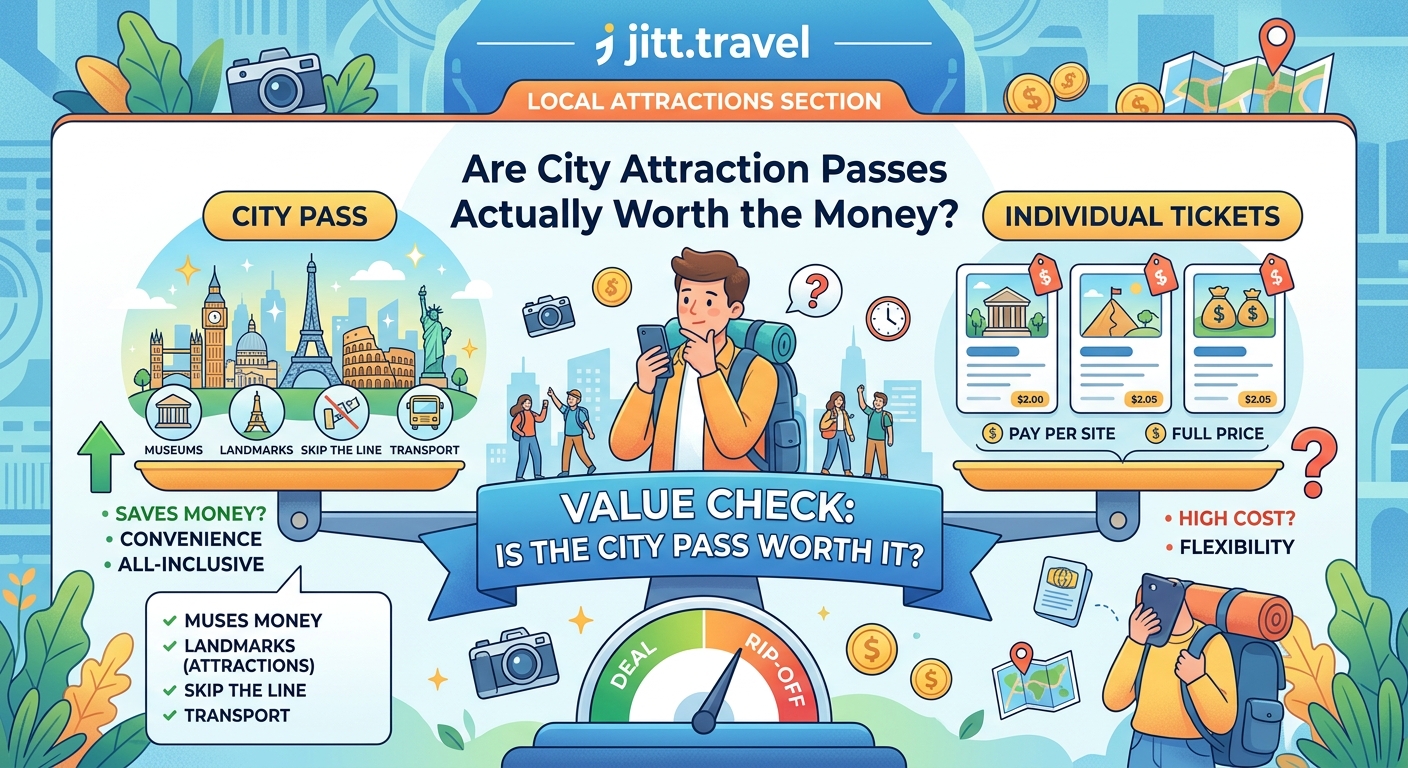
City attraction passes save money only when you visit enough included sites to exceed the pass cost. Most travelers break even at 3 to 4 major attractions within the validity period. Passes work best for first-time visitors tackling top sights in short trips, but fail when you prefer slower travel, niche museums, or already have specific plans that don’t align with included venues.
How City Passes Actually Work
Most city passes fall into two categories: all-inclusive and credits-based.
All-inclusive passes give you access to a set list of attractions for a fixed number of days. You pay $100 for three days, and you can visit as many included sites as physically possible. The clock starts ticking the moment you scan the pass at your first attraction.
Credits-based passes let you choose a certain number of attractions from a larger menu. A five-choice pass might cost $85, and you pick which five venues to visit over a 30-day window.
The pricing feels designed to confuse you. A three-day pass costs $129, a five-day costs $159, and a seven-day costs $179. The incremental cost drops, nudging you toward longer passes you might not need.
Here’s what most passes include:
- Major museums and galleries
- Observation decks and towers
- Hop-on-hop-off bus tours
- River or harbor cruises
- Popular historical sites
- Zoo or aquarium access
What they often exclude:
- Special exhibitions requiring separate tickets
- Guided tours with live experts
- Seasonal attractions or temporary installations
- Restaurants, shows, or nightlife venues
- Transportation beyond tourist buses
Some passes bundle public transit. Others charge extra for it. Always check what’s actually included before you buy.
Running the Numbers on Your Trip

Let’s use a real example. You’re planning four days in a major city. The attractions you want to see are:
- Art museum: $25
- Science museum: $28
- Observation tower: $35
- Historic house tour: $18
- Aquarium: $32
- River cruise: $30
Total if purchased separately: $168
A three-day all-inclusive pass covering these venues: $129
Looks like a winner, right? You save $39.
But wait. Can you actually visit six attractions in three days? That’s two per day, minimum. Each visit takes 2 to 4 hours when you factor in travel time, lines, and actually seeing things. You’re looking at 8 to 10 hour days of back-to-back sightseeing.
If you skip the aquarium because you’re tired, your savings drop to $9. Skip one more, and you’ve lost money.
The break-even calculation matters more than the theoretical maximum savings.
| Attractions Visited | Cost Without Pass | With $129 Pass | Net Savings |
|---|---|---|---|
| 2 major sites | $60 | $129 | -$69 |
| 3 major sites | $90 | $129 | -$39 |
| 4 major sites | $120 | $129 | -$9 |
| 5 major sites | $150 | $129 | +$21 |
| 6 major sites | $180 | $129 | +$51 |
You need to hit at least five attractions to see meaningful savings. That’s aggressive touring.
When Passes Make Perfect Sense
City passes shine in specific situations.
First-time visitors with limited time: If you have three days in a city you’ve never seen, you probably want to hit all the famous spots. A pass removes decision fatigue and gets you into the top ten sights without fumbling with tickets at each location.
Families with kids: When you’re buying four tickets to everything, costs multiply fast. A family pass that covers two adults and two children can cut your total spend in half, even if you only visit three or four places.
Bad weather backup plans: Passes with longer validity periods give you flexibility. Rain ruins your walking tour? Pivot to an indoor museum without worrying about wasted tickets.
Cities with expensive flagship attractions: Some observation decks or specialty museums charge $40+ for entry. In these cities, visiting just three sites can justify a pass.
Travelers who love structured itineraries: If you thrive on packed schedules and checking off lists, passes reward that energy. You’ll hit the break-even point easily.
“I bought a five-day pass for London and visited 12 attractions. The pass paid for itself by day three, and everything after that felt free. But I was exhausted. My next trip, I skipped the pass and saw four museums slowly. I enjoyed that more, even though it cost more.” — Sarah, frequent European traveler
When Passes Waste Your Money
Passes fail in equally clear situations.
Slow travelers: If you prefer spending half a day in one museum, then lingering in cafes and neighborhoods, you won’t visit enough sites to break even.
Return visitors: Already seen the big attractions? Passes rarely cover the quirky small museums or specialized galleries that appeal to repeat visitors.
Off-season trips: Some included attractions close or reduce hours in winter. Your seven-day pass becomes a five-day pass when two venues are shuttered.
Niche interests: Love modern art but hate natural history? A pass that bundles both forces you to pay for access you won’t use.
Short validity windows: Three consecutive days means three consecutive days. If you want a rest day in the middle of your trip, you lose a day of access.
Hidden exclusions: That famous museum might be included, but the blockbuster Van Gogh exhibition requires a separate $25 ticket. You still pay extra for what you actually wanted to see.
Smart Ways to Decide Before You Buy
Follow this process to make an honest assessment:
- List every attraction you genuinely want to visit, not what the pass makes available.
- Look up individual ticket prices for each one.
- Add them up.
- Compare that total to the pass price.
- Calculate how many days you’d need to visit everything on your list.
- Ask yourself if that pace sounds enjoyable or miserable.
Be ruthlessly honest in step one. Don’t add attractions just because they’re included. Add only places you’d pay to see independently.
Check if any of your target attractions offer free days or discounted evening hours. Many major museums have free entry one evening per week. If three of your six targets are free on Thursday night, the pass math changes completely.
Look for combination tickets sold directly by attractions. Some museums partner to offer two-site passes at 30% off. These smaller bundles often beat city-wide passes for travelers with focused interests.
Consider your trip timing. Visiting during a holiday weekend when attractions have reduced hours? A pass wastes money if venues close early or skip days entirely.
Alternative Strategies That Often Work Better
Sometimes the best move is skipping the pass entirely.
Pay as you go: Sounds old-fashioned, but buying individual tickets lets you move at your own pace. You’re not racing a clock or forcing yourself into places that don’t interest you.
Museum memberships: Planning to visit one world-class museum multiple times? An annual membership often costs less than a three-day city pass and includes perks like member previews and gift shop discounts.
Free attractions: Most cities offer incredible free options. Parks, markets, historic neighborhoods, street art, public viewpoints, and free museum days fill itineraries without costing anything.
Discount cards for residents: Some cities offer resident discount cards if you’re staying for a week or more. These aren’t tourist passes, but longer-term visitors can sometimes access them.
Booking direct with combo deals: Attractions often bundle their own tickets. The aquarium plus the science center for $45 instead of $60 when purchased separately, no city pass required.
Reading the Fine Print That Changes Everything
Pass terms hide crucial details.
Validity periods start when you activate the pass, not when you buy it. Purchase three months ahead for flexibility, but know the countdown begins at your first attraction visit.
Some passes require reservations at popular sites, even though you already paid for access. The pass doesn’t guarantee entry, just the right to book a time slot that might be full.
Refund policies range from generous to nonexistent. Bought a pass and got sick? Some companies offer partial refunds or extensions. Others keep your money regardless.
Child age cutoffs vary. One pass defines children as under 12, another as under 16. If you’re traveling with a tall 11-year-old, you might get questioned at entry points.
Mobile vs. physical passes matter for some travelers. Physical passes require pickup at a specific location, eating into your first day. Mobile passes activate instantly but need charged phones and stable internet.
Calculating Your Personal Break-Even Point
Your break-even point is the number of attractions you must visit to save money.
Take the pass price and divide it by the average cost of included attractions you actually want to see. That’s your magic number.
Example: $129 pass, and your target attractions average $30 each. You need to visit 4.3 attractions, so realistically five, to break even.
If those five attractions require three full days of touring, ask if you want to spend three days doing nothing but museums and landmarks. Maybe you do. Maybe you’d rather see three attractions and spend a day wandering neighborhoods.
The pass companies want you to focus on maximum theoretical savings. You should focus on realistic actual savings based on how you like to travel.
Making Peace with Your Decision
Here’s the truth: sometimes you’ll guess wrong, and that’s fine.
You might buy a pass, get food poisoning, and only visit two places. You wasted money, but you also didn’t waste time standing in ticket lines while feeling awful.
You might skip the pass, then discover you loved the city so much you visited eight attractions and spent $240. You could have saved $100 with a pass, but you also moved at your own pace without pressure.
The financial optimization matters less than whether you enjoyed your trip.
Passes work best when they remove friction and decision-making, letting you say yes to opportunities without calculating costs each time. They work worst when they create anxiety about maximizing value and rushing through experiences.
Your Money, Your Pace, Your Trip
City attraction passes aren’t scams, but they’re not automatic bargains either. They’re tools that work brilliantly for some travelers and poorly for others.
Run the real numbers for your specific trip. Be honest about your energy levels and interests. Don’t let marketing pressure you into a pace that turns sightseeing into a forced march.
If the math works and the itinerary excites you, buy the pass and enjoy skipping ticket lines. If the numbers are close or you value flexibility, skip it and pay as you go. Either way, you’ll spend your time and money in ways that match how you actually want to travel.