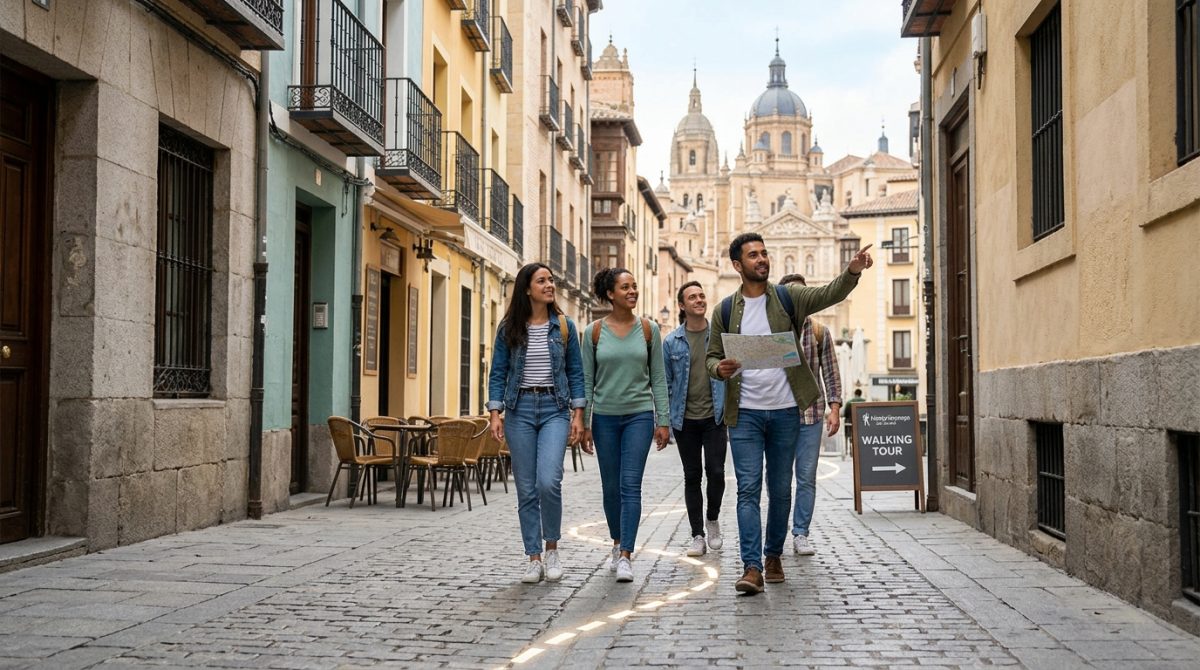
Walking through a new city costs nothing but time, and that’s exactly what makes it the perfect way to travel. You don’t need a tour guide charging $30 per person when you have a solid route, a charged phone, and comfortable shoes.
Free walking tours world cities provide let you see major attractions, hidden neighborhoods, and local culture without paying for guides. Download offline maps, start early to beat crowds, bring water and snacks, and follow proven routes that cover 5-8 kilometers in 2-4 hours. Most cities offer free audio guides through apps or tourism websites that enhance your experience at zero cost.
Why Self-Guided Walking Tours Beat Paid Options
Paid walking tours follow rigid schedules. You’re stuck with strangers, waiting for latecomers, and listening to rehearsed scripts. Self-guided routes give you control.
Start when you want. Linger at places you love. Skip what doesn’t interest you. Take a coffee break without holding up a group.
The money you save adds up fast. A family of four spending $120 on a guided tour could use that for a nice dinner instead. Solo travelers banking $25 per city across a month-long trip save $750.
Free doesn’t mean low quality. Cities invest heavily in tourism infrastructure. You’ll find detailed walking route maps at visitor centers, free audio tours through official apps, and well-marked historical plaques at every major site.
How to Plan Your Free City Walking Route
Planning takes 30 minutes but saves hours of wandering aimlessly.
- Research top attractions and mark them on a map app
- Group nearby sites into logical clusters
- Check opening hours and free entry days
- Download offline maps before you leave your accommodation
- Screenshot or print your route as backup
- Identify rest stops like parks, cafes, or public squares
- Note public restroom locations along the way
Most walking routes should cover 5 to 8 kilometers. That’s manageable for average fitness levels and takes 2 to 4 hours at a relaxed pace with photo stops.
Start early. Launching at 8 AM means you’ll see major landmarks before tour buses arrive. Morning light is better for photos too.
The best walking tours happen when you’re not following anyone else’s timeline. You notice street art, smell bakeries, hear street musicians, and stumble into neighborhood festivals that no paid tour would ever include.
Essential Items for All Day Walking
Pack light but smart. Here’s what actually matters:
- Comfortable broken-in shoes (not new ones)
- Refillable water bottle
- Portable phone charger or power bank
- Small snacks like nuts or energy bars
- Sunscreen and hat for sunny cities
- Light rain jacket that folds small
- Small first aid kit with blister bandages
- Cash for street food or emergency transport
Your phone does heavy lifting. It’s your map, camera, translator, and research tool. Keep it charged.
Download these free apps before you go:
- Maps.me for offline navigation
- Google Translate for restaurant menus and signs
- City-specific tourism apps with free audio guides
- AllTrails or similar for scenic walking paths
Top Free Walking Routes Around the World
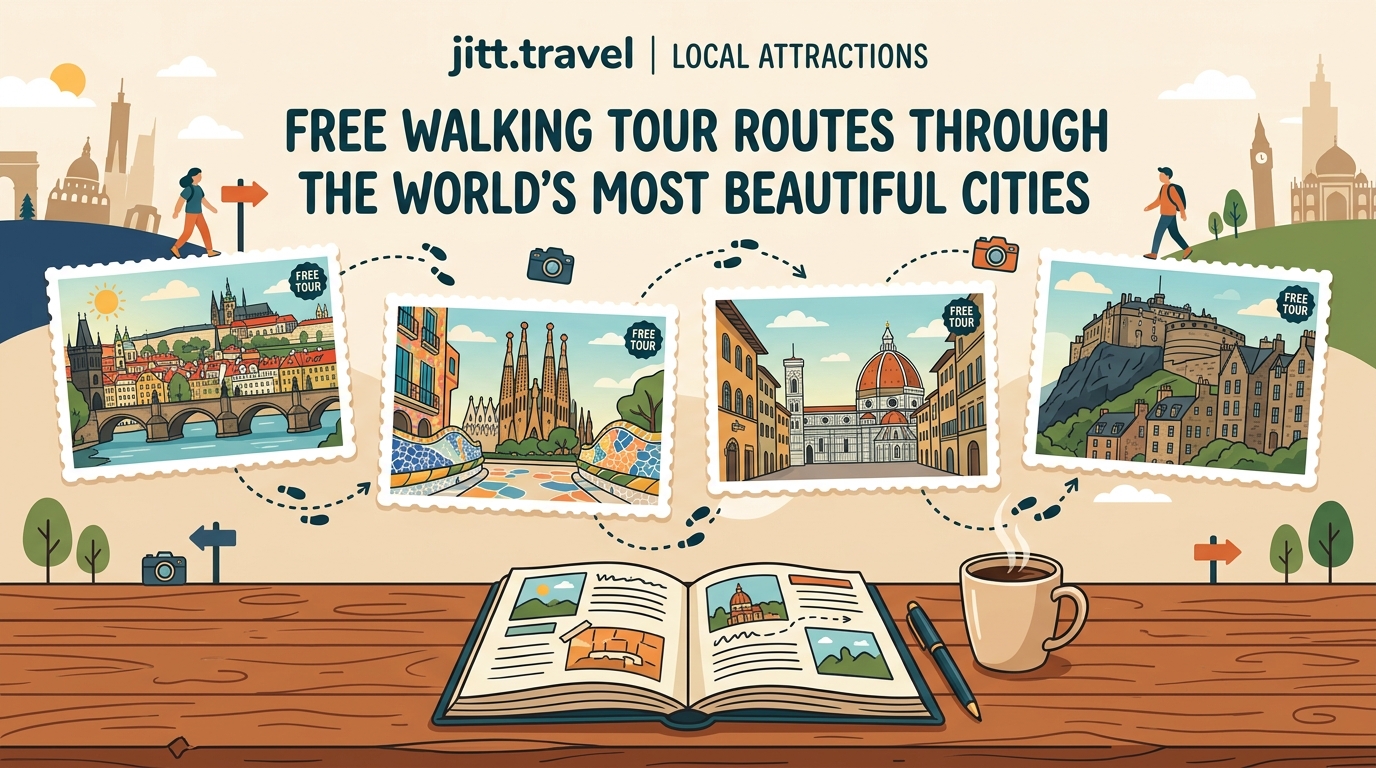
Different cities shine in different ways. Here are proven routes that cost nothing.
Paris Classic Loop
Start at Notre-Dame, walk along the Seine to the Louvre, cut through Tuileries Garden, reach Place de la Concorde, stroll up Champs-Élysées to Arc de Triomphe. Return via Pont Alexandre III and Latin Quarter.
Distance: 7 kilometers. Time: 3 hours without museum stops.
Rome Ancient Center
Begin at Colosseum, walk through Roman Forum, climb Capitoline Hill, see Piazza Venezia, throw coins at Trevi Fountain, visit Pantheon, end at Piazza Navona.
Distance: 5 kilometers. Time: 2.5 hours.
London Royal Route
Tower of London to Tower Bridge, walk Thames Path to Shakespeare’s Globe, cross Millennium Bridge to St. Paul’s Cathedral, continue to Trafalgar Square, see Buckingham Palace, finish at Westminster Abbey and Big Ben.
Distance: 8 kilometers. Time: 4 hours.
Barcelona Gaudí Trail
Start at Sagrada Familia, metro to Park Güell, walk down to Casa Batlló and Casa Milà on Passeig de Gràcia, end at Gothic Quarter and Las Ramblas.
Distance: 6 kilometers plus metro. Time: 3 hours.
Tokyo Traditional Meets Modern
Senso-ji Temple in Asakusa, walk to Ueno Park, train to Shibuya Crossing, walk to Meiji Shrine through Harajuku, end at Shinjuku.
Distance: 5 kilometers plus trains. Time: 4 hours.
Common Walking Tour Mistakes and How to Avoid Them
| Mistake | Why It Hurts | Better Approach |
|---|---|---|
| Wearing new shoes | Blisters ruin your trip | Break in shoes two weeks before travel |
| No offline maps | Dead phone means you’re lost | Download maps the night before |
| Starting at noon | Crowds and heat make everything worse | Begin at 8 AM or start at 4 PM for evening walks |
| Skipping water | Dehydration kills your energy | Carry a bottle and refill at fountains |
| No backup plan | Rain or closures waste your day | Have indoor alternatives ready |
| Overpacking route | Rushing through 15 sites teaches you nothing | Pick 6-8 meaningful stops |
The biggest mistake is trying to see everything. You’re not checking boxes. You’re experiencing a place.
Spend 20 minutes sitting in a plaza watching locals. That memory lasts longer than sprinting past 30 landmarks.
Free Audio Guides and Apps That Actually Help
Many cities offer official free audio tours that rival paid options.
Rick Steves Audio Europe provides free walking tours for dozens of European cities. Download episodes for Paris, Rome, London, and more. His conversational style beats robotic tourist information.
GPSmyCity turns your phone into a walking tour guide. Free versions cover major routes. The app works offline once downloaded.
Detour offers immersive audio walks created by locals. Some cities have free options. You’ll hear personal stories instead of Wikipedia facts.
Museum apps often include free audio tours. The Louvre, British Museum, and Metropolitan Museum of Art all have free official apps with detailed commentary.
Local tourism boards publish free PDF walking tour guides. Check the official city tourism website before you arrive. Download and save these guides offline.
Finding Hidden Neighborhoods Beyond Tourist Centers
The best parts of cities hide in residential areas.
Ask your accommodation host for their favorite neighborhood. Tell them you want to see where locals actually live.
Food markets reveal authentic culture. La Boqueria in Barcelona, Borough Market in London, or Tsukiji Outer Market in Tokyo cost nothing to walk through. You’ll see ingredients, cooking styles, and daily life.
University districts have cheap food, street art, and young energy. The Latin Quarter in Paris, Trastevere in Rome, or Shimokitazawa in Tokyo feel completely different from tourist zones.
Follow locals during morning commutes. See where they grab coffee, buy newspapers, or eat breakfast. These spots rarely appear in guidebooks.
Street art tours cost nothing. Cities like Berlin, Melbourne, and Bogotá have incredible murals in non-touristy neighborhoods. Search “street art map” plus your city name for free guides.
Weather and Timing Strategies
Season changes everything about walking tours.
Summer means early starts or evening walks. Midday heat in cities like Athens, Seville, or Dubai makes walking miserable. Start at 7 AM or wait until 5 PM.
Winter shortens daylight. Plan routes that finish before dark. Northern cities like Stockholm or Edinburgh have tiny winter days. Prioritize outdoor sights first, save museums for afternoon.
Rainy cities need flexible plans. London, Amsterdam, and Seattle require backup indoor routes. Museum hopping becomes your walking tour when weather turns bad.
Shoulder seasons (April-May and September-October) offer perfect walking weather for most European cities. Fewer crowds, comfortable temperatures, and longer days than winter.
Check local event calendars. Festivals, marathons, or protests can block your planned route. City tourism websites list major events months ahead.
Staying Safe While Walking Alone or in Groups
Cities are generally safe, but awareness helps.
Keep valuables hidden. Don’t wave your phone around in sketchy areas. Use a cross-body bag that stays in front of you.
Stay in well-lit, populated areas after dark. Your evening walking route should stick to busy streets with shops and restaurants.
Trust your gut. If a street feels wrong, turn around. No landmark is worth feeling unsafe.
Walk with purpose. Even if you’re lost, look like you know where you’re going. Checking your phone constantly screams “tourist target.”
Share your route with someone. Text a friend or family member your planned path and expected return time.
Groups of 2-4 people are ideal. Solo walking is fine during daylight in most cities. Large groups move slowly and attract attention.
Food and Rest Stop Planning
Walking tours burn energy. Plan eating and resting strategically.
Pack substantial snacks. Granola bars, trail mix, or fruit keep you going between meals. Airport security allows solid foods.
Budget one sit-down meal during a 4-hour walk. Find a local spot away from major attractions where prices drop 30-50%.
Public parks offer free rest stops. Retiro Park in Madrid, Tiergarten in Berlin, or Central Park in New York provide benches, shade, and people-watching.
Churches often let you sit quietly for free. It’s a cultural experience and a rest break combined.
Avoid tourist trap restaurants near landmarks. Walk two blocks in any direction and prices improve dramatically.
Water fountains exist in most European cities. Refill your bottle instead of buying plastic bottles every hour.
Making the Most of Free Entry Times
Museums and attractions offer free hours that most tourists miss.
Many museums have free evenings once per week. The Louvre is free on first Saturdays. London’s major museums are always free. Research before you go.
Churches rarely charge entry. Notre-Dame, Sagrada Familia exterior, and St. Peter’s Basilica offer incredible architecture at no cost.
Parks and gardens cost nothing. Versailles charges for the palace but the gardens are free most days.
Viewpoints beat observation deck tickets. Sacré-Cœur in Paris, Gellért Hill in Budapest, or Arthur’s Seat in Edinburgh provide free panoramic views.
Government buildings often have free public areas. The European Parliament, Reichstag dome in Berlin, or U.S. Capitol offer free tours with advance booking.
Photography Tips for Walking Tours
Your photos document the experience. Make them count.
Golden hour (first hour after sunrise, last hour before sunset) creates beautiful light. Schedule your route to hit photogenic spots during these times.
Get low or get high. Shooting from ground level or elevated positions creates more interesting compositions than eye-level snapshots.
Include people for scale and life. Empty landmark photos feel sterile. A street musician, cafe diners, or kids playing add humanity.
Shoot details, not just wide shots. A weathered door handle, colorful tile pattern, or vendor’s hands tell stories that landmark photos miss.
Turn around. The best shot is often behind you while you’re focused on the obvious subject ahead.
Ask permission before photographing locals. A smile and gesture go far. Most people appreciate respectful requests.
Your Next Walk Starts Now
Free walking tours world cities offer work because cities want you to see them. Tourism infrastructure exists to help you navigate, learn, and enjoy without spending money on guides.
The routes are there. The maps are free. The stories are waiting on every corner.
Pick a city, download a map, and start walking tomorrow morning. You’ll see more, learn more, and remember more than any bus tour could ever show you.