You’ve saved for months, planned your itinerary, and finally booked that dream vacation. But when you arrive at that famous landmark everyone raves about, you’re met with shoulder-to-shoulder crowds, inflated prices, and a nagging feeling that you’re missing the real destination. Sound familiar? Many of the world’s most hyped attractions deliver disappointment instead of the magical experience you imagined. The good news is that better alternatives exist just around the corner, often at a fraction of the cost and with none of the tourist chaos.
Many famous attractions disappoint with overcrowding, high prices, and manufactured experiences. Smart travelers skip these overrated spots for authentic alternatives that cost less and provide genuine cultural immersion. By choosing lesser-known neighborhoods, local markets, and regional attractions, you’ll save money while experiencing destinations the way locals actually live. This guide reveals which popular tourist traps deserve your skip and what to visit instead.
Why Popular Attractions Often Disappoint
Tourist traps thrive on reputation, not reality. They became famous decades ago, and that fame perpetuates itself through guidebooks, social media, and word of mouth. But popularity doesn’t equal quality.
These spots know they have a captive audience. They can charge premium prices, cut corners on service, and still pack in visitors every single day. You’ll pay $30 for a mediocre meal because the restaurant sits next to a famous fountain. You’ll wait two hours to take a photo at a viewpoint that looks identical to a dozen other spots nearby.
The experience becomes about checking a box rather than creating memories. You snap your obligatory photo, fight through the crowds, and leave wondering what all the fuss was about.
Budget travelers feel the sting most acutely. When you’re watching every dollar, dropping $50 on entrance fees and overpriced snacks at a disappointing attraction hurts. That money could fund an entire day of authentic experiences elsewhere.
The Real Cost of Tourist Traps
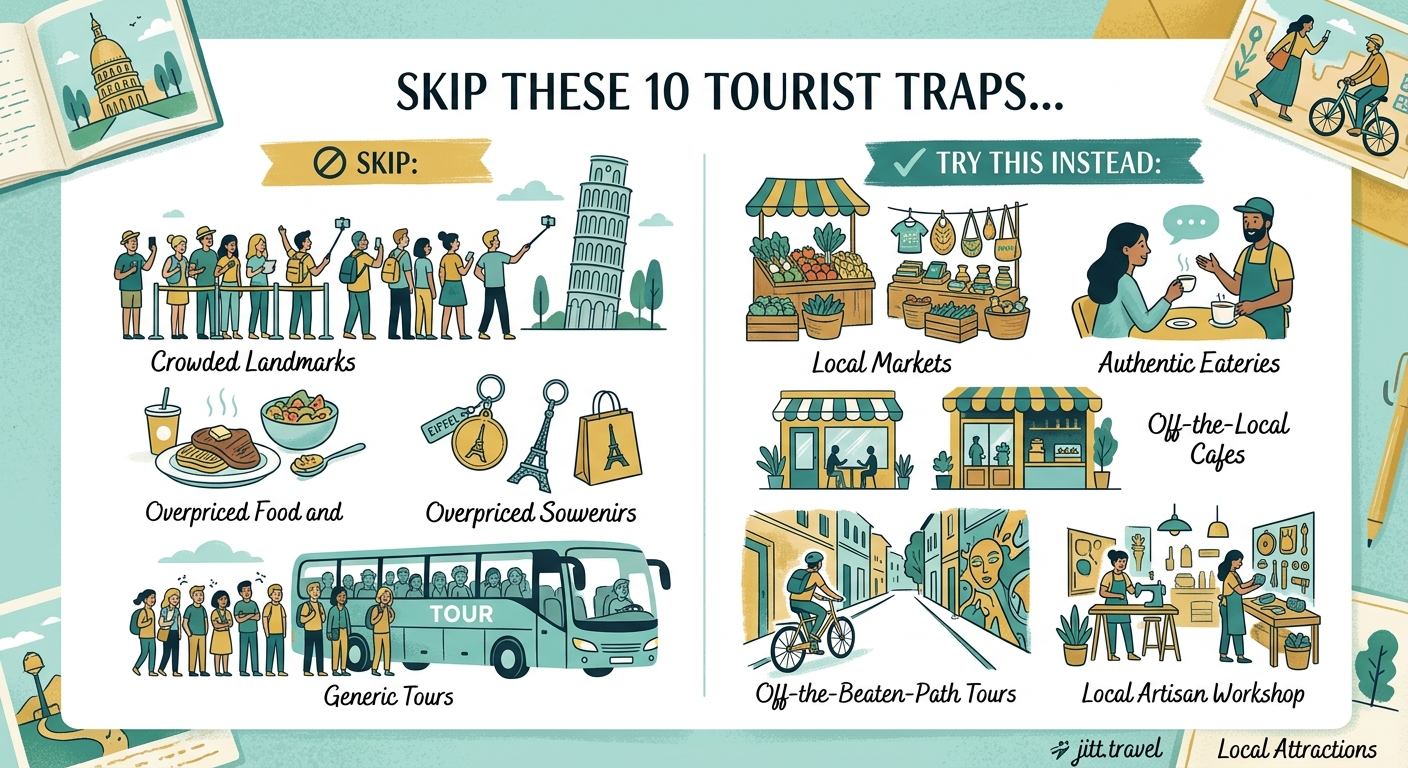
Let’s break down what you actually pay at these overrated destinations:
| Expense Category | Tourist Trap Price | Alternative Price | Savings |
|---|---|---|---|
| Entrance fees | $25-50 per person | Free to $10 | $15-40 |
| Meals nearby | $20-35 per person | $8-15 | $12-20 |
| Souvenirs | $15-30 | $5-10 | $10-20 |
| Photos/experiences | $10-25 | Free | $10-25 |
| Transportation | Premium rates | Standard rates | $5-15 |
For a couple spending just one day at a major tourist trap, you’re looking at $150 to $300. Multiply that across a week-long trip, and you’ve spent your entire accommodation budget on inflated experiences.
The time cost matters too. Waiting in lines, navigating crowds, and dealing with tourist-focused scams eats hours you could spend actually experiencing your destination.
Overrated Spots You Should Skip
Times Square in New York City
This intersection of billboards and chain restaurants offers nothing you can’t see better elsewhere in Manhattan. The crowds make walking difficult. The restaurants serve mediocre food at inflated prices. Street performers aggressively demand tips for photos.
Do this instead: Walk through Central Park’s Ramble, visit the High Line, or spend an afternoon in Greenwich Village. These spots give you actual New York culture without the manufactured chaos.
The Hollywood Walk of Fame
Dirty sidewalks, aggressive costumed characters demanding payment, and underwhelming stars embedded in concrete. This is what you traveled to Los Angeles for? The stars are just names on the ground, and the surrounding area feels more depressing than glamorous.
Do this instead: Hike Runyon Canyon for actual Hollywood sign views, visit the Getty Center for world-class art and architecture, or spend time in Silver Lake and Los Feliz neighborhoods where LA’s creative culture actually thrives.
The Mona Lisa at the Louvre
You’ll stand behind velvet ropes with hundreds of other people, craning to see a surprisingly small painting behind bulletproof glass. Most visitors spend more time photographing it than actually looking at it. The Louvre contains thousands of masterpieces you can actually see up close.
Do this instead: Spend your Louvre time in the less-crowded wings. The French Romantic paintings, Islamic art collection, and Napoleon III apartments offer stunning art without the crush. Or visit the Musée d’Orsay for Impressionist masterpieces in a more manageable setting.
Pisa’s Leaning Tower
The tower leans. That’s it. The surrounding square is packed with tourists doing the same forced perspective photos. The nearby restaurants serve overpriced, mediocre Italian food because they know you’re a captive audience.
Do this instead: Spend your Tuscany time in Lucca, just 30 minutes away. This walled city offers authentic medieval architecture, excellent local restaurants, and bike-friendly streets with a fraction of Pisa’s crowds.
Dubai’s Burj Khalifa
Yes, it’s tall. But you’ll pay premium prices for timed entry tickets, wait in multiple queues, and get views that aren’t significantly better than what you’d see from many other Dubai high-rises. The surrounding Dubai Mall is just another shopping center.
Do this instead: Visit the observation deck at The View at The Palm for better value and equally impressive views. Or skip the tall buildings entirely and spend time at the Al Fahidi Historical District for actual Emirati culture.
London’s Changing of the Guard
Crowds gather hours early for prime viewing spots. The ceremony itself lasts about 45 minutes but feels repetitive. You’re watching from a distance, and unless you arrive extremely early, you’ll mostly see the backs of other tourists’ heads.
Do this instead: Visit the Churchill War Rooms for actual British history, walk along Regent’s Canal through Little Venice, or spend an afternoon in Borough Market sampling local food.
How to Spot Tourist Traps Before You Go
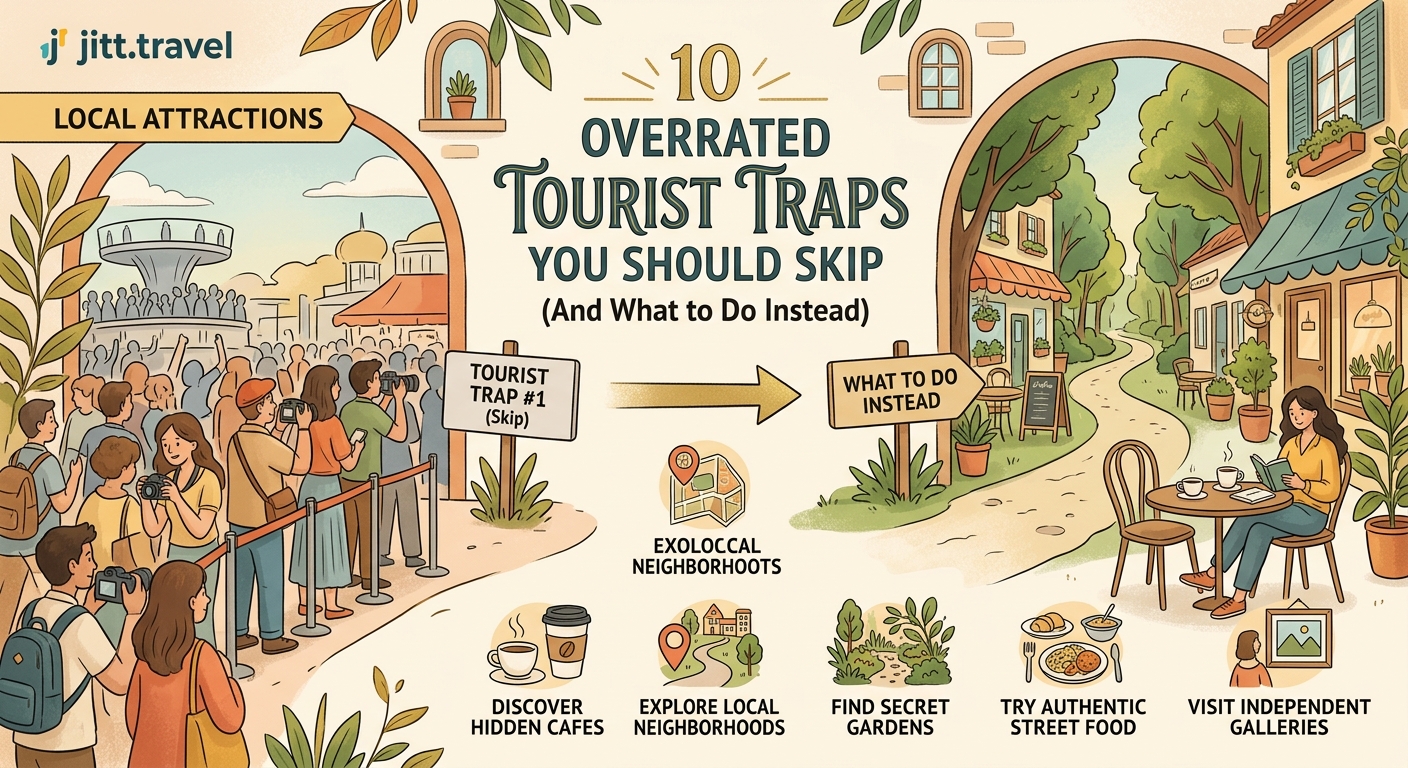
Certain red flags signal that an attraction might disappoint:
-
Aggressive marketing everywhere: If every tour company, hotel, and guidebook pushes the same spot, question whether it’s genuinely good or just pays the best commissions.
-
No locals in sight: When an area is 100% tourists, you’re in manufactured territory. Authentic experiences attract both visitors and residents.
-
Prices jump dramatically: If restaurants and shops within two blocks of an attraction charge double what similar establishments cost elsewhere, you’re paying a tourist tax.
-
Timed entry and advance booking required: Popular doesn’t always mean good. Sometimes it just means effective marketing.
-
Souvenir shops outnumber everything else: When an area’s primary purpose is separating tourists from money, the experience suffers.
“The best travel experiences happen when you wander away from the main tourist corridor. That’s where you find the family-run restaurant that’s been serving the same recipes for three generations, the neighborhood park where locals actually spend time, and the small museum curated by someone who genuinely loves the subject. These places don’t need aggressive marketing because they offer real value.”
Finding Better Alternatives
Here’s how to identify worthwhile alternatives to overrated attractions:
-
Research where locals actually go: Food blogs, local subreddits, and neighborhood-specific Instagram accounts reveal the spots residents frequent. If locals eat there, shop there, or spend leisure time there, it’s probably authentic.
-
Look one neighborhood over: The area immediately adjacent to major tourist zones often offers similar architecture, culture, and atmosphere without the crowds and markup. In Rome, Trastevere beats the Trevi Fountain area. In Paris, the 10th arrondissement offers better value than the 1st.
-
Choose regional attractions over international ones: Every destination has lesser-known sites that locals consider special. These rarely appear in international guidebooks but offer richer experiences.
Smart Planning Strategies
Budget-conscious travelers can avoid tourist traps with these approaches:
-
Book accommodations away from major attractions: Staying in residential neighborhoods costs less and puts you near authentic restaurants and shops. You’ll take a 15-minute metro ride to see the famous stuff, but you’ll save $50 to $100 per night.
-
Eat where you see construction workers and office employees: These folks eat out regularly and know which spots offer good value. Tourist restaurants don’t need to compete on quality or price.
-
Visit famous sites early or late: If you must see a popular attraction, go at opening time or during the last entry slot. Crowds thin dramatically, and you’ll get better photos and more space.
-
Free walking tours reveal hidden gems: Many cities offer tip-based walking tours led by knowledgeable locals. These guides know which famous spots disappoint and which alternatives deliver.
What Makes an Experience Worth Your Time
Not every popular attraction is a trap. Some famous sites genuinely deserve their reputation. Here’s how to tell the difference:
Worth it:
– Offers something you can’t experience elsewhere
– Provides educational value or unique perspective
– Allows actual interaction, not just observation
– Prices reflect real operational costs, not tourist markup
– Locals recommend it alongside visitors
Skip it:
– Exists primarily for photo opportunities
– Offers nothing unique to the location
– Feels manufactured or theme-park-like
– Prices seem disconnected from the actual experience
– Only tourists recommend it
Making the Most of Your Travel Budget
Every dollar you don’t spend on overpriced tourist traps extends your trip or improves your experiences elsewhere. That $40 you save by skipping the Leaning Tower funds a fantastic dinner in Lucca. The $100 you don’t spend on Burj Khalifa tickets pays for a desert safari or a day trip to Abu Dhabi.
Budget travel isn’t about deprivation. It’s about spending money on experiences that deliver value. A $15 cooking class with a local chef beats a $50 meal at a tourist-trap restaurant. A $5 metro pass that lets you explore residential neighborhoods offers more authentic culture than a $100 hop-on-hop-off bus tour.
Track where your money goes during the first few days of your trip. You’ll quickly notice patterns. Tourist-zone purchases feel regrettable. Experiences in local areas feel like discoveries.
Your Travel Experience Deserves Better
You work hard for your vacation time and money. Spending either on overcrowded, overpriced attractions that deliver manufactured experiences doesn’t make sense. The world offers too many genuine alternatives.
Next time you plan a trip, research beyond the top 10 lists. Ask locals what they love about their city. Wander into neighborhoods that don’t appear in guidebooks. Eat at restaurants where you can’t read the menu. These moments create the stories you’ll actually remember and the experiences worth your investment.
Skip the tourist traps. Your budget, your schedule, and your travel memories will all improve dramatically.