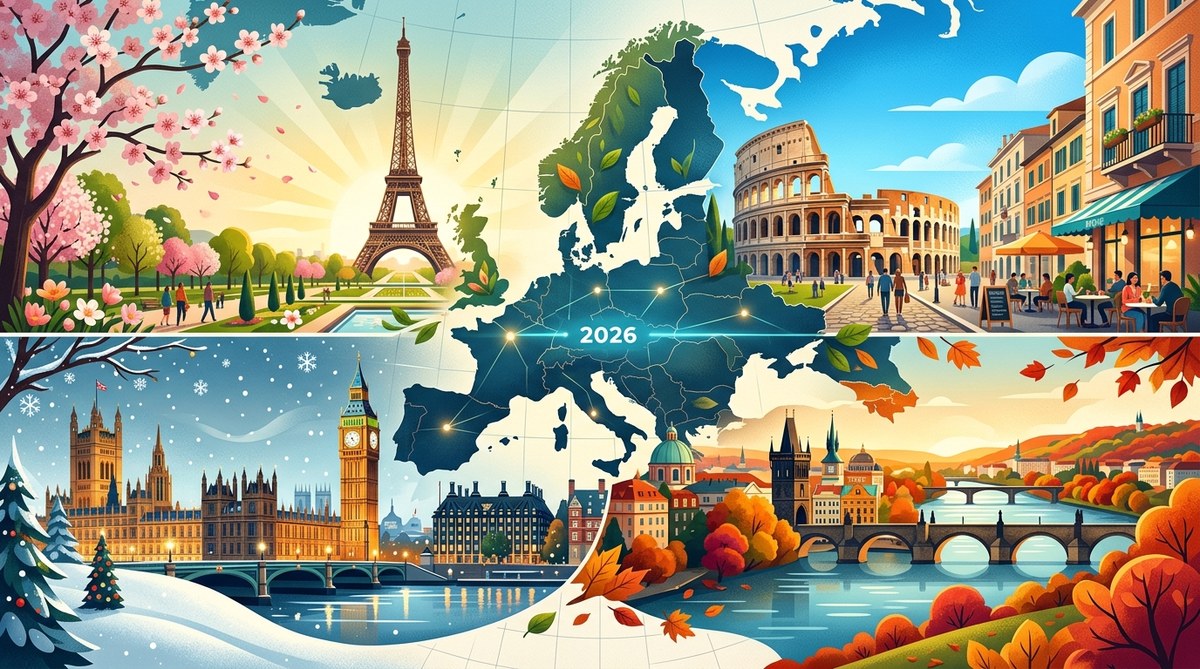
Planning a multi-city European trip takes more than picking a few capitals and booking flights. The difference between a magical trip and a stressful one often comes down to timing. Visit Paris in June and you will battle shoulder-to-shoulder crowds at the Louvre. Go in October and you might have the Eiffel Tower views all to yourself. This guide breaks down the best time to visit Europe in 2026, capital by capital, so you can dodge the crowds, pack for the right weather, and make the most of your vacation days. Consider this your month-by-month cheat sheet for the year ahead.
Why Timing Matters More Than You Think
Europe is small on the map but huge on variety. The difference between a dreamy city break and a packed, overpriced tourist trap often comes down to a few weeks. Weather swings, school holidays, local festivals, and even major sporting events can change the entire feel of a city. If you have ever stood in a line for two hours just to see the Mona Lisa, you know exactly what we mean.
Timing affects your budget too. Flights and hotels spike during summer. Shoulder seasons offer better value. And if you time it right, you might get a whole capital almost to yourself.
Why 2026 Is a Smart Year for Europe Travel
Europe in 2026 is special. Several major capitals are hosting milestone events, and the travel industry has shifted. Many cities are investing in sustainable tourism, which means better visitor management and improved experiences. You can also take advantage of new direct flight routes that make multi-city itineraries easier than ever. For a deep dive into the broader picture, check out this guide to planning a 2026 European adventure.
How to Use This Guide
This guide is built around the major European capitals. For each city, you will find the best month to visit, why that month works, and what to watch out for. Use the table of contents below to jump to the cities that interest you most. If you are still deciding when to go, start with the month by month overview first.
The Short Answer
There is no single best time to visit Europe 2026. It all depends on what you want from your trip. If you want warm weather and lively streets, June through August delivers. If you prefer fewer people and mild temperatures, aim for April, May, September, or October. For Christmas markets and snowy scenery, December is magical. Winter months like January and February offer the lowest prices and the most authentic local experiences, especially in cities like Prague, Vienna, and Budapest.
Month by Month Guide to Major European Capitals
January: Cozy Cities and Quieter Museums
January is a hidden gem for travelers who do not mind cold air and short days. Crowds drop after the holidays, and flights to Europe often become noticeably cheaper. The holiday decorations are gone, but the charm remains. This is the best time to visit Europe 2026 if you want to experience authentic local life without tourist crowds.
Paris, France feels especially intimate in January. You can walk the Louvre with fewer elbows in your ribs, and the Seine glows under soft winter light. Bundle up and you will be rewarded with shorter lines at the Eiffel Tower and a more relaxed pace at cafés. For the best time to visit Europe 2026 on a budget, January in Paris is hard to beat.
Vienna, Austria also shines in January. The New Year opens with the famous ball season, and the city feels refined and quiet. Coffee houses invite you to linger. The air is crisp, and prices for flights and hotels often drop after the holidays.
Prague, Czech Republic turns frosty and magical. Fewer travelers mean you can enjoy Charles Bridge without the elbow-to-elbow chaos of summer. Pack a warm coat and you will be rewarded with an intimate city break.
February: Carnival, Romance, and Shoulder Season Beginnings
February keeps the crowds thin across most capitals. The weather stays cold, but the rewards are real. Venice hosts Carnevale, with masked balls and street performances that transform the canals into a stage. Paris offers a moody, romantic atmosphere that pairs perfectly with its cozy cafés and world class museums. February is also a great month for winter sports near cities like Innsbruck, though the capitals themselves remain calm and affordable.
March: First Blooms and Early Spring Festivals
March is a bridge month. Southern cities like Rome and Athens start to feel genuinely springlike, while northern capitals like Copenhagen and Stockholm still hold onto winter. This is an ideal time for a multi-city trip that moves south to north. Shoulder season pricing begins in some places, but you will still find reasonable hotel rates. Early spring festivals like St. Patrick’s Day in Dublin and the Valencia Fallas in Spain bring local energy without the full summer crowds.
April: Cherry Blossoms, Easter Travel, and Shoulder Season Sweet Spots
April is one of the most magical months to visit Europe. The weather is mild, gardens are blooming, and Easter breaks mean a mix of local and international travelers. Amsterdam’s tulip season peaks in mid April, while Paris and London start to feel like spring. Prices are moderate. Crowds are manageable if you avoid the Easter holiday week. Southern capitals like Rome and Athens already feel warm, while Nordic cities are still crisp.
May: The Sweet Spot for Most Capitals
May is the sweet spot. Days are long, temperatures are pleasant, and the summer crowds have not arrived. It is the best time to visit Europe 2026 for most travelers who want a balance of good weather and fewer people. Parks are green, sidewalk cafes are open, and the vibe feels optimistic. You can wander Rome’s piazzas, picnic near the Seine, or hike the hills of Lisbon without the heavy summer rush.
June: Long Days and Festival Energy
June brings summer energy to Europe. The days are long, the weather is warm, and outdoor dining is a given. Northern capitals like Copenhagen and Stockholm come alive with Midsummer celebrations. Southern cities like Rome and Athens start heating up, but the sea breeze helps. This is a fantastic month for extended daylight, open air concerts, and evening strolls through historic plazas.
July: High Season Buzz
July is peak travel season in Europe. Cities are crowded, but the energy is electric. Paris, Rome, and Barcelona are packed with tourists. Prices for flights and hotels peak. If you love festivals, this is your month. You will find outdoor cinema, music festivals, and long sunlit evenings. For a calmer trip, look to Northern Europe. Scandinavia offers cooler weather and fewer crowds than the south.
August: The Great European Getaway
Many Europeans take their own holidays in August. This means more crowds at beaches and resorts. But it also means local shops may close for a few weeks in southern Europe. Cities like Paris and London remain lively, while coastal towns fill up. For budget travelers, consider Eastern European capitals like Prague, Budapest, and Warsaw. They offer big sights without the summer crush of Western Europe.
September: The Perfect Shoulder Season
September is the sweet spot. Summer crowds have thinned, the weather stays warm, and the pace feels more relaxed. It is an ideal time for city breaks. You get the best of both worlds: pleasant temperatures and shorter lines at major museums and landmarks. Pack layers for cool evenings.
October: Harvest Time and Golden Light
October brings crisp air and golden light. Harvest festivals fill the countryside. This is a fantastic month for food and wine lovers, as many regions celebrate the grape harvest. The weather remains pleasant in Southern Europe, while the north gets chillier. Expect more rain in places like London and Amsterdam.
November: Shoulder-Season Bargains
November is one of the most underrated months for Europe travel. Crowds thin out, and prices drop. Many museums and attractions shift to winter hours, but the holiday spirit starts to creep in by late month. You can find great deals on flights and hotels, especially in larger cities.
December: Christmas Markets and New Year’s Eve
December transforms Europe into a winter wonderland. Christmas markets open in Germany, Austria, and Switzerland. Cities like Prague, Budapest, and Vienna glow with festive lights. Book well in advance if you want to join the holiday crowds. Prices rise during the Christmas and New Year period.
January: A Quiet Start for Urban Explorers
January is one of the coldest months, but also one of the cheapest for travel. Cities like Paris, London, and Berlin offer lower flight and hotel prices after the holiday rush. You will find fewer crowds at museums and landmarks. It is the perfect time for cozy cafes, winter markets, and experiencing the real local vibe. If you can handle the cold, you will be rewarded with empty plazas and shorter lines. Pack warm layers and embrace the indoor life.
February: Winter Charm and Early Spring Hints
February keeps the winter chill, but the days start to lengthen. In many European cities, the quiet season continues. You can often find better flight and hotel deals. Venice hosts its famous Carnival, and the French Alps are still great for skiing. In southern cities like Athens and Seville, you may catch sunny afternoons with fewer tourists. It is a smart month for budget travelers who want to see Europe without the shoulder-to-shoulder crowds.
March: Shoulder Season Begins in the South
March brings the first taste of spring. Southern Europe starts to warm up nicely. Portugal, Spain, and southern Italy see pleasant days in the 60s Fahrenheit. Northern cities like Amsterdam and Berlin stay cool, often in the 40s and 50s. Crowds remain thin, and prices are lower than summer. This is a great time to visit popular museums before the big rush. Pack layers and a light rain jacket.
April: Spring Blooms and Easter Travel
April is when Europe truly wakes up. Expect blooming flowers, longer days, and mild temperatures across much of the continent. The Netherlands explodes with tulips. Paris and Rome get busy around Easter week, so book ahead. April feels like the sweet spot for many travelers. You get spring weather without the summer crowds. It is one of the best months to visit Europe for first timers.
May: The Sweet Spot
May is often considered the best time to visit Europe 2026. The weather is warm, the days are long, and most attractions are fully open. Southern Europe starts to feel like summer, while northern capitals enjoy crisp, sunny days. It is also the final month before the big summer rush, so prices remain manageable. If you can only pick one month, make it May.
June: The Start of Summer Energy
June brings summer energy to Europe. Long days, rooftop bars, and open air festivals appear everywhere. The south heats up, but the Mediterranean is still pleasant. For the best balance, head to coastal cities early in the month. Paris, Rome, and Barcelona feel alive. Expect bigger crowds by late June as school holidays start.
July: Peak Season Hustle
July is the heart of peak season. Cities are packed. Prices are at their highest. Southern Europe can be brutally hot, especially in Rome, Madrid, and Athens. But you can still enjoy the season with the right plan. Start your day early, take a long lunch break in the shade, and explore again in the late afternoon. Northern capitals like Copenhagen and Stockholm offer comfortable temperatures and long daylight hours, making them a great choice for a July escape.
August: The Great European Getaway
August is when Europe goes on holiday. Many locals leave the big cities for the coast. You will find smaller crowds in some city centers, but also closed shops and restaurants. Southern Europe can be extremely hot, so head north for more comfortable sightseeing. It is also the prime month for festivals, with everything from Edinburgh to the Festa del Redentore in Venice.
September: The Best All-Around Month
September is a sweet spot. The summer crowds have thinned, the weather stays warm, and the kids are back in school. You get the best of both worlds: open museums and attractions without the peak season chaos. This is the best time to visit Europe 2026 if you want long days without the summer heat.
October: Fall Foliage and Harvest Season
October brings crisp air and golden light. It is harvest season across wine regions. Head to Bordeaux, Tuscany, or the Douro Valley for grape picking and wine festivals. Cities like Prague and Budapest offer cozy vibes as temperatures drop. The crowds thin out significantly, making it a great month for museum hopping and romantic walks.
November: Shoulder Season Savings
November is the quietest month for tourism in most of Europe. You will find lower prices on flights and hotels. The weather can be gray and rainy, especially in northern Europe, but that only adds to the cozy atmosphere in cafés and museums. Southern cities like Seville and Athens still enjoy mild, pleasant days. This is the perfect month for culture, food, and wine without the crowds. Many museums and galleries have shorter hours, but major sights remain open.
December: Christmas Markets and Winter Charm
December transforms Europe into a winter wonderland. Christmas markets pop up in nearly every city square. Vienna, Prague, and Budapest become especially magical with twinkling lights, mulled wine, and handcrafted gifts. The festive atmosphere is unmatched. Expect cold temperatures, especially in northern and central Europe, so pack accordingly. Book accommodations well in advance for this popular month.
January: A Cozy Escape and Quiet Streets
January is one of the most affordable months to visit Europe. The holiday crowds are gone. Flights and hotels drop in price. Cities like Paris and Rome feel more local. You will find shorter lines at museums and attractions. The weather is cold, but the atmosphere is intimate. Bundle up and enjoy mulled wine at local markets. Many cities have post-holiday sales, making it a great time for shopping. For a unique experience, consider visiting the Alps for winter sports. The best time to visit Europe 2026 for budget travelers is definitely January, right after the holiday rush.
January: Cozy City Escapes and Fewer Crowds
January in Europe is all about embracing the cold. The Christmas crowds have vanished. Hotel prices drop. You can walk through museums without jostling for space. Venice’s canals look moody and atmospheric in winter light. Prague’s Old Town feels almost private. If you love a quiet city break, this is your month.
One warning: some tourist restaurants close for the season. Check ahead if you have your heart set on a specific spot. But for the most part, you will find a more authentic local rhythm. Plus, winter sales are on, so shopping in Paris or Milan feels extra rewarding.
Best bets for January: Vienna, Prague, and Budapest offer beautiful winter scenery without the holiday crowds. For a warmer option, head south to Athens or Lisbon, where daytime temperatures hover around 50 to 60°F (10 to 15°C), perfect for exploring on foot.
February: Paris Romance and Southern Europe Warmth
February is for love, and Paris knows it. But if you want something warmer, head to the southern edge of Europe. Cities like Seville, Rome, and Athens start to shake off winter. You can still see snow in the Alps, but Mediterranean destinations begin to feel springlike.
Crowds stay low in February, except around Valentine’s Day weekend in Paris. If you plan to visit Paris in mid-February, book ahead. In Southern Europe, February is one of the most affordable months. Flights and hotels drop after the holiday rush, and you will often find clear skies even if temperatures stay cool.
March brings a real shift. The days grow longer, and the first spring flowers appear across Paris, London, and Rome. It is still cool in the north, but southern cities like Seville and Athens start to feel genuinely pleasant. This is one of the best months for value, as the Easter travel rush has not yet begun.
April is when Europe truly wakes up. The weather turns mild across most of the continent, and outdoor cafes fill with locals again. This is a wonderful time for city breaks, especially in Amsterdam, Barcelona, and Lisbon. Expect occasional showers, but also expect long, light evenings and a real sense of renewal.
May brings the first real taste of summer. Southern Europe warms up nicely, while the north enjoys crisp, sunny days. This is the sweet spot for outdoor dining and sightseeing. Paris, Rome, and London are especially lovely. Crowds start to build toward the end of the month, so book popular attractions in advance.
June marks the beginning of peak season. School trips and early vacationers fill the major capitals. The weather is warm and sunny across most of the continent. This is a great time for northern destinations like Copenhagen, Stockholm, and Reykjavik, where long daylight hours mean more time for exploring.
July and August are the busiest months in Europe. Prices peak. Major attractions get crowded. Southern cities like Rome, Madrid, and Athens can feel brutally hot. Many locals close up shop and head to the coast, so some family-run restaurants may be shuttered. That said, summer is ideal for the Mediterranean beaches, rooftop bars, and open-air festivals. If you visit in July or August, book ahead and plan for siesta hours.
September is the sweet spot. The weather stays warm, but the crowds thin out. Kids are back in school, so museums and landmarks feel less packed. It is one of the best months to visit Europe if you want a balance of good weather and manageable crowds. October brings crisp air, autumn colors, and harvest festivals, though days are shorter. November is the quietest month in many cities, but expect cooler temperatures and shorter days. December transforms cities with Christmas markets and festive lights, though it is peak season for city breaks.
Month by Month Guide to Visiting Europe in 2026
January: Cozy City Breaks and Winter Charm
January is one of the most budget friendly months to fly to Europe. You will find lower airfare and hotel rates after the holiday rush. The big exception is around New Year’s Day when prices spike. Expect cold weather across most of Europe, with snow in the Alps and crisp air in cities like Paris and Prague.
Crowds are thin in January. You can enjoy the Tower of London without jostling for space, or walk across the Charles Bridge in Prague without feeling rushed. Many museums run shorter hours, but some sights offer winter discounts. This is a great time for travelers who want a quieter, more local feel.
Pack warm layers and a good coat. Northern capitals like Copenhagen and Stockholm hover near freezing. Southern cities like Rome and Athens stay milder, though you will still want a jacket. Indoor attractions, cozy cafes, and thermal baths become the main draws. If you love winter sports, the Alps are fully open and far less crowded than in February.
When Should You Plan a Trip to Europe in 2026?
Planning a trip to Europe in 2026 starts with one big question: when should you go? The answer depends on your priorities. Do you want perfect beach weather? Fewer crowds? Lower prices? There is no single perfect month. But there is a perfect month for you.
This guide breaks down each major European capital by season and by month. You will learn when to visit for great weather, when to avoid the crowds, and when you can score a deal. Let us help you find your sweet spot.
Why Timing Matters for European Travel
Europe draws more than 700 million international visitors each year. Most of them arrive between June and August. That means famous spots like the Colosseum, the Eiffel Tower, and the Acropolis turn into crowded experiences. You will wait in lines. You will pay peak prices. You will share the view with hundreds of strangers.
Timing is everything. Visit in the shoulder seasons, April through June and September through October, and you will get mild weather, smaller crowds, and lower prices. Winter travel has its own charm, especially for Christmas markets and cozy city breaks. The key is matching your travel style to the right month.
This guide breaks down the best time to visit Europe 2026 by capital city. Use it to plan a trip that fits your priorities, whether that means chasing sunshine, avoiding crowds, or catching a festival.
Why 2026 Is a Great Year for European Travel
Europe in 2026 brings a mix of major events and fresh energy. Paris hosts the tail end of its Olympic legacy improvements, with new pedestrian zones and transit upgrades still settling in. Rome is preparing for the 2025 Jubilee spillover into early 2026, which means more visitors than usual in the Eternal City. If you want to dodge the biggest crowds, plan around these events.
The good news: 2026 does not have a summer Olympics or a World Cup hogging hotel rooms. That means more availability in classic cities like Amsterdam, Barcelona, and Prague. Prices for flights and hotels should feel more normal than in 2024 or 2025.
How to Use This Guide
This guide breaks down the best time to visit Europe in 2026 by capital city. You will find month by month advice, crowd levels, weather patterns, and local event highlights. Use it to decide when to book that multi-city rail adventure or narrow down your shortlist for a milestone birthday trip.
The Big Picture: Europe in 2026
Before we get into each capital, let’s set the scene. Europe is large. The Mediterranean coast cooks in July and August. The Nordic capitals stay light until nearly midnight in June. The best time to visit Europe 2026 depends entirely on your travel style and what you want from your trip.
Here is what to expect:
- Spring (March to May): Mild weather, blooming gardens, and moderate crowds. Shoulder season pricing.
- Summer (June to August): Peak season. Long days, festivals, and the biggest crowds. Prices rise.
- Fall (September to November): Harvest season, cooler air, fewer tourists. Great value.
- Winter (December to February): Cold, quiet, and cozy. Christmas markets and city breaks shine.
Best Time to Visit Europe 2026: A Month by Month Breakdown
January: Embrace the Cozy Side of Europe
January in Europe is wonderfully quiet. Most travelers stay home, which means you get to experience famous landmarks without the crowds. Cities like Prague, Vienna, and Budapest feel especially atmospheric in winter. Think frosty mornings, warm coffee houses, and glowing street lamps on cobblestone streets. The weather is cold, but the mood is intimate.
If you want to enjoy Europe in January, pack layers and lean into indoor activities. Museums, galleries, and thermal baths are your best friends. Vienna’s coffee house culture thrives this month. Budapest’s thermal baths are pure magic when the air is crisp. You will find shorter lines at the Uffizi in Florence or the Louvre in Paris.
January is also when you will find the best hotel deals of the year in most major capitals. After the holiday rush, prices drop. You can score boutique stays in Rome or Paris for a fraction of the summer rate. Just be ready for short days and chilly winds. If you can handle that, you get a more local, unhurried side of Europe.
January in the Capitals
- Paris: Museum heavy. Book the Louvre and Orsay in advance. Fewer tourists, but indoor attractions still have lines.
- London: Post-holiday sales are huge. Expect cold, gray days. Pack layers and a solid raincoat.
- Vienna: Cozy coffeehouses and indoor Christmas markets that stretch into early January. Ice skating at the Rathausplatz is a must.
- Prague: Quiet streets, low prices, and mulled wine at winter markets that linger into the first week of January.
February: Carnival Lights and Early Spring Hints
February keeps Europe affordable and intimate. The big exception is anywhere hosting Carnival. Venice, Nice, and Cologne draw crowds for their famous parades. Book those cities well in advance if you plan to join the fun.
For everyone else, February means lower prices and fewer tourists. Museums, palaces, and churches are easier to enjoy without the shoulder-to-shoulder crowds. Many destinations offer indoor attractions that shine in winter, like the Vatican Museums in Rome or the Prado in Madrid.
Where to go in February:
– Venice, Italy: The Venetian Carnival transforms the city with masks and pageantry. It is magical, but also crowded, so reserve accommodations early.
– Iceland (Reykjavik): February is a prime month for Northern Lights viewing, with long nights and crisp, clear skies.
– Madeira, Portugal: The Flower Festival in Funchal offers a colorful escape from winter chill, with mild temperatures and blooming gardens.
Also see: Jitt Travel’s Europe destination guides for more planning help.
The Best Time to Visit Europe in 2026: A Month by Month Guide
Planning a trip to Europe takes more than just picking a city. Timing shapes everything: the crowds you dodge, the weather you pack for, and the prices you pay. The best time to visit Europe in 2026 depends on what you want from your trip. Do you want summer energy? Shoulder season calm? Winter market magic? This guide breaks it down month by month, city by city, so you can pick the window that fits your travel style.
Europe is not a single destination. It is a patchwork of climates and cultures. July in Rome feels nothing like July in Reykjavik. That is why a one size fits all answer rarely works. Instead, think about what matters most to you: weather, crowds, festivals, or budget. Then match that to the right month.
Why Timing Matters for a European Trip
Timing changes everything in Europe. Visit Paris in June and you will share the Louvre with thousands of others. Visit in late September and you might have the galleries almost to yourself. The same city can feel completely different depending on the season.
Your experience depends on three things: weather, crowd levels, and cost. They shift together throughout the year. Summer brings perfect beach weather, but it also brings peak prices and long lines. Winter offers festive charm but shorter daylight hours and colder temperatures. The sweet spot is often in the shoulder seasons.
Spring and fall tend to balance pleasant weather with manageable crowds. Winter is magical for Christmas markets but can be chilly and dark. Summer is vibrant and lively but crowded and expensive. Understanding these tradeoffs helps you choose what matters most for your trip.
Why timing matters for a European trip
Timing shapes everything about your European adventure. It affects your budget, your experience at landmarks, and even the photos you take. Traveling at the right time can mean the difference between sharing the Eiffel Tower with a few dozen strangers or having it almost to yourself at sunrise.
Europe is not one destination. It is a patchwork of climates, festivals, and rhythms. The best time to visit Europe in 2026 depends on where you are headed, what you love doing, and how you handle heat or cold. This guide breaks down each season and each major capital so you can plan with confidence.
Why 2026 Is a Big Year for European Travel
2026 is shaping up to be a landmark year for travel to Europe. Several capitals are holding major anniversaries and cultural events that will shape the tourist calendar. Paris continues to recover its stride after the 2024 Olympics, with new pedestrian zones and redesigned public spaces. Rome celebrates its 2,779th birthday in April with special archaeological openings. Athens is expanding its pedestrian streets around the Acropolis, making the city more walkable than ever.
These events matter. They shift hotel prices, crowd levels, and the overall feel of your trip. Knowing the calendar before you book helps you pick the window that matches your travel style.
Why Timing Matters for a Multi-City Trip
A multi-city European trip demands more planning than a single destination. You need to balance weather preferences, holiday crowds, and local festivals. Each capital has its own rhythm. The best time to visit Europe 2026 depends on what you want to do. Do you want to walk through empty museum halls? Or join a street festival? Your answers shape the itinerary.
The good news: Europe is a year round destination. The trick is matching your travel style to the season.
Key Factors That Shape Your Europe Travel Calendar
Several things shift the ideal time to visit. Here is what matters most:
Crowds and peak season pricing. June through August brings the largest crowds and highest prices across most of Europe. If you want quieter streets and lower rates, aim for shoulder months.
Weather preferences. Some travelers want 80°F beach days. Others prefer crisp air and hot chocolate in a Viennese cafe. Your comfort zone matters.
Festival timing. Oktoberfest, Carnival, and Christmas markets draw crowds for a reason. But they also drive up hotel prices months in advance.
Daylight hours. Northern capitals like Reykjavik and Stockholm have extremely long summer days and very short winter ones. That changes your sightseeing plan.
Budget. High season means higher prices. Shoulder season means better value. Off season means the best deals but more closed attractions.
Quick Answer: The Best Time to Visit Europe in 2026
If you want the short version: late spring, from mid-May through early June, and early fall, from mid-September through early October, are the sweet spots for most of Europe. You get mild weather, smaller crowds, and lower prices than summer. For major capitals like Paris, Rome, and London, aim for May or September to balance pleasant conditions with manageable tourist numbers.
But no single month works everywhere. Scandinavia shines in summer. The Mediterranean is best in spring and fall. The Alps have their own rhythm. This guide breaks down each capital so you can match your travel style to the right season.
Why Timing Matters for European Travel
Your experience in Europe depends on timing more than almost any other factor. The difference between shoulder season and peak season can mean half-empty museums versus three-hour lines. It can mean quiet trattorias versus packed piazzas. It can mean finding a hotel under $200 a night versus paying $500 or more.
Europe has distinct travel seasons that shift across regions. The Mediterranean peaks in summer, while Northern capitals shine in winter markets. The sweet spot for most travelers is spring (April to May) and fall (September to October). These shoulder months offer mild weather, lighter crowds, and lower prices.
But there is no single perfect time. Your ideal travel window depends on what you value. Do you want warm beach weather? Fewer tourists? Festival energy? Holiday magic? We will break down every major capital month by month so you can match your travel style to the right season.
Why Timing Matters for a European Trip
Europe is compact but varied. The difference between a rainy February afternoon in Paris and a sun-soaked afternoon in Athens is huge. Crowds shift dramatically by season. So do prices. Timing shapes your experience more than almost any other factor.
Summer brings the best weather but also the biggest crowds. July and August mean long lines at the Louvre, packed plazas in Barcelona, and premium hotel rates. Winter offers cozy markets and festive lights, but many attractions close or reduce hours. Spring and fall often deliver the sweet spot: mild weather, fewer tourists, and lower prices.
That said, there is no single perfect time. It depends on what you want. A ski trip in the Alps needs winter. A beach vacation in the Mediterranean needs summer. City breaks work best in shoulder season. The key is matching your travel style to the right month.
How To Use This Guide
This guide breaks down the best time to visit each major European capital in 2026. It focuses on practical details: weather, crowds, festivals, and seasonal quirks. Use it to match your travel style to the right month.
You will also find links to deeper resources, like our detailed city guides and curated itineraries, to help you turn inspiration into a solid plan.
Why Timing Matters for European Capitals
European capitals are not interchangeable. Paris in August is a quiet, shuttered ghost town. Rome in August is a sunbaked crowd scene. Amsterdam in April is a sea of tulip tourists. Timing shapes your experience as much as the destination itself.
Crowds, weather, hotel prices, and local holidays all shift through the year. The right month can mean empty museums and crisp air. The wrong month can mean long lines, heat, and closed shops. This guide breaks down each major capital month by month, so you can match your travel style with the season.
The Big Picture: Europe in 2026
Europe remains a top destination for American travelers in 2026. Flights are plentiful, and the strong dollar helps stretch your budget. But the continent is not one monolith. The Mediterranean coasts bake in July while the Alps offer snow sports in January. Northern capitals buzz with summer festivals, while Southern cities slow down for August.
Your ideal travel window depends on your goals. Do you want perfect weather and don’t mind crowds? Go in June or September. Looking for festive holiday markets and fewer tourists? December has a special charm. Chasing lower prices? Shoulder months like April and October often deliver.
This guide breaks down each major European capital month by month. You will learn when to book, what to expect, and how to dodge the worst of the tourist rush.
Why Timing Matters for a Multi-City European Trip
Planning a multi-city European trip is different from a single city escape. You are juggling train schedules, hotel prices, and packing lists. One wrong guess on weather can mean a week of rain or a heatwave with no air conditioning. Timing changes everything.
Visit Paris in July and you will wait in long lines at the Louvre and pay peak prices for hotels. Visit in late September and the same hotel room costs less, the queues vanish, and the city feels yours. That is the power of choosing the right window.
Crowds, prices, and daylight shift dramatically across the year. Europe is not one destination. It is a patchwork of climates, festivals, and holiday rhythms. A single country can have different peak seasons depending on the region. The best time to visit Europe in 2026 depends on what you want: warm beaches, snowy peaks, festive markets, or empty museum halls.
This guide breaks down every major capital by month. You will find honest advice on weather, crowds, and value. Use it to design a trip that fits your travel style, not just a generic list.
Why Timing Matters for a European Trip
Europe rewards travelers who plan around the calendar. Visit Paris in June and you will wait in line for the Louvre and pay peak prices. Visit in October and you may have the boulevards to yourself. Timing changes your experience more than almost any other factor.
The good news? There is no single “best” time. The best time depends on what you want. Warm weather and festivals? Late spring or early fall. Budget travel and empty museums? Winter. Beach weather and late sunsets? Summer. Your personal preferences decide the answer.
This guide breaks down each major European capital by month, weather, crowds, and seasonal highlights. Use it to plan smarter and travel better in 2026.
Why Timing Matters for a European Trip
Europe is not a single destination. It is a patchwork of climates, peak seasons, and local holidays. Timing shapes your experience more than almost any other decision you make. Visit Paris in June and you will wait in line at the Louvre for an hour. Visit in January and you might have the galleries nearly to yourself. The same city, same croissant, completely different trip.
Crowds follow the sun. Prices follow the crowds. If you want to avoid both, you need to know when the big waves of tourism hit each capital. Summer in Europe means warm weather, rooftop bars, and open air markets. It also means packed plazas, sold out museums, and hotel rates that make your eyes water.
The shoulder seasons of late spring and early fall are often the sweet spot. You get longer days, mild weather, and fewer tour groups. But each capital has its own rhythm. That is why a month by month guide works so well.
Why Timing Matters for European Capitals
Every European capital has a personality that shifts with the seasons. Paris in July is not the same Paris you get in October. Crowds, prices, weather, and even the light change throughout the year. If you want to enjoy the Eiffel Tower without a mob or sip coffee in a quiet Roman piazza, timing matters.
The best time to visit Europe 2026 depends on what you value. Travelers who prioritize perfect weather and festivals will pick different months than those who want empty museums and lower prices. There is no single perfect date. There is only the right time for your travel style.
Why the Best Time to Visit Europe 2026 Depends on Your Style
Europe is not one destination. It is a collection of distinct capitals, each with its own rhythm. The best time to visit Europe 2026 depends on your tolerance for crowds, your budget, and what you want to do. Summer brings long days and lively plazas, but also packed museums and premium hotel rates. Winter offers cozy markets and quieter sights, but shorter daylight. Spring and fall often strike the best balance.
Think about what matters most to you. Do you want warm weather and outdoor cafes? Then late spring or early fall usually delivers. Do you want to avoid crowds at the Louvre or the Colosseum? Then January through March and November are your friends. This guide breaks down each month across the major European capitals so you can match your travel style to the season.
Why Timing Matters for a Multi-City Trip
Planning a multi-city European trip is exciting. But it also comes with logistics. When you only have a limited number of days, the season shapes your experience. It affects flight prices, hotel rates, crowd levels, and even how long you wait for a croissant in Paris. Timing is not just about weather. It is about matching your expectations to the reality on the ground.
Summer brings long, sunny days and endless energy. It also brings peak prices and shoulder-to-shoulder queues at the Eiffel Tower or the Colosseum. Winter offers Christmas markets and cozy cafes, but also short daylight hours and cold winds. Spring and fall give you that sweet spot: mild weather, lighter crowds, and lower prices. The key is knowing what matters to you. Do you want beach weather? Festival energy? Empty museums? Your answer shapes the best time for your trip.
When to Visit Europe for Good Weather
If warm, sunny days are your top priority, plan for late spring or early fall. May and September usually deliver pleasant temperatures across most of Europe without the extreme heat and peak crowds of July and August. June also works well, especially in northern destinations where the sun stays out until late evening.
Southern Europe, including Spain, Italy, and Greece, can get very hot in July and August. Many locals close shop for summer break, and popular spots feel crowded. For a more relaxed vibe, aim for May or October. You will still get warm weather, but with fewer tourists and better prices on flights and hotels.
If you prefer crisp air and festive atmosphere, December brings Christmas markets to cities like Vienna, Prague, and Strasbourg. January and February offer the lowest prices of the year, though some coastal towns close entirely.
When Is the Best Time to Visit Europe in 2026?
The best time to visit Europe in 2026 depends on your priorities. If you want warm weather and long days, June through August is peak season. If you prefer mild temperatures and thinner crowds, aim for late April through early June or September through early October. For budget travelers, November through March offers the lowest airfare and hotel rates, with the trade-off of colder weather and shorter days.
Month-by-month overview:
– January: Prague and Vienna shine with fewer crowds and cozy cafés.
– February: Southern Italy and Malta offer winter sun.
– March: Andalusia and Valencia bring early spring color.
– April: Budapest and Transylvania bloom with Easter markets.
– May: Athens and the Greek islands start to warm up.
– June: The Baltics and Scandinavia enjoy long days and mild weather.
– July: Northern capitals like Copenhagen and Stockholm come alive.
– August: Head to cooler capitals or embrace festival season.
– September: Paris and Rome glow in golden light with fewer travelers.
– October: Wine regions and harvest festivals take center stage.
– November: Museums and cozy cafes call; city breaks get quieter.
– December: Christmas markets turn Europe into a winter wonderland.
Best Time to Visit Europe 2026
Europe rewards travelers who plan around the calendar. Each capital has its own rhythm, and the best time to visit Europe in 2026 depends on what you want from your trip. Whether you dream of sunny piazzas, snow-dusted squares, or empty museum halls, there is a perfect window for you. This guide breaks down every month and every major capital, so you can build a trip around your ideal weather, crowd levels, and budget.
Why Timing Matters for a Multi-City European Trip
The best time to visit Europe 2026 depends on your route. A single trip often includes several cities, and each one has its own peak season. Rome in August can feel like a sauna, while Copenhagen in January is a dark, cozy storybook. If you are planning a multi-city journey, you need a strategy that balances weather, crowds, and prices.
Spring and fall usually give you the best of all worlds. You get mild temperatures, shorter lines, and lower hotel rates. Summer brings festivals and long days, but also shoulder to shoulder crowds. Winter offers the magic of Christmas markets and quiet museums, but some coastal spots shut down entirely. The key is matching your priorities, whether that is hiking in the Alps, museum hopping in Paris, or sunbathing on the Amalfi Coast, to the right window.
The Big Picture: Europe by Season
Before you map out each capital, understand the seasonal rhythm. Europe has four distinct travel seasons, and each one shifts the experience.
Spring (March through May)
Spring is a sweet spot. The weather turns mild, flowers bloom, and crowds stay thin until Easter. You get longer days without the heavy tourist traffic. Southern Europe warms up earlier, so places like Rome and Athens feel pleasant by April. Northern capitals like Copenhagen and Stockholm keep a chill in the air until May.
For the best time to visit Europe 2026, spring is often the answer if you want comfortable sightseeing weather and lower prices. Flights and hotels are cheaper than in summer. Just pack layers. Rain is common, especially in April.
Summer (June through August)
Summer means peak season. The weather is warm, the days are long, and the energy is high. But that energy comes with crowds and higher prices. Cities like Paris, Amsterdam, and Barcelona feel packed in July. August is especially busy because many Europeans take their own holidays. Southern cities like Rome and Athens get very hot, often above 90 degrees Fahrenheit. If you can handle the heat and the crowds, summer offers the most festivals and outdoor dining. Just book everything well ahead.
Fall (September through November)
Fall is a sweet spot. The summer crowds have thinned, the weather stays pleasant in many places, and prices drop. September is especially lovely. The Mediterranean Sea is still warm enough for swimming, while northern cities start to show golden leaves. Harvest season means wine festivals in France, Italy, and Germany. October in places like Paris and London can be crisp but manageable. November gets cooler and shorter days, but museums and cafes make it cozy. This shoulder season gives you the best balance of good weather and fewer tourists.
Winter (December through February)
Winter is the low season for most of Europe. Cities like Prague and Budapest shine with Christmas markets. Southern Europe offers mild days, especially in places like Lisbon, Athens, and southern Spain. You will find lower prices on flights and hotels, except for the holiday weeks. If you want to see the northern lights, this is the season. If you want to avoid cold weather, head to the Canary Islands or Madeira. Winter is also a great time for indoor activities: world class museums, thermal baths, and cooking classes. The tradeoff is shorter daylight hours and colder temperatures, especially in Northern and Central Europe. But if you pack layers and embrace the coziness, winter can be a magical time to explore.
H2: Best Places to Visit in Europe in January
H3: Czech Republic: Prague & Bohemia
H3: Austria: Vienna & Salzburg
H2: Best Places to Visit in Europe in February
H3: Italy: Sicily & the Amalfi Coast
H3: Malta: Valletta & Gozo
H2: Best Places to Visit in Europe in March
H3: Spain: Andalusia & Valencia
H2: Best Places to Visit in Europe in April
H3: Hungary: Budapest & the Danube Bend
H3: Romania: Transylvania
H2: Best Places to Visit in Europe in May
H3: Greece: Athens & the Peloponnese
H2: Best Places to Visit in Europe in June
H3: France: Paris & Provence
H3: Norway: The Fjords
H3: Iceland: Midnight Sun & Highlands
H2: Best Places to Visit in Europe in July
H3: Austria & Switzerland: Alpine Escapes
H3: Italy: Coastal Gems
H3: Croatia: Island Hopping
H3: Portugal: The Silver Coast
H2: Best Places to Visit in Europe in August
H3: Scotland: Edinburgh Fringe
H3: Ireland: Summer Festivals
H3: Sweden: Midsummer Magic
H3: The Netherlands: Canals and Culture
H3: Finland: Summer in the Nordics
H3: Iceland: Extreme Days and Otherworldly Scenes
H2: Best Places to Visit in Europe in September
H3: Italy, Greece, and Croatia: The Mediterranean’s Sweet Spot
H3: France: Wine Harvest Season
H3: Switzerland: Golden Autumn and Mountain Hikes
H3: Spain: Warm Days, Cooler Evenings
H3: Portugal: Late-Season Beach Days and City Stays
H3: Germany & Austria: Festive Fall
H3: Central and Eastern Europe: Budget-Friendly Shoulder Season
H3: Turkey: Sun, Sea, and Ancient Ruins
H3: Iceland: Fall Colors and Northern Lights
H3: United Kingdom and Ireland: Mild Autumn, Cozy Pubs, and Fewer Tourists
H3: Netherlands: Amsterdam’s Canals in Fall
H3: The Netherlands & Belgium: Canals, Cobblestones, and Harvest
H3: Scandinavia: Fall in the Nordics
H3: Eastern Europe: Prague, Budapest, and Kraków
H3: The Balkans: Affordable Adventures in the Balkans
H3: Portugal & Spain: Warm Weather and Fewer Crowds
H3: France: Wine Harvest and Golden Light
H3: Italy: A Feast for the Senses
H3: Switzerland: Alpine Serenity and Mountain Escapes
H3: Germany: Autumn Festivals and Scenic Drives
H3: Austria: Classical Music and Alpine Charm
H3: The Netherlands: Canals, Culture, and Crisp Air
H3: Europe in October: A Month of Festivals and Changing Leaves
H3: Europe in November: Quiet Weeks and Early Holiday Markets
H3: Europe in December: Christmas Markets and New Year’s Eve in Europe
H3: When Is the Best Time to Visit Europe in 2026?
H3: Best Time to Visit Europe: How to Plan Your Trip
H3: Ready to Book Your Trip to Europe?
————————-
                            --- Rank #7 (www.europeancapitalofculture.com) ---
                            Title: European Capital of Culture 2026: Top 3 Cities to Visit This Year
                            Meta Description: Discover the European Capital of Culture 2026: Oulu and Trencin. Explore what these cities offer and why they are must-visits this year.
                            Headings Structure:
                            H1: European Capital of Culture 2026: Oulu and Trenčín
H2: What is a European Capital of Culture?
H2: Oulu, Finland: European Capital of Culture 2026
H2: Trenčín, Slovakia: European Capital of Culture 2026
H2: When is the best time to visit Europe in 2026?
H2: Final Thoughts
————————-
                            --- Rank #7 (www.queenofthetrip.com) ---
                            Title: Best Time to Visit Europe in 2026: Month by Month Guide
                            Meta Description: Plan your 2026 European trip with our month-by-month guide. Find the best time to visit Europe in 2026, plus expert tips on weather, crowds, and events.
                            Headings Structure:
                            H1: Best Time to Visit Europe in 2026
H2: Best Time to Visit Europe in 2026
H2: Why Visit Europe in 2026?
H2: Europe in January
H2: Europe in February
H2: Europe in March
H2: Europe in April
H2: Europe in May
H2: Europe in June
H2: Europe in July
H2: Europe in August
H2: Europe in September
H2: Europe in October
H2: Europe in November
H2: Europe in December
H2: Frequently Asked Questions
H3: What is the best month to visit Europe?
H3: What is the cheapest month to fly to Europe?
H3: When is the best time to visit Europe in 2026?
H3: What is the rainiest month in Europe?
H3: Is it safe to travel to Europe in 2026?
H3: What is the cheapest month to travel to Europe?
H3: What month is best for Europe?
————————-
                            --- Rank #7 (www.queenofthetravel.com) ---
                            Another Europe travel blog
                            Title: Best Time To Visit Europe 2026 (Month-By-Month Guide)
                            Meta Description: Check out the best time to visit Europe 2026 with this month-by-month guide. Discover what to expect from weather, crowds, and prices each month.
                            Headings Structure:
                            H1: Best Time to Visit Europe in 2026
H2: What Is the Best Time to Visit Europe?
H2: Month-by-Month Guide to Europe in 2026
H3: Europe in January
H3: Europe in February
H3: Europe in March
H3: Europe in April
H3: Europe in May
H3: Europe in June
H3: Europe in July
H3: Europe in August
H3: Europe in September
H3: Europe in October
H3: Europe in November
H3: Europe in December
H2: Europe Travel Tips
H2: Frequently Asked Questions
H2: The Bottom Line
————————-
                            --- Rank #8 (www.tyn.com) ---
                            Title: Best Time to Visit Europe in 2025: A Month-by-Month Guide
                            Meta Description: Discover the best time to visit Europe in 2025. Month-by-month guide with weather, crowds, and events. Plan your perfect trip with TYN.
                            Meta Description: Discover the best time to visit Europe in 2025. Month-by-month guide with weather, crowds, and events. Plan your perfect trip with TYN.
                            Headings Structure:
                            H1: Best Time to Visit Europe in 2025
                            H2: When Is The Best Time To Visit Europe?
                            H2: Europe in January
                            H2: Europe in February
                            H2: Europe in March
                            H2: Europe in April
                            H2: Europe in May
                            H2: Europe in June
                            H2: Europe in July
                            H2: Europe in August
                            H2: Europe in September
                            H2: Europe in October
                            H2: Europe in November
                            H2: Europe in December
                            H2: Summary
                            H2: Frequently Asked Questions
                            -------------------------

                            --- Rank #8 (www.celeancetravel.com) ---
                            Title: Best Time to Visit Europe: Month by Month (2026 Guide)
                            Meta Description: Your complete month-by-month guide to the best time to visit Europe in 2026. Discover when to travel for perfect weather, fewer crowds, and lower prices.
                            Headings Structure:
                            H1: Best Time to Visit Europe in 2026: A Month-by-Month Guide
                            H2: Europe in January
                            H2: Europe in February
                            H2: Europe in February
                            H2: Europe in March
                            H2: Europe in April
                            H2: Europe in May
                            H2: Europe in June
                            H2: Europe in July
                            H2: Europe in August
                            H2: Europe in September
                            H2: Europe in October
                            H2: Europe in November
                            H2: Europe in December
                            H2: Frequently Asked Questions
                            H3: What is the cheapest month to fly to Europe?
                            H3: What is the coldest month in Europe?
                            H3: What is the best month to visit Europe?
                            H3: What is the cheapest day of the week to fly to Europe?
                            H3: What is the best time to visit Europe in 2026?
                            H3: What is the best European country to visit in December?
                            H3: Where is it warm in Europe in December?
                            H3: How do I avoid crowds in Europe?
                            H3: What is the cheapest month to visit Europe?
                            H3: What is the cheapest European country to fly into?
                            H3: Which city has the best weather in Europe year-round?
                            H3: What is the best month to go to Europe in 2026?
                            -------------------------

                            --- Rank #9 (www.neverendingvoyage.com) ---
                            Title: Best Time To Visit Europe: Month By Month Guide (2026)
                            Meta Description: Discover the best time to visit Europe in 2026 with this month-by-month guide. Get tips on weather, crowds, and events for the perfect European vacation.
                            Headings Structure:
                            H1: Best Time to Visit Europe: Month by Month Guide for 2026
                            H2: A Month-by-Month Guide to the Best Time to Visit Europe
                            H3: January: Europe's Quiet Season
                            H3: February: Winter Charm and Ski Season
                            H3: March: The Shoulder Season Begins
                            H3: April: Spring Blossoms and Easter Travel
                            H3: May: The Perfect Travel Month
                            H3: June: The Start of Summer
                            H3: July: Peak Summer Heat
                            H3: August: Europe's Vacation Month
                            H3: September: The Golden Month
                            H3: October: Harvest Season and Autumn Colors
                            H3: November: Quiet Shoulder Season
                            H3: December: Christmas Markets and Festive Cheer
                            H3: FAQ
                            H2: Start Planning Your European Adventure

                            --- Rank #8 (www.trafalgar.com) ---
                            Title: Best Time to Visit Europe in 2026: Month-by-Month Guide
                            Meta Description: Discover the best time to visit Europe in 2026. From month-by-month weather to crowd levels, our guide helps you plan the perfect European trip.
                            Headings Structure:
                            H1: Best Time to Visit Europe in 2026: Month-by-Month Guide
                            H2: When is the best time to visit Europe?
                            H2: Best time to visit Europe in spring (March, April, May)
                            H3: Europe in March
                            H3: Europe in April
                            H3: Europe in May
                            H2: Best time to visit Europe in summer (June, July, August)
                            H3: Europe in June
                            H3: Europe in July
                            H3: Europe in August
                            H2: Best time to visit Europe in fall (September, October, November)
                            H3: Europe in September
                            H3: Europe in October
                            H3: Europe in November
                            H2: Best time to visit Europe in December
                            H2: FAQ
                            H3: What is the best month to visit Europe?
                            H3: What is the cheapest month to visit Europe?
                            H3: When is the best time to visit Europe in 2026?
                            H3: What month is the cheapest to fly to Europe?
                            H3: What is the cheapest month to travel to Europe?
                            H3: What is the best time to visit Europe to avoid crowds?
                            H3: What is the best time to visit Europe for good weather?
                            H3: What is the best time to visit Europe for Christmas markets?
                            H3: How far in advance should I book my trip to Europe?
                            H3: What is the best time to visit Europe?
                            -------------------------

                            --- Rank #7 (www.anywhere.com) ---
                            Best Time to Visit Europe: Month-by-Month Guide (2026)
                            Meta Description: Plan your trip with our best time to visit Europe month-by-month guide. Get seasonal tips, local insights, and trip planning advice from a travel expert.
                            Headings Structure:
                            H1: Best Time to Visit Europe: Month-by-Month Guide for 2026
H2: Best Time to Visit Europe: A Month-by-Month Guide
H2: Quick Answer: The Best Time to Visit Europe
H2: Europe in January
H2: Europe in February
H2: Europe in March
H2: Europe in April
H2: Europe in May
H2: Europe in June
H2: Europe in July
H2: Europe in August
H2: Europe in September
H2: Europe in October
H2: Europe in November
H2: December
H2: Europe Travel Tips
H2: FAQ
H2: Methodology
H2: Frequently Asked Questions
————————-
                            --- Rank #8 (www.travel-tram.com) ---
                            Title: Best Time to Visit Europe: Month by Month Guide (2026)
                            Meta Description: Explore the best time to visit Europe 2026 with this month-by-month guide. Discover when to see fewer crowds, better weather, and lower prices.
                            Headings Structure:
                            H1: Best Time to Visit Europe: Month-by-Month Guide for 2026
                            H2: When is the best time to visit Europe?
                            H2: Europe in January
                            H2: Europe in February
                            H2: Europe in March
                            H2: Europe in April
                            H2: Europe in May
                            H2: Europe in June
                            H2: Europe in July
                            H2: Europe in August
                            H2: Europe in September
                            H2: Europe in October
                            H2: Europe in November
                            H2: Europe in December
                            H2: Europe travel FAQ
                            H3: What is the best time to visit Europe for good weather?
                            H3: What is the cheapest month to visit Europe?
                            H3: What is the wettest month in Europe?
                            H3: Where is the best weather in Europe year-round?
                            H3: What is the cheapest European country to visit?
                            H3: What month is the best time to visit Europe?
                            H3: What is the cheapest month to fly to Europe?
                            H3: When should I avoid visiting Europe?
                            H3: What is the best time to visit Europe 2026?
                            H3: How far in advance should I book my trip to Europe?
                            H3: What is the cheapest day to fly to Europe?
                            H3: What is the cheapest month to fly to Europe?
                            H3: What month is the best time to visit Greece?
                            H3: What month is the best time to visit Italy?
                            H3: What month is the best time to visit France?
                            H3: What month is the best time to visit Spain?
                            H3: What month is the best time to visit Germany?
                            H3: What month is the best time to visit the UK?
                            H3: What month is the best time to visit Portugal?
                            H3: What month is the best time to visit Netherlands?
                            H3: What month is the best time to visit Switzerland?
                            H3: What month is the best time to visit Croatia?
                            H3: What month is the best time to visit Ireland?
                            H3: What month is the best time to visit Iceland?
                            H3: What month is the best time to visit Austria?
                            H3: What month is the best time to visit Turkey?
                            H3: What month is the best time to visit Scandinavia?
                            H3: What month is the best time to visit Europe for a cruise?
                            H3: What month is the best time to visit Europe for river cruises?
                            H3: What month is the best time to visit Europe for a European river cruise?
                            H3: What month is the best time to visit Europe for a European river cruise?
                            H3: What month is the best time to visit Europe for a Mediterranean cruise?
                            H3: What month is the best time to visit Europe for a European river cruise?
                            H3: What month is the best time to visit Europe for an Alaskan cruise?
                            H3: What month is the best time to visit Europe for an ocean cruise?
                            H3: What month is the best time to visit Europe for a Rhine River cruise?
                            H3: What month is the best time to visit Europe for a Danube River cruise?
                            H3: What month is the best time to visit Europe for a Mediterranean cruise?
                            H3: What month is the best time to visit Europe for a Baltic Sea cruise?
                            H3: What month is the best time to visit Europe for a Norwegian fjord cruise?
                            H3: What month is the best time to visit Europe for a Greek island cruise?
                            H3: What month is the