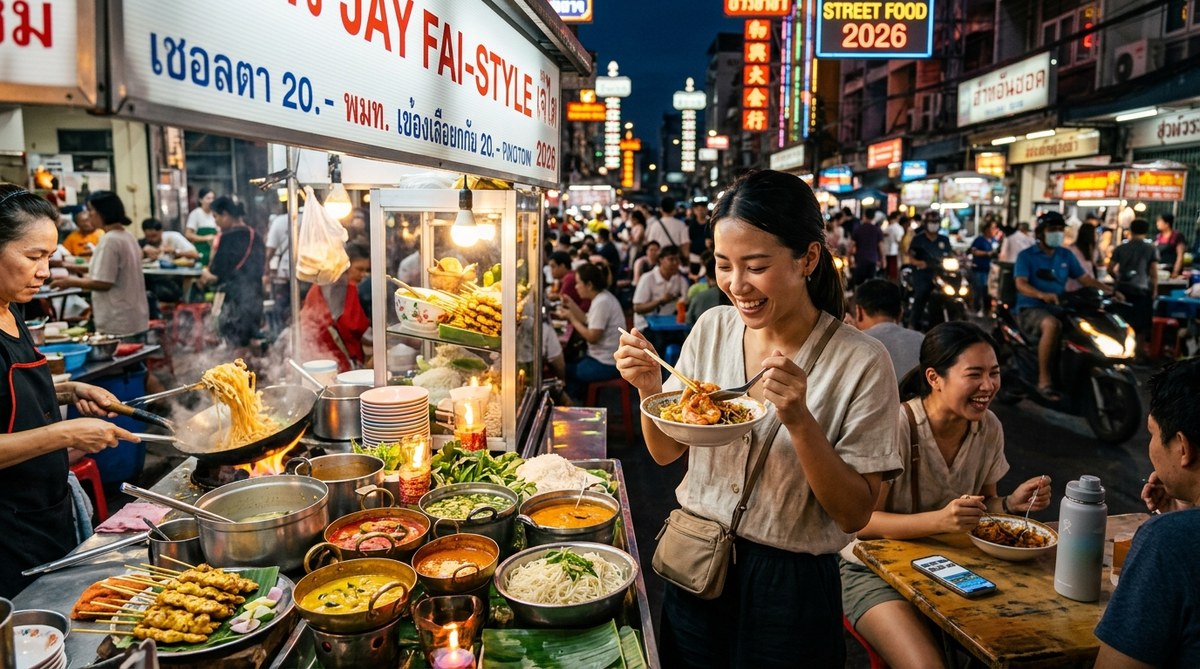
Bangkok’s street food is more than a meal. It’s a pulse. The sizzle of a wok, the hiss of charcoal, the chatter of locals bargaining over bowls of noodles at midnight. If you’re visiting in 2026, you’re in for a treat (literally). But eating your way through this chaotic, delicious landscape takes more than just a hungry stomach. It takes a little know-how. Let’s get you eating like a seasoned local, one stall at a time.
This guide turns you from a confused tourist into a street food pro. You’ll learn where to find the best stalls, what to order without a menu, and how to eat safely. We cover timing, etiquette, and money tips so you can spend less time guessing and more time eating. By the end, you’ll navigate Bangkok’s food scene with confidence and a full belly.
Why Bangkok Street Food is a Must in 2026
Bangkok’s street food isn’t just famous. It’s a UNESCO-recognized part of the city’s soul. In 2026, the scene is as vibrant as ever, with new stalls popping up alongside century-old family recipes. You can eat world-class dishes for under two dollars. You can eat at midnight, at dawn, or any time in between. The city practically never sleeps because someone is always frying, grilling, or boiling something good.
But the best stalls aren’t on Instagram. They’re in alleyways, under expressways, and in markets that only locals know. That’s where this guide comes in. We’ll cut through the noise and get you to the real food.
How to Plan Your Street Food Crawl
Treat your street food tour like a treasure hunt, not a race. Here’s a five-step plan that works every time.
-
Pick your neighborhood base. Don’t try to cover the whole city in one night. Choose one or two areas: Yaowarat (Chinatown) for roasted duck and seafood, Thong Lor for trendy grilled meats, or the old city around Khao San for budget eats. Each has a different vibe. Stick to a small radius so you can walk from stall to stall.
-
Time your meals right. Most stalls open for dinner around 5 PM and stay open until late. Lunch stalls are common near office areas but close by 2 PM. For the best selection, eat between 6 PM and 9 PM. For the freshest food, come when the vendor is busy, not after they’ve been sitting on a batch for hours.
-
Start with the basics. You don’t need to order the most exotic thing on the first night. Begin with a classic pad thai, a bowl of tom yum soup, or a plate of khao man gai (chicken rice). These dishes are popular for a reason, and a good version will blow your mind.
-
Watch the locals. Stand back for a minute and see what people order. If ten people are eating the same thing, that’s what you should get. Also notice how they eat. Some dishes come with raw vegetables or herbs on the side. Use them.
-
Bring cash and small bills. Most stalls don’t take cards. Break your 1,000 baht notes at a 7-Eleven or a larger shop first. And always have coins handy for small purchases like grilled skewers or fresh juice.
Must-Try Dishes for a True Taste of Bangkok
This list covers the essentials. Order these, and you’ll leave with a happy stomach and a desire to come back.
- Pad Thai (but skip the tourist version): Look for a stall that uses tamarind paste, not ketchup. It should be slightly sweet and sour.
- Som Tum (green papaya salad): Spicy, sour, crunchy. Ask for “mai pet” (not spicy) if you need to ease into it.
- Tom Yum Goong: Hot and sour soup with shrimp. The broth should be clear, the flavors bold.
- Khao Soi: A northern Thai coconut curry noodle soup. Creamy, spicy, and topped with crispy noodles.
- Moo Ping (grilled pork skewers): Don’t leave without trying these. The marinade is a perfect mix of garlic, soy, and coconut milk.
- Roti Gluay: A thin, crispy banana pancake drizzled with condensed milk. Perfect for dessert.
- Mango with Sticky Rice: Only eat it when mangoes are in season (April to June). Off-season versions are disappointing.
Street Food Etiquette Do’s and Don’ts
Small habits make a big difference. These will earn you a smile from the vendor and a better meal.
| Common Mistake | Smart Local Move |
|---|---|
| Standing too close to the cooking area | Keep a respectful distance and watch from the side |
| Using your left hand to handle food or money | In Thai culture, the left hand is considered unclean. Use your right hand |
| Leaving a huge tip | Tipping is appreciated but not expected. A few coins left on the table is fine |
| Taking photos without asking | Always ask permission. A smile and a nod usually works |
| Not using the provided chopsticks or spoon | Even for noodles, try the local way. It’s part of the experience |
Expert Advice from a Bangkok Food Blogger: “I’ve been eating street food in Bangkok for over a decade. The golden rule? If the stall looks clean, has high turnover, and the vendor smiles, you’re in good hands. Trust your nose and your instincts. And never skip the stool with the red cushion. That’s always a good sign.”
Safety Tips Every Visitor Should Know
Street food is safe when you follow a few simple rules. Don’t let fear stop you from trying amazing food.
- Look for high turnover. A stall that sells out quickly means fresh ingredients. Avoid food that has been sitting out for hours.
- Watch how they handle raw ingredients. If the vendor uses separate utensils for raw meat and cooked food, that’s a green flag.
- Drink bottled water only. Ice in Thailand is usually made from purified water, but stick to bottled to be safe.
- Start with cooked food. Raw dishes like shrimp salad or minced pork can be risky for first timers. Build up your tolerance slowly.
- Carry a small bottle of hand sanitizer. Many stalls have a shared bucket of water for rinsing. Use your own sanitizer instead.
For a broader approach to eating safely abroad, check out the secret to finding the best street food in any city without getting sick.
Where to Find the Best Street Stalls in 2026
Some areas are legendary for street food. Here’s where to point your feet.
- Chinatown (Yaowarat) : The king of Bangkok street food. Go at night when the whole street turns into a glowing market. Must-try spots include the roasted duck at Nai Ek Roll and the seafood at T&K.
- Sukhumvit Soi 38 : A classic spot that was demolished a few years back but has since rebuilt. The mango sticky rice here is still the benchmark.
- Banglampoo (near Khao San Road) : Good for cheap eats and backpacker-friendly stalls. Try the pad thai at Thipsamai, but expect a line.
- Or Tor Kor Market : A daytime market near Chatuchak. It’s cleaner and more organized than most, with high-quality produce and ready-to-eat dishes. Perfect for lunch.
- Wang Lang Market : Across the river in Thonburi. Less touristy, very authentic. Great for boat noodles and grilled fish.
If you’re looking for more hidden food spots in other cities, you might enjoy where locals actually eat in tourist-heavy cities.
Common Mistakes Even Seasoned Travelers Make
Even experienced travelers can trip up in Bangkok’s food scene. Avoid these.
- Assuming the busiest stall is always the best. Sometimes tourists just follow each other. Look for a steady mix of locals and a reasonable line.
- Ordering without knowing the price. Always ask “tao rai?” (how much?) before you order. Some stalls charge tourists double. A quick question keeps things fair.
- Eating only one dish. Street food is about mixing and matching. Order a skewer here, a soup there, a dessert from the next cart.
- Forgetting about the sides. Every stall serves fresh herbs, cucumber slices, and chilies. Use them. They add texture and cut through the grease.
- Not bringing a container for leftovers. Thai portion sizes are generous. If you can’t finish, ask for a bag. It’s common and polite.
Your 2026 Bangkok Street Food Adventure Awaits
The beauty of Bangkok’s street food is that you don’t need a reservation or a dress code. You just need curiosity and an appetite. Start with the neighborhoods and dishes we’ve covered, talk to the vendors, and trust your senses. Each stall has a story, and each bite teaches you something about this incredible city. So grab your cash, step away from the hotel buffet, and hit the streets. Your taste buds will thank you. And when you get back, tell us what you ate. We’ll be hungry to hear about it.