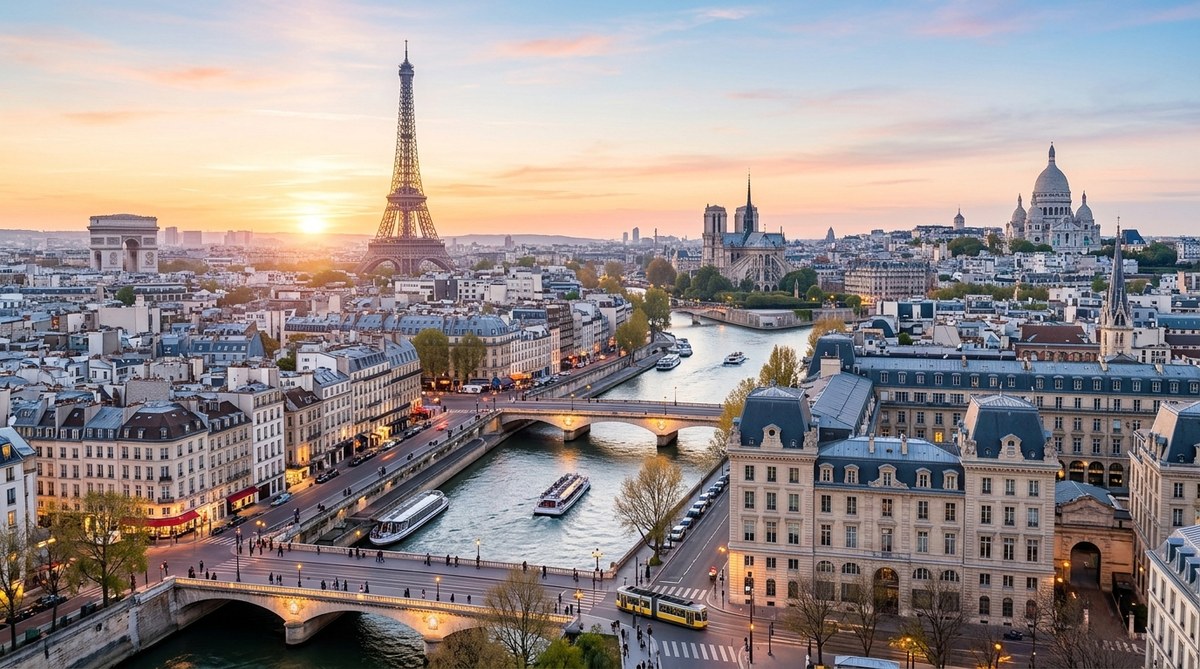
Paris has a way of making even the most seasoned traveler feel a little starry-eyed. You land at Charles de Gaulle, step out into the crisp air, and suddenly the city is right there, waiting. But 72 hours is a short window. You want to see the Eiffel Tower sparkle at night, get lost in the Louvre, and still have time to sit at a sidewalk cafe with a glass of wine. This 3 day Paris itinerary 2026 is designed to help you do exactly that. It is built for first timers who want a balanced mix of iconic sights, local flavor, and actual breathing room.
This 3 day Paris itinerary 2026 covers the must see landmarks like the Eiffel Tower and the Louvre, plus hidden gems like the Marais and Montmartre. You will get practical tips on how to skip long lines, where to eat without tourist prices, and how to pace your days. No rushing, no regrets.
How to Use This 3 Day Paris Itinerary 2026
Before you start packing, understand the logic behind this schedule. We grouped attractions by neighborhood. This saves you metro transfers and keeps your feet happy.
- Day one focuses on the Left Bank and the Eiffel Tower area. You will cover the big outdoor monuments.
- Day two is for art lovers. The Louvre and Musee d’Orsay are your main stops, with a relaxed afternoon in the Marais.
- Day three takes you up to Montmartre and the Sacre Coeur, then down to the Latin Quarter for a final evening.
Every day includes a built in break for a proper lunch and a casual dinner. You will not need to run between sites.
Day One: The Grand Landmarks and a River Cruise
Your first morning in Paris should start with a view. Head straight to the Trocadero esplanade. From here, you get the postcard shot of the Eiffel Tower without a crowd blocking you. Cross the river and walk through the Champ de Mars. The grass is open, and locals are already sitting with baguettes.
Morning: Eiffel Tower and Les Invalides
Book your Eiffel Tower tickets at least two weeks in advance for 2026. The summit is worth it for the panoramic view, but the second floor has the best balance of height and price. After you come down, walk east along the Seine toward Les Invalides. The golden dome of the army museum is stunning in the morning light.
Lunch: Rue Cler Market Street
Rue Cler is a quiet market street between the Eiffel Tower and Les Invalides. Grab a sandwich from a boulangerie and a pastry from a patisserie. Sit on a bench near the Eglise Saint Pierre du Gros Caillou. This is not a tourist trap. It is a real neighborhood spot.
Afternoon: Musee d’Orsay
Skip the Louvre today. The Musee d’Orsay is smaller, less overwhelming, and houses the world’s best collection of Impressionist art. The building itself, a former train station, is a masterpiece. Focus on the fifth floor for the Renoirs, Monets, and Degas. The clock face on the top floor gives you a framed view of the city.
Evening: Seine River Cruise at Sunset
A river cruise is the best way to see the city lights without walking. Many operators offer one hour cruises from the base of the Eiffel Tower. Go at sunset. The tower lights up on the hour after dark. Have dinner at a bistro near the Pont Neuf. Le Fumoir is a solid choice for classic French dishes.
Day Two: Museums, the Marais, and Nightlife
This day is heavy on indoor culture. Plan to arrive at the Louvre when it opens at 9:00 AM. The crowds build fast after 11:00 AM.
Morning: The Louvre
Do not try to see the entire museum. Pick three wings. The Denon wing has the Mona Lisa, the Winged Victory, and the Venus de Milo. The Sully wing covers French history. The Richelieu wing has Napoleon’s apartments. If you want to avoid the Mona Lisa scrum, go straight there first, then loop back.
Lunch: Palais Royal Gardens
Just a few minutes from the Louvre, the Palais Royal gardens offer a quiet escape. The striped columns by Daniel Buren make a fun photo. Grab lunch at a cafe on the garden side. Cafe du Palais Royal is a local favorite.
Afternoon: Le Marais
The Marais is the oldest district in Paris and the most charming. Wander the narrow streets around Rue des Rosiers. This area is full of falafel shops, boutique clothing stores, and hidden courtyards. Visit the Place des Vosges, the oldest planned square in the city. Sit on a bench and watch the children play.
Evening: Dinner in the Marais
The Marais has some of the best food in Paris without the tourist markup. Try a traditional bistro like Chez Janou for duck confit. After dinner, walk to the Centre Pompidou. The exterior escalators are free to ride, and the view from the top is fantastic.
Day Three: Montmartre, Sacre Coeur, and the Latin Quarter
Your final day takes you uphill. Montmartre is a village within the city. It feels different from the rest of Paris.
Morning: Sacre Coeur and Montmartre
Take the metro to Abbesses station. Walk up the steep streets or take the funicular. The basilica of Sacre Coeur is free to enter. The view from the dome costs a few euros and is worth every step. Afterward, wander the Place du Tertre. Artists set up easels here, and the cafes are perfect for a coffee.
Lunch: A Real Bistro in Montmartre
Avoid the overpriced places right next to Sacre Coeur. Walk downhill to Rue des Abbesses. Find a bistro with a chalkboard menu. Le Relais de la Butte serves honest French food at fair prices.
Afternoon: The Latin Quarter and Notre Dame
Take the metro down to the Latin Quarter. This is the student district, full of bookshops, narrow streets, and the historic Sorbonne university. Walk along the Seine to see Notre Dame. The cathedral is still under restoration, but the exterior is visible and the surrounding square is beautiful. Stop at Shakespeare and Company, the legendary English language bookstore.
Evening: Final Dinner and a Walk
For your last night, book a table at a restaurant in the Latin Quarter or near the Pantheon. Try a classic steak frites or a bowl of onion soup. After dinner, walk along the river one last time. The bridges are lit up, and the city hums with a gentle energy.
Practical Tips for Your 3 Day Paris Itinerary 2026
A good plan needs good logistics. Here are the essential tips.
Getting Around
The Paris Metro is efficient and easy to use. Buy a carnet of 10 tickets at any station. It costs less than individual tickets. The RER trains go to the airports and Versailles. For this itinerary, you will mostly use metro lines 1, 4, 6, and 12.
| Task | Mistake to Avoid | Better Approach |
|---|---|---|
| Buying metro tickets | Buying single tickets each ride | Buy a carnet of 10 tickets at once |
| Museum entry | Showing up without a reservation | Book timed entry slots online |
| Dining near landmarks | Eating at restaurants with picture menus | Walk one street away from the main square |
| Tipping | Over tipping like in the US | Service is included; leave small change (1-2 euros) |
Where to Stay
Choose a neighborhood that matches your style. The Marais is central and lively. The Latin Quarter is historic and budget friendly. Saint Germain is elegant and close to the museums. Avoid staying near the Eiffel Tower. It is touristy and far from the metro lines you will use most.
When to Visit
Spring (April to June) and fall (September to October) offer the best weather and smaller crowds. Summer is hot and packed. Winter is cold but the city is beautiful and flights are cheaper. For 2026, consider late September. The weather is mild, and the tourist rush has thinned.
A local tip from a Parisian friend: “Never eat at a restaurant on a major square. Walk one street behind it. The food is better, the prices are lower, and the owner will probably say hello.”
Making the Most of Your Short Stay
Three days in Paris is enough to fall in love with the city but not enough to see everything. That is fine. Focus on quality over quantity. If you miss one museum, you will have a reason to come back. If you spend an extra hour at a cafe, you will remember that moment longer than any selfie line.
For more ideas on what to do when you return, read our guide on 15 hidden neighborhoods in Paris that most tourists never discover. It will give you a whole new layer of the city to explore next time.
Your Paris Adventure Starts Now
You have the plan. You know the route. Now all you have to do is go. Pack comfortable shoes, bring a reusable water bottle, and leave room in your suitcase for a baguette. Paris in 2026 is waiting for you. Enjoy every croissant, every bridge, every moment.