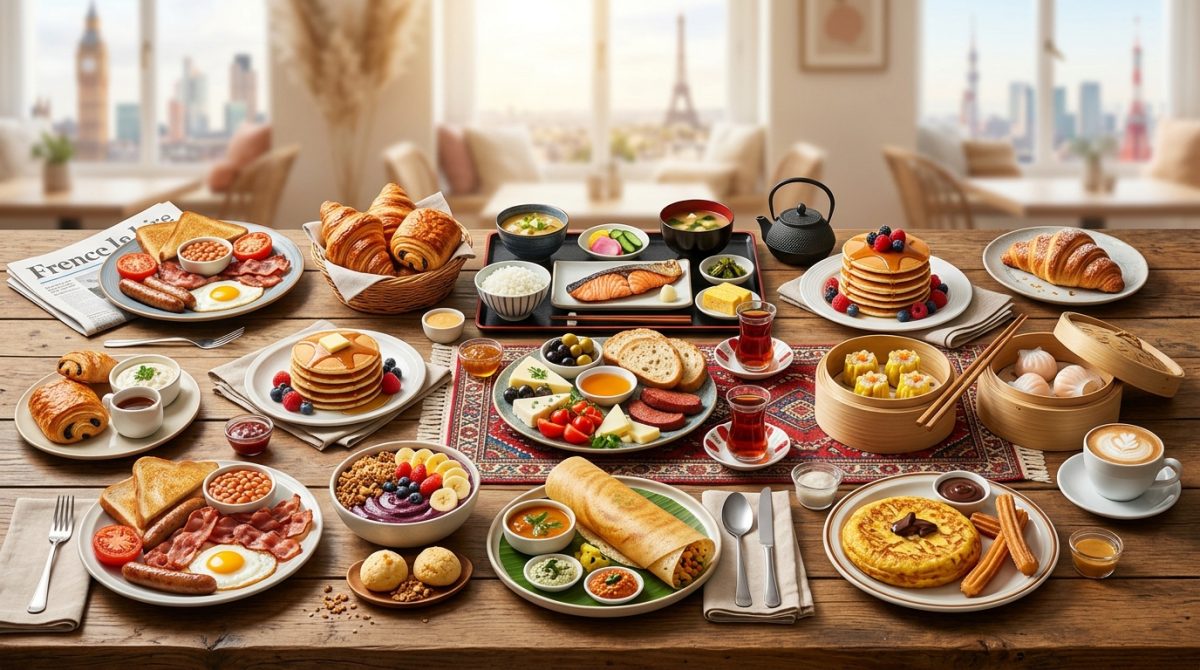
Breakfast tells you everything about a place. The way a city starts its day reveals more than any guidebook can capture. Whether it’s a steaming bowl of congee in Hong Kong or a flaky croissant in Paris, morning meals connect you to local rhythms and traditions in ways that lunch or dinner rarely match.
Traditional breakfast varies dramatically across cultures, from Japan’s savory grilled fish and [miso soup](https://en.wikipedia.org/wiki/Miso_soup) to Mexico’s hearty chilaquiles and Turkey’s cheese-filled pastries. Understanding what locals eat for their first meal helps travelers experience authentic cuisine, avoid tourist traps, and connect with daily rhythms in each destination. This guide covers 20 major cities with specific dish recommendations and cultural context.
What Makes a Traditional Breakfast Worth Seeking Out
Tourist-focused restaurants serve the same international buffet everywhere. You’ve seen it: scrambled eggs, bacon, toast, and orange juice whether you’re in Bangkok or Buenos Aires.
Real breakfast happens in neighborhood cafes, street stalls, and family-run spots where locals grab their morning fuel. These places open early, close by mid-morning, and serve dishes you won’t find at any other time of day.
The best part? Breakfast spots are usually affordable. A meal that would cost you $30 at dinner runs $5 to $8 in the morning. You get authentic food at honest prices before the tourist crowds wake up.
Asia Pacific Morning Meals That Define Local Culture
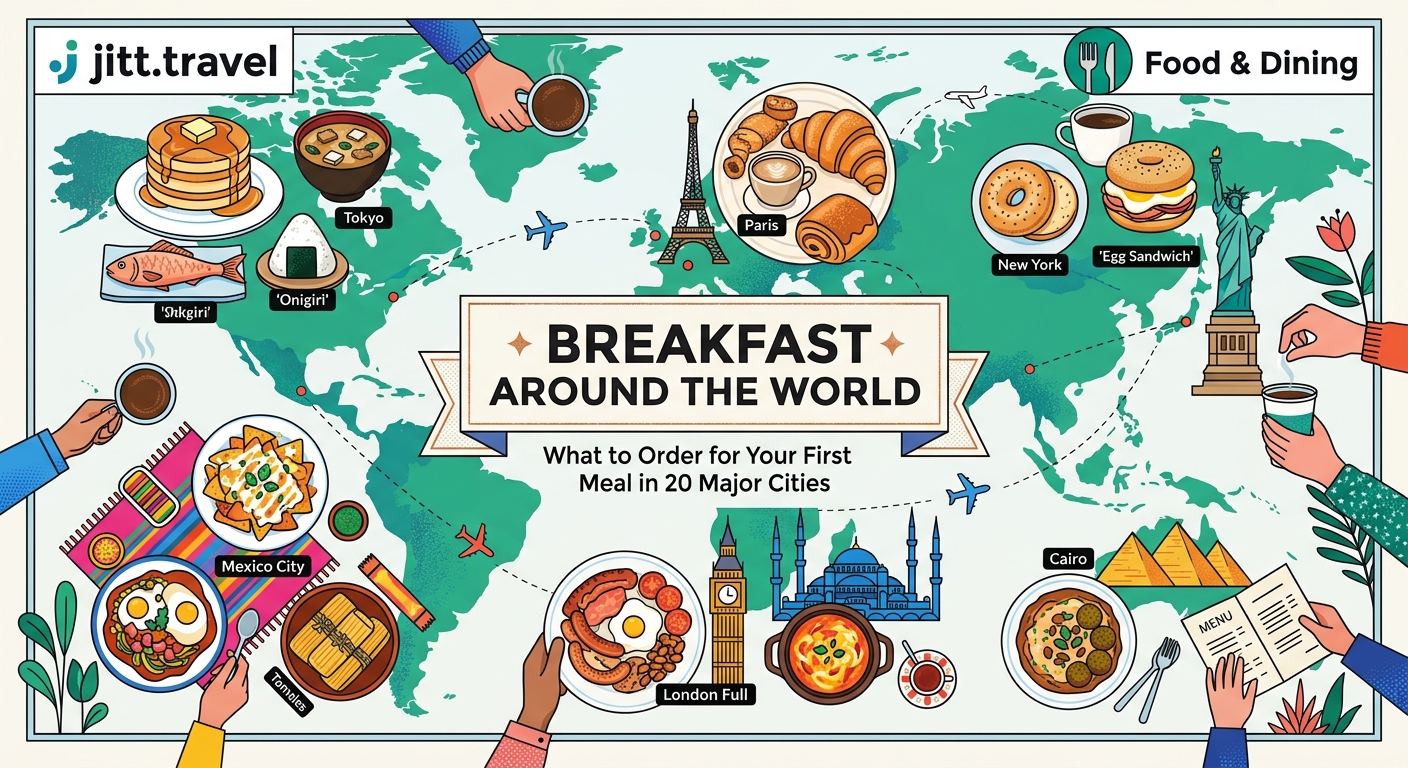
Tokyo, Japan
Japanese breakfast centers on balance and nutrition. A traditional set meal includes grilled fish (usually salmon or mackerel), steamed rice, miso soup, pickled vegetables, and a raw egg to mix into your rice.
Find this at any family restaurant chain like Yoshinoya or Matsuya. Order the “morning set” and you’ll pay around 500 yen for a complete meal that keeps you full until dinner.
Hong Kong
Congee dominates Hong Kong mornings. This rice porridge comes topped with century egg, pork, preserved vegetables, or seafood. Pair it with youtiao, those crispy fried dough sticks perfect for dunking.
Head to Mui Kee Congee in Mong Kok or any cha chaan teng (local cafe) before 10am. Locals also love pineapple buns with a thick slab of butter, despite the name having nothing to do with actual pineapple.
Bangkok, Thailand
Street vendors serve jok (rice porridge similar to congee) with pork meatballs, ginger, and crispy garlic. Another popular choice is khao tom, a thinner rice soup with fish or shrimp.
For something heartier, try khao khai chiao, which is essentially fried rice with a massive fluffy omelet on top. You’ll find these at any market or street corner from 6am to 9am.
Sydney, Australia
The flat white originated here, and Australians take their coffee seriously. Breakfast culture revolves around avocado toast, but locals know to order it with feta, dukkah, and poached eggs.
Cafes in Surry Hills or Newtown serve proper Australian breakfast: thick-cut sourdough, fresh ingredients, and coffee that makes Starbucks taste like dishwater. Expect to pay $18 to $25 AUD for a sit-down meal.
European Cities Where Breakfast Is an Institution
Paris, France
The stereotype is real. Parisians do eat croissants and drink cafe au lait for breakfast. But they eat them standing at the bar counter, not sitting at a table where prices double.
A proper croissant should shatter when you bite it, leaving buttery flakes everywhere. Pain au chocolat runs a close second. Skip hotel breakfast and hit any neighborhood boulangerie between 7am and 9am.
Istanbul, Turkey
Turkish breakfast spreads are legendary. Expect tomatoes, cucumbers, olives, multiple cheeses, honey, jam, butter, and fresh bread. Add menemen (scrambled eggs with tomatoes and peppers) and simit (sesame-crusted bread rings).
Van Kahvalti Evi serves one of the best traditional spreads in Cihangir. You’ll spend 90 minutes eating because Turkish breakfast is meant to be leisurely, social, and substantial.
London, England
The full English breakfast isn’t subtle. Bacon, sausages, eggs, baked beans, grilled tomatoes, mushrooms, black pudding, and toast all crowd one plate.
Most locals only eat this on weekends, but cafes serve it daily. Regency Cafe in Westminster gives you the authentic greasy spoon experience. Order a builders tea (strong black tea with milk and sugar) to complete the meal.
Barcelona, Spain
Catalans keep breakfast simple. Pan con tomate (bread rubbed with tomato and drizzled with olive oil) appears on every table. Add jamón ibérico if you want protein.
Coffee means a cortado, which is espresso with a small amount of steamed milk. Pastry shops sell ensaimadas, those spiral pastries from Mallorca that pair perfectly with mid-morning coffee around 11am.
Middle Eastern and African Morning Traditions
Cairo, Egypt
Ful medames defines Egyptian breakfast. These slow-cooked fava beans come mashed with olive oil, lemon, garlic, and cumin. Scoop them up with baladi bread (Egyptian flatbread).
Street vendors sell ful from giant copper pots starting at 6am. Add ta’ameya (Egyptian falafel made from fava beans instead of chickpeas) for extra substance. The whole meal costs less than $2.
Tel Aviv, Israel
Israeli breakfast combines Mediterranean and Middle Eastern elements. Expect shakshuka (eggs poached in spicy tomato sauce), multiple salads, labneh, tahini, olives, and fresh bread.
Cafe Xoho or Benedict serve massive breakfast spreads that easily feed two people. Israelis treat breakfast as the main meal, especially on Shabbat mornings.
Marrakech, Morocco
Moroccan breakfast centers on bread. Msemen (square flatbread) or baghrir (semolina pancakes with honeycomb texture) come with honey, jam, and amlou (almond butter with argan oil).
Pair these with mint tea served in small glasses. Riads typically include breakfast, but neighborhood cafes near Jemaa el-Fnaa square offer more authentic versions at lower prices.
Latin American Cities That Take Breakfast Seriously
Mexico City, Mexico
Chilaquiles reign supreme. These fried tortilla chips get simmered in salsa (red or green), topped with eggs, cream, cheese, and onions. Some versions add chicken or beef.
Fonda Margarita in Roma Norte serves outstanding chilaquiles verdes. Pair them with fresh juice (orange, grapefruit, or a mix called vampiro) and cafe de olla (cinnamon-spiced coffee).
Buenos Aires, Argentina
Argentines eat breakfast light. Medialunas (small croissants, slightly sweeter than French versions) with cafe con leche make up the standard morning meal.
Confiteria Ideal or any corner cafe serves this combination. Locals dunk their medialunas in coffee, which would horrify the French but works perfectly here. Breakfast happens late, often after 9am.
Lima, Peru
Tamales appear on Lima breakfast tables, especially on weekends. These corn masa parcels filled with chicken or pork come wrapped in banana leaves. Pair them with pan con chicharron (bread with fried pork belly).
Street vendors set up near markets from 7am to 10am. Wash it down with emoliente, a warm herbal drink sold by street vendors from wheeled carts.
North American Breakfast Variations
New York City, USA
Bagels define New York breakfast culture. A proper bagel is boiled before baking, creating that distinctive chewy texture. Order it with lox (smoked salmon), cream cheese, tomato, onion, and capers.
Russ & Daughters or any neighborhood bagel shop will make you understand why New Yorkers are snobs about their bagels. Grab coffee from a bodega and eat while walking. That’s the New York way.
Montreal, Canada
Bagels here differ from New York style. Montreal bagels are smaller, sweeter, denser, and always baked in wood-fired ovens. St-Viateur or Fairmount Bagel (open 24 hours) represent the two competing traditions.
For something heartier, try a Montreal-style smoked meat breakfast sandwich. Schwartz’s Deli opens at 8am and serves their famous smoked meat on rye with eggs.
Practical Tips for Eating Breakfast Like a Local
Finding authentic breakfast requires different strategies than lunch or dinner. Here’s how to locate the real spots:
- Wake up early. Most traditional breakfast places close by 10am or 11am. If you’re sleeping until noon, you’re missing the entire breakfast culture.
- Follow the crowds. Empty restaurants at 8am are empty for a reason. Look for lines of locals, especially older residents who know the neighborhood.
- Check opening times. The best breakfast spots often open at 6am or 7am. They’re not trying to catch tourists who wake up at 9am.
- Ask hotel staff where they eat. Not where they recommend for tourists, but where they personally grab breakfast before their shift.
- Look for limited menus. Specialists who make three things perfectly beat generalists who make thirty things poorly.
“The best breakfast I’ve had in any city came from asking a taxi driver where he eats before starting his morning shift. Those recommendations never fail.” – Anthony Bourdain
Common Breakfast Mistakes Travelers Make
| Mistake | Why It Happens | Better Approach |
|---|---|---|
| Eating hotel breakfast | Convenience and included cost | Hotel breakfast is rarely authentic and often overpriced when factored into room rates |
| Ordering familiar foods | Fear of trying new dishes | Start with one local item alongside something familiar, then expand |
| Eating too late | Sleeping in on vacation | Set an alarm once or twice to experience morning food culture |
| Sitting at tourist areas | Following guidebook recommendations | Walk three blocks away from major attractions for better food and prices |
| Skipping street food | Concerns about food safety | Street vendors who cook food fresh in front of you are usually safe |
Understanding Regional Breakfast Patterns
Breakfast falls into distinct patterns based on geography and culture. Recognizing these helps you know what to expect:
Savory-focused regions include most of Asia, the Middle East, and parts of Europe. Expect vegetables, proteins, and complex flavors even at 7am.
Sweet and simple traditions dominate France, Spain, and parts of Latin America. Coffee and pastries provide a light start before a substantial lunch.
Heavy breakfast cultures appear in English-speaking countries, Germany, and Turkey. These meals include multiple dishes and substantial protein.
Flexible breakfast timing varies wildly. Spaniards might eat at 10am or 11am, while Japanese breakfast happens before 8am. Adjust your schedule to match local patterns.
What to Order When You Don’t Speak the Language
Language barriers shouldn’t stop you from eating well. Use these strategies:
- Point at what other diners are eating. Most people feel flattered when you copy their order.
- Learn three phrases: “What do you recommend?”, “The same as that”, and “Thank you.”
- Use translation apps to photograph menus, but verify the translation looks reasonable.
- Look for picture menus, common in Asia and tourist-friendly spots.
- Order the “morning set” or “breakfast special” which usually represents the most popular local option.
Street food vendors often have the simplest ordering systems. Point, hold up fingers for quantity, and hand over money. The transaction takes 30 seconds.
Seasonal Breakfast Variations Worth Timing Your Trip For
Some breakfast dishes only appear during specific seasons:
- Japan in winter: Hot amazake (fermented rice drink) from street vendors
- Mexico during Dia de los Muertos: Pan de muerto (sweet bread) with hot chocolate
- Morocco in winter: Harira soup becomes a breakfast staple
- Thailand during mango season: Khao niao mamuang (sticky rice with mango) appears everywhere
- Germany during asparagus season: White asparagus with eggs and hollandaise
Timing your visit around seasonal ingredients gives you access to dishes that don’t appear on menus year-round.
Budget Considerations for Daily Breakfast
Breakfast costs vary dramatically by city and venue type:
Street food and markets: $2 to $5 USD in most cities. Bangkok, Cairo, and Mexico City offer incredible value.
Local cafes and casual spots: $5 to $12 USD. This range covers most neighborhood places in medium-cost cities.
Sit-down restaurants: $12 to $25 USD. Sydney, London, and New York fall into this category for table service.
Hotel breakfast: $15 to $40 USD when not included. Almost never worth paying for separately.
Eating breakfast out daily for a week costs less than three dinners at mid-range restaurants. Your food budget goes further in the morning.
How Breakfast Connects You to Daily Rhythms
Breakfast reveals how a city actually functions. You see people heading to work, students grabbing food before school, and elderly residents meeting friends at their regular spots.
Markets buzz with energy as vendors set up and shoppers select fresh ingredients. Coffee shops fill with regulars who have assigned seats and usual orders. Construction workers line up at street carts for substantial meals before physical labor.
This daily theater disappears by mid-morning. Tourists who sleep late miss the authentic pulse of urban life. The city you see at 7am differs completely from the one at 11am.
Your First Morning Meal Sets the Tone
Start your first day in any city with a local breakfast. Not the second day after you’ve settled in. Not when you finally work up the courage. The first morning.
That meal frames everything that follows. You’ll taste ingredients that appear in other dishes throughout your trip. You’ll learn how locals interact with food vendors and cafe staff. You’ll discover whether this city moves slowly or rushes through mornings.
Plus, you’ll be hungry, jet-lagged, and ready to eat whatever appears in front of you. That’s the perfect state for trying new foods without overthinking them.
Wake up early tomorrow. Find the nearest breakfast spot filled with locals. Order whatever they’re having. That’s how you really arrive in a new place.