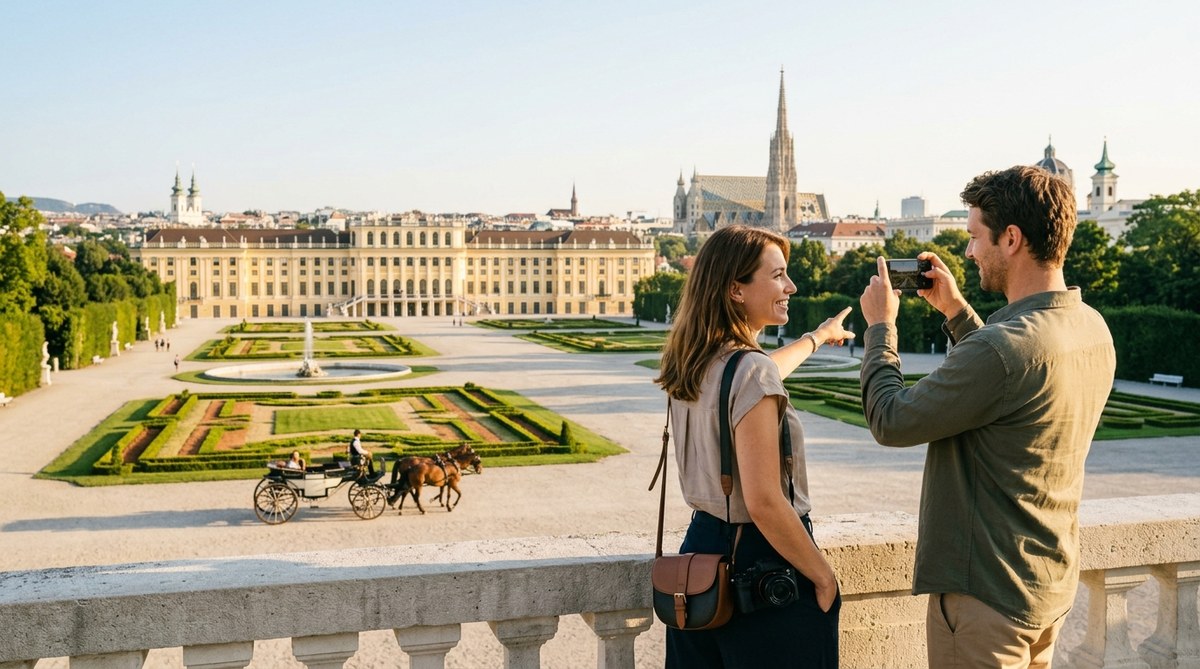
You have finally booked that trip to Vienna. Maybe you have seen the Instagram shots of St. Stephen’s Cathedral and the Habsburg palaces. Maybe you have heard about cheap Sacher torte and Wiener schnitzel. But walking into a city with so much history can be overwhelming. Where do you start? What is actually worth your time? And which tourist spots are overrated?
This guide cuts through the noise. It lists the best things to do in Vienna for first-timers 2026: the experiences that give you the city’s soul without burning your vacation days on long lines or disappointing attractions.
A first trip to Vienna works best when you mix big landmarks with relaxed local rituals. Prioritize the Schönbrunn Palace tour, a coffeehouse sit down, and a walk through the MuseumsQuartier. Buy skip the line tickets online for top sights. Use the U-Bahn to save time. Budget at least three days. Avoid the overpriced horse carriage rides and look for free chamber music concerts in city churches.
Start at the Heart: The Innere Stadt
The Innere Stadt, or first district, is Vienna’s historic center. It is compact and walkable. You can see the most famous landmarks within a few blocks. St. Stephen’s Cathedral, the Hofburg Palace, the Vienna State Opera, and the Spanish Riding School are all here.
For a first timer, the best approach is a self guided walk. Start at Stephansplatz. Admire the cathedral’s colorful tiled roof. Then walk down the Graben, a pedestrian shopping street, to the Plague Column. From there, turn toward the Hofburg. The imperial apartments and the Sisi Museum give a good look at royal life.
You do not need a guide for this area. Many audio guides are available for a small fee. The whole walk takes about three hours if you pop into one or two museums.
Schönbrunn Palace Is Still the King of Attractions
You cannot visit Vienna without spending a morning at Schönbrunn. This was the summer residence of the Habsburgs. The palace is huge. The gardens are free and lovely. The interior tours are the highlight.
Book a Grand Tour ticket online at least a week ahead in 2026. It gives you access to 40 rooms. You will see the Hall of Mirrors, the salon where Mozart played as a child, and the lavish living quarters of Empress Elisabeth. The tour takes about 50 minutes.
Afterward, wander through the French garden to the Gloriette. The view over the city is worth the uphill walk. If you have kids, the Zoo Schönbrunn is inside the park. It is one of the oldest zoos in the world.
Coffeehouse Culture: More Than Just a Drink
Vienna’s coffeehouses are UNESCO Intangible Cultural Heritage. They are not just cafes. They are social institutions where people read, write, argue, and sit for hours over one cup. The best thing to do in Vienna for first timers is to pick one and stay for at least 30 minutes.
Some famous ones:
– Cafe Central (very touristy but beautiful)
– Cafe Sperl (more local, near the Naschmarkt)
– Cafe Hawelka (dark, bohemian vibe)
– Cafe Schwarzenberg (grand and on the Ringstrasse)
Order a Melange, which is similar to a cappuccino. Have a slice of Apfelstrudel or Sacher torte. Do not expect service to be fast. It is a place to slow down.
The MuseumsQuartier: Art, People, and Free Spaces
The MuseumsQuartier, or MQ, is a large square filled with museums and bars. It is popular with locals and tourists alike. The area contains the Leopold Museum, the Mumok, and the Kunsthalle.
For first timers, the MQ is great for two reasons: the outdoor lounging area (chairs and beanbags) and the rooftop terrace. You can sit outside with a drink, watch street performers, and enjoy the architecture. It feels very Viennese.
If you like modern art, buy a ticket for the Leopold Museum. It holds the best collection of Schiele and Klimt outside of the Belvedere. If you prefer photography, go to the Kunsthalle.
Eat Your Way Through the Naschmarkt
The Naschmarkt is Vienna’s largest open air food market. It runs for about a kilometer. You can find fresh produce, spices, olives, cheese, and international street food. Many stalls offer small tastings.
One practical tip: go in the late morning on a Saturday. The market is lively. Grab a falafel sandwich from one of the Middle Eastern stalls. Or sit down at one of the small restaurants for a bowl of pumpkin seed oil salad.
Do not buy the touristy souvenirs at the stands near the entrance. Walk to the end for better prices.
Belvedere Palace and the Kiss
The Belvedere Palace is a Baroque masterpiece. It houses the Belvedere Museum, which holds Gustav Klimt’s famous painting The Kiss. This is a must see for art lovers.
The palace itself is split into Upper and Lower Belvedere. The painting is in Upper Belvedere. The gardens between the two are free and offer great photo opportunities.
Buy your ticket online in 2026. The line at the ticket counter can be long on weekends. Plan about two hours for the museum.
The Ringstrasse: A Boulevard of Dreams
The Ringstrasse is a grand boulevard that circles the Innere Stadt. It is lined with impressive buildings: the State Opera, the Parliament, the Rathaus (City Hall), and the Burgtheater.
You can do a Ringstrasse tour by tram. Tram line 1 runs the full loop. It costs a single ticket (about 2.40 euros). Sit on the right side for the best views.
But if you want a better experience, take a horse drawn carriage ride. It is pricey (around 60 euros for 20 minutes). Most first timers skip it. Instead, walk a section of the Ring near the Rathaus. The architecture is stunning.
The Vienna State Opera: Even If You Are Not an Opera Fan
You do not need to love opera to appreciate the Vienna State Opera. The building is spectacular. And there is a trick: standing room tickets cost only about 3 to 4 euros. They go on sale 80 minutes before the start of the performance.
Show up early, get a standing spot, and watch a world class performance for pocket change. Even if you do not understand German, the music and the atmosphere are memorable.
If you prefer a guided tour, book one in advance. The building is rich with history.
Day Trips: The Wachau Valley and Vienna Woods
If you have more than three days, consider a half day trip outside the city. The Wachau Valley is a UNESCO region with vineyards, castles, and the town of Melk. You can take a train from Vienna to Melk and see the abbey. Or join a wine tour that includes tastings.
Another option: the Vienna Woods (Wienerwald). Take bus 38A to the Kahlenberg viewpoint. You get a panoramic view of the city and the Danube. There are hiking trails for all levels.
A Suggested 3-Day Itinerary for First Timers
To help you plan, here is a schedule that covers the best things to do in Vienna for first timers 2026 without feeling rushed.
- Day 1: Old Town and Coffee
- Morning: Walk through the Innere Stadt. See St. Stephen’s Cathedral and Hofburg.
- Lunch: Grab a sausage from a Würstelstand.
- Afternoon: Visit the Belvedere Palace (book ahead).
-
Evening: Coffee at Cafe Sperl.
-
Day 2: Imperial Splendor and Market
- Morning: Schönbrunn Palace Grand Tour (book ahead).
- Lunch: Naschmarkt exploration.
- Afternoon: MuseumsQuartier. Pick one museum or just lounge outside.
-
Evening: Standing room at the State Opera.
-
Day 3: Art, Relaxation, and Departure
- Morning: Ringstrasse tram ride (line 1).
- Lunch: Try a local Beisl (pub) for schnitzel.
- Afternoon: Visit the Leopold Museum or the Kunsthistorisches Museum.
- Evening: A final coffee at Cafe Hawelka.
This itinerary works for a weekend trip. You can adjust based on your interests.
Practical Tips for Smooth Travel
Here are some common mistakes to avoid:
- Don’t buy tickets on the spot for major attractions. Always book online. Lines are long in 2026.
- Don’t use taxis unless necessary. The U-Bahn is fast and cheap. Download the Wiener Linien app.
- Don’t overpack for cultural sites. Most museums have coat check.
- Don’t forget to reclaim VAT if you shop. Items over 75 euros qualify.
| Attraction | Skip the Line Tip | Best Time to Visit |
|---|---|---|
| Schönbrunn | Book Grand Tour online 1 week ahead | 9am (opens) or 3pm (less crowded) |
| Belvedere | Buy ticket online, enter Upper first | Tuesday or Wednesday mornings |
| State Opera standing room | Arrive 60 min before start | Typically at 7pm |
| Naschmarkt | No tickets needed | Saturday 10am for best food mood |
Expert advice: “Vienna is a city of secrets. Look for the small courtyards around the first district. Street 7 in the Freyung has a quiet garden. Also, the best Apfelstrudel is often in a random cafe, not a tourist spot.” – local travel writer Eleanor G.
When to Visit for Best Weather and Fewer Crowds
Vienna is busy year round, but some months are better for first timers. May, June, and September have mild weather and full schedules of outdoor events. July and August can be hot and crowded with tourists.
If you want lower prices, go in late March or early November. The museums are less crowded, and hotel rates drop. Avoid Christmas markets if you hate crowds; they are beautiful but packed.
How to Save Money Without Missing Out
Vienna is not cheap, but you can save in smart ways. Use the Vienna City Card for free public transport and discounts at many attractions. Consider the Vienna Pass if you plan to visit several paid sites.
Eat lunch at a market stall or a supermarket bakery instead of a sit down restaurant. A slice of pizza at a takeaway costs 3 euros. A Melange in a coffeehouse is around 4.50 euros, but it buys you an hour of peace.
What to Skip (The Tourist Traps)
Some popular activities are not worth the money for first timers. The Spanish Riding School shows are expensive and hard to get tickets for. The Prater amusement park is fun but not unique; skip the giant wheel unless you want a ride. The House of Music museum is overpriced for what it offers.
Focus on the free and low cost experiences: the gardens of Schönbrunn, the courtyards of the Hofburg, the Danube canal walk, and the street art in the 7th district.
Final Thoughts for Your Vienna Trip
A first visit to Vienna should feel like a conversation with history, not a checklist. Allow yourself to sit in a cafe longer than planned. Wander into a side street that looks interesting. Say yes to a slice of torte from a bakery you have never heard of.
The best things to do in Vienna for first timers 2026 are not just the landmarks. They are the moments when the city feels alive: the sound of a string quartet in a church, the smell of roasted chestnuts at a market, the golden light on the Ringstrasse at sunset.
Plan ahead for tickets, but leave room for spontaneity. Vienna will reward you.