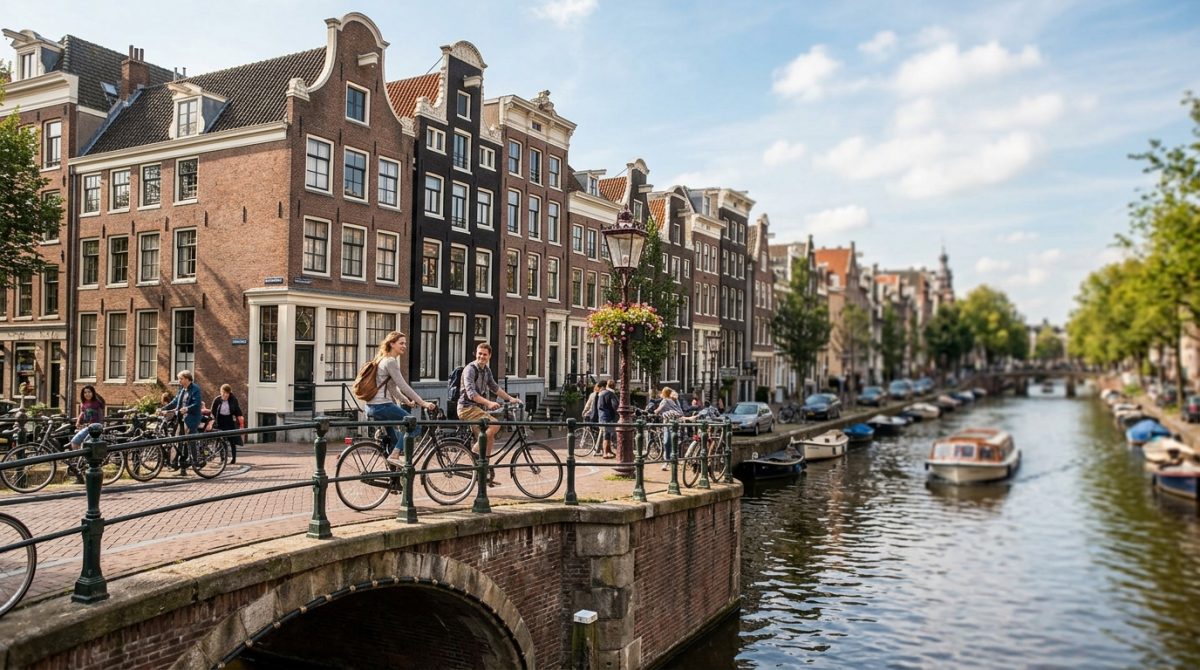
Amsterdam packs centuries of history, world-class art, and distinctive charm into a compact city center that’s perfect for a weekend visit. You can walk between most major attractions, cycle along canals like a local, and still have time to sit at a brown café with a Dutch beer. This guide breaks down exactly how to spend 48 hours in Amsterdam without rushing or missing the highlights that make this city special.
This two-day Amsterdam itinerary covers the Anne Frank House, Rijksmuseum, canal walks, Jordaan neighborhood, local markets, and authentic Dutch dining. Book museum tickets in advance, rent a bike for easy transport, and mix famous attractions with neighborhood wandering. You’ll experience Amsterdam’s art, history, and daily life without feeling rushed or overwhelmed during your weekend visit.
Day One Morning: Canals and Culture
Start your first morning at the Anne Frank House around 9:00 AM. Book your ticket online weeks before your trip because same-day entry is nearly impossible. The museum opens early, and arriving at opening time means smaller crowds in the narrow rooms where Anne and her family hid during World War II.
The experience takes about 75 minutes. You’ll walk through the actual Secret Annex, see Anne’s original diary, and learn about the family’s daily life in hiding. It’s emotionally heavy but essential for understanding Amsterdam’s wartime history.
After leaving the museum, walk south along Prinsengracht canal. Stop at Winkel 43 for their famous apple pie, which locals genuinely eat for breakfast. The café sits on Noordermarkt square, where you can watch neighborhood life unfold.
Continue walking toward the Nine Streets shopping district. These narrow lanes between major canals hold independent boutiques, vintage shops, and specialty stores. You’re not here to shop for hours, but the architecture and canal views make this area worth 30 minutes of wandering.
Day One Afternoon: Art and History
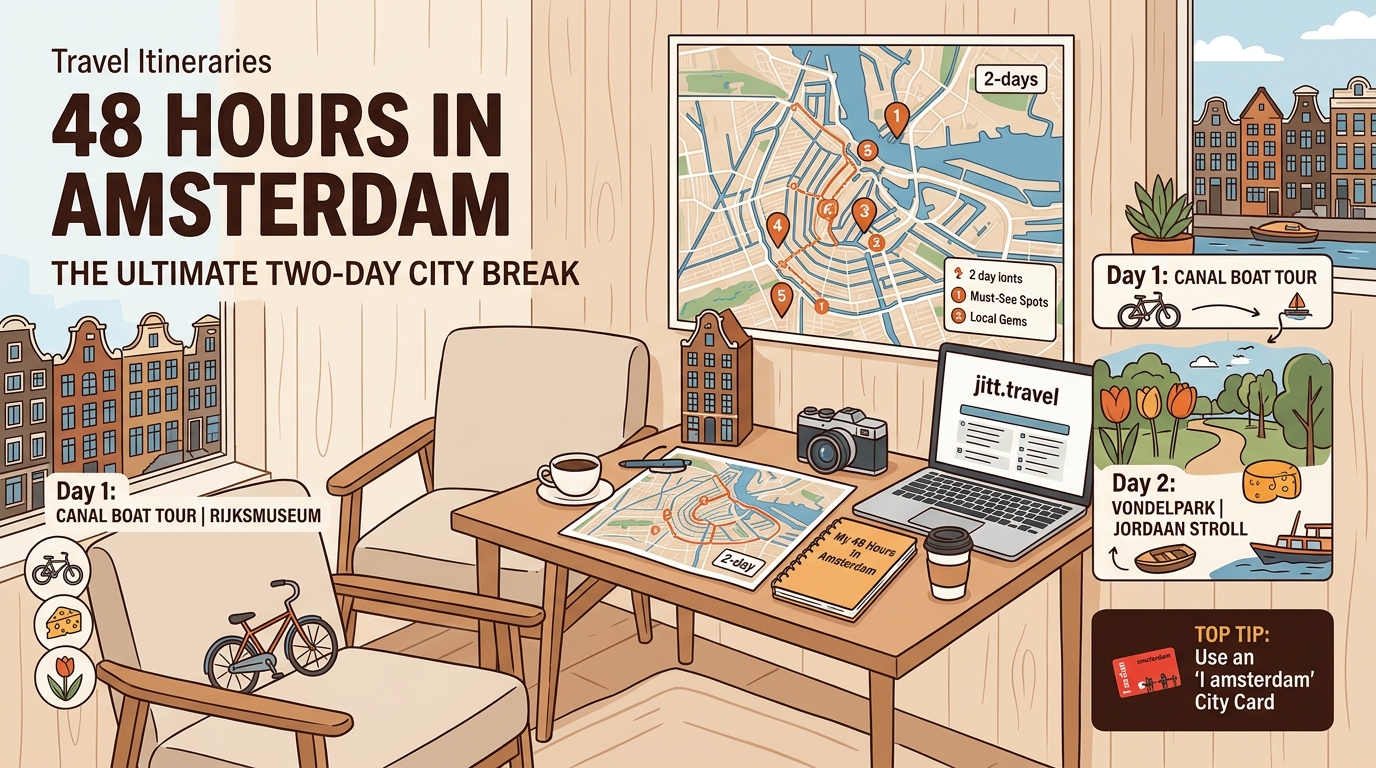
Head to the Rijksmuseum by 1:00 PM. You should have booked a timed entry ticket online. This museum holds the world’s largest collection of Dutch Golden Age paintings, including Rembrandt’s Night Watch and Vermeer’s Milkmaid.
The museum is massive. Focus on the Gallery of Honour on the second floor, which displays the most famous works. Allow two hours minimum, though art lovers could easily spend four.
The museum’s garden is free to enter and connects to the I Amsterdam sign, though the city removed the original letters in 2019. The area around Museumplein includes the Van Gogh Museum and Stedelijk Museum if you want to add another cultural stop.
By mid-afternoon, you’ll need food. Walk to the De Pijp neighborhood, about 10 minutes south. This multicultural area feels less touristy than the center. Albert Cuyp Market runs daily except Sunday, selling everything from fresh stroopwafels to Indonesian snacks.
Grab a late lunch at Bazar, a restaurant in a converted church serving Middle Eastern and North African food. The interior is colorful and the portions are generous.
Day One Evening: Jordaan Neighborhood
Spend your evening in the Jordaan, Amsterdam’s most charming residential neighborhood. This former working-class area now holds art galleries, cozy restaurants, and the kinds of cafés where locals actually drink.
Walk along Egelantiersgracht and Bloemgracht canals. These waterways are quieter than the main tourist canals but just as beautiful. The narrow houses lean at different angles, and you’ll see houseboats moored along the edges.
For dinner, try Moeders, a restaurant where Dutch mothers contribute their home recipes. The walls are covered in photos of people’s moms, and the menu rotates based on traditional Dutch cooking. Expect stamppot (mashed potatoes with vegetables), hutspot (carrot and onion stew), or slow-cooked meat dishes.
After dinner, stop at Café ‘t Smalle, a brown café from 1780 with a canal-side terrace. Order a Dutch beer or jenever (Dutch gin) and watch boats pass under the bridge. Brown cafés get their name from tobacco-stained walls, though most are now non-smoking. They’re the traditional Amsterdam drinking spot, more neighborhood living room than bar.
Day Two Morning: Markets and Museums
Start day two at the Bloemenmarkt, the world’s only floating flower market. Vendors sell tulip bulbs, fresh flowers, and tourist souvenirs from permanent barges on the Singel canal. Visit around 9:00 AM before tour groups arrive.
You can buy tulip bulbs to take home, but check your country’s agricultural import rules first. Many vendors sell bulbs cleared for international travel.
Walk north to Dam Square, Amsterdam’s central plaza. The Royal Palace sits on the west side, and the National Monument honors Dutch World War II victims. The square itself is tourist-heavy, but it’s worth seeing as the city’s historic center.
From Dam Square, walk five minutes to the Red Light District. Visiting during morning hours removes the nighttime crowds and lets you see the area’s actual architecture. The district is a legitimate neighborhood with residents, cafés, and the beautiful Oude Kerk (Old Church) from 1306.
Day Two Afternoon: Bikes and Neighborhoods
Rent a bike after lunch. Amsterdam has more bikes than residents, and cycling is the authentic way to cover ground. Rental shops are everywhere, charging around 10-15 euros per day. Get a basic city bike with a lock and bell.
Cycle east to the Plantage neighborhood. This green area holds several attractions worth your time:
- Artis Royal Zoo, the oldest zoo in the Netherlands
- Hortus Botanicus, a botanical garden from 1638
- The Portuguese Synagogue, still lit entirely by candles
- Wertheimpark, a quiet park perfect for a rest
You don’t need to visit everything. Pick one or two based on your interests. The neighborhood itself is lovely for cycling, with wide streets and fewer tourists than the center.
Continue cycling north to the NDSM wharf, a former shipyard turned creative district. It’s a 15-minute ferry ride from Central Station (ferries are free). The area features street art, shipping container studios, and waterfront cafés with views back to the city center.
Day Two Evening: Food and Farewell
Return to the center by late afternoon. Drop off your bike and head to the Canal Ring for your final evening. This UNESCO World Heritage area includes the main canals: Herengracht, Keizersgracht, and Prinsengracht.
Take a canal boat tour if you haven’t already. Evening tours are less crowded than midday options. The one-hour cruise shows you canal houses, bridges, and houseboats from water level. Audio guides explain the architecture and history.
For your final dinner, try authentic Indonesian food, a Dutch colonial legacy. Restaurant Blauw serves rijsttafel, a multi-dish meal with rice, vegetables, meats, and sambals. It’s filling and flavorful, representing Amsterdam’s multicultural food scene.
End your night at a craft beer bar. Brouwerij ‘t IJ sits next to a windmill and brews its own organic beers. Or try Café Belgique near Central Station, which stocks over 100 Belgian beers alongside Dutch options.
Practical Details for Your Weekend
Here’s what you need to know before arriving:
| Topic | Details | Common Mistakes |
|---|---|---|
| Museum Tickets | Book Anne Frank House 6-8 weeks ahead, Rijksmuseum 1-2 weeks ahead | Assuming you can buy tickets on arrival |
| Transportation | Bikes are fastest for distances over 10 minutes walking | Renting bikes in tourist areas (too expensive) |
| Tipping | Round up bills or add 5-10% for good service | Over-tipping like in the US |
| Cash vs Card | Most places take cards, but small cafés may be cash-only | Bringing only cards |
| Cannabis | Coffee shops require ID, no tobacco mixing allowed | Assuming all cafés sell cannabis |
Getting around Amsterdam is straightforward once you understand the layout:
- The center is compact and walkable within 20 minutes in any direction.
- Trams run frequently and cover areas bikes can’t easily reach.
- Bikes are ideal for distances beyond comfortable walking but not worth tram hassle.
- The GVB multi-day transit pass covers trams, buses, and metro if you skip bikes.
“First-time visitors often try to see too much. Amsterdam rewards slowing down. Sit at a canal-side café for an hour. Watch the bikes pass. That’s when you actually feel the city instead of just photographing it.” — Local tour guide, 12 years experience
What to Skip and What to Prioritize
Not everything needs to fit into 48 hours. Here’s what you can safely skip:
- Madame Tussauds (generic tourist trap)
- Heineken Experience (unless you love branded tours)
- Amsterdam Dungeon (aimed at kids)
- Canal dinner cruises (overpriced, mediocre food)
Prioritize these instead:
- Walking or cycling through neighborhoods without a destination
- Sitting at brown cafés during afternoon hours
- Visiting at least one major museum (Rijksmuseum or Van Gogh)
- Eating at least one Indonesian or Surinamese meal
- Seeing the Anne Frank House if you booked in time
Weather impacts your experience significantly. Amsterdam averages 170 rainy days per year. Bring a waterproof jacket regardless of season. Dutch people bike in all weather, and you should too if you rent one.
Summer (June through August) brings the best weather but also peak crowds and prices. Spring tulip season (late March through May) is beautiful but books up fast. Fall and winter are quieter and cheaper, though darker and wetter.
Food You Should Actually Try
Amsterdam’s food scene goes beyond stroopwafels and cheese. Here’s what locals actually eat:
Breakfast and Lunch:
– Broodje haring (raw herring sandwich with onions and pickles)
– Uitsmijter (open-faced sandwich with eggs and ham)
– Bitterballen (deep-fried meat ragout balls, usually with drinks)
– Poffertjes (tiny fluffy pancakes with butter and powdered sugar)
Dinner:
– Stamppot (mashed potatoes mixed with vegetables and served with sausage)
– Erwtensoep (thick split pea soup, winter specialty)
– Indonesian rijsttafel (multi-dish rice table)
– Surinamese roti (flatbread with curried meat and potatoes)
Street food from the Febo automat walls is a late-night tradition. Insert coins, open the little door, grab your kroket or frikandel. It’s not gourmet, but it’s authentically Dutch and open when everything else closes.
Neighborhood Character Guide
Each Amsterdam neighborhood has a distinct personality. Here’s what to expect:
De Wallen (Red Light District): Historic center with beautiful canals, old churches, and yes, window prostitution. Busy at night, quieter during the day. Don’t photograph the workers.
Jordaan: Former working-class area now filled with artists, boutiques, and cozy cafés. Best for evening walks and dinner. Feels residential and authentic.
De Pijp: Multicultural and young, with the best food diversity. Albert Cuyp Market is the main draw. Good for lunch and afternoon exploring.
Oud-West: Residential and relaxed, with Foodhallen (indoor food market) as the anchor. Fewer tourists, more local life.
Plantage: Green and quiet, with museums and the zoo. Good for afternoon cycling and escaping crowds.
Making the Most of Limited Time
Two days means choices. Here’s how to decide what fits your interests:
If you love art: Spend three hours at the Rijksmuseum, add the Van Gogh Museum, skip the markets.
If you want local culture: Focus on neighborhoods (Jordaan, De Pijp), brown cafés, and Indonesian food. Minimize museum time.
If history matters most: Anne Frank House is essential, add the Jewish Historical Museum or Resistance Museum, walk through the old Jewish Quarter.
If you just want to relax: Rent a bike, cycle along canals without a plan, stop at cafés when you feel like it. Skip the structured itinerary entirely.
Amsterdam doesn’t require you to rush between checkboxes. The city’s charm lives in its details: the way canal houses lean, the sound of bike bells, the smell of fresh stroopwafels, the golden light on brick facades at sunset.
Your Weekend Starts Now
You’ve got a solid plan for 48 hours in Amsterdam. Book your museum tickets tonight, not next week. The Anne Frank House especially sells out months ahead during summer.
Pack light, bring a water-resistant jacket, and download an offline map. Amsterdam’s center is small enough that you’ll develop a mental map by day two.
The best moments won’t be the ones you plan. They’ll be the unexpected canal view, the perfect café you stumbled into, the conversation with a local who gave you a restaurant tip. Stay flexible enough to let those moments happen.
Your weekend in Amsterdam is waiting. The canals aren’t going anywhere, but your time is limited. Use it well.