How to Stay Connected Abroad Without Overpaying for Data

Every international traveler knows that sinking feeling when the landing gear goes up and the “Welcome to [Country]” text from your carrier appears. That text is usually followed by a second message: …

Every international traveler knows that sinking feeling when the landing gear goes up and the “Welcome to [Country]” text from your carrier appears. That text is usually followed by a second message: a cheerful reminder that your data will now cost you a small fortune. Roaming charges have ruined more than a few vacation budgets, and they don’t have to.

The good news? You have more affordable options in 2026 than ever before. Whether you are a frequent flyer or packing for your first trip abroad, you can use your phone without fear of a massive bill. This guide walks you through every practical method to stay connected and keep your money where it belongs: in your pocket.

Key Takeaway

Roaming charges are avoidable with a little planning. The best options for 2026 are eSIMs for convenience and local prepaid SIMs for deep savings. Before you leave, turn off data roaming in your settings, download offline maps, and check if your carrier offers a short-term international pass. Wi-Fi is everywhere, but a backup data plan gives you peace of mind when you really need it.

Why Roaming Charges Still Hurt in 2026

Carriers have not suddenly become generous. Roaming rates remain high because your phone uses a foreign network, and your home carrier pays that network a wholesale fee. That fee gets passed to you, often with a markup. A single photo upload or a quick navigation check can cost several dollars depending on your plan.

Some US carriers now include limited international data in their premium plans. T-Mobile’s Magenta and Go5G plans, for example, offer free 2G data and texts in many countries. AT&T and Verizon have day passes that cap your charges at around $10 per day. Those passes add up fast on a two-week trip. If you travel with family and each person has a phone, the daily fees multiply across every device.

The cheapest approach is to disconnect roaming entirely and use an alternative. Let’s look at the methods that actually work.

The Four Best Ways to Avoid Roaming Charges

Each traveler has different needs. A digital nomad working from a cafe in Lisbon needs far more data than a tourist snapping a few photos in Rome. Here are the four main strategies ranked from most to least convenient.

1. eSIMs: The 2026 Traveler’s Best Friend

An eSIM is a digital SIM card embedded in your phone. You buy a data plan online, install it with a QR code, and activate it when you land. No physical card swapping required.

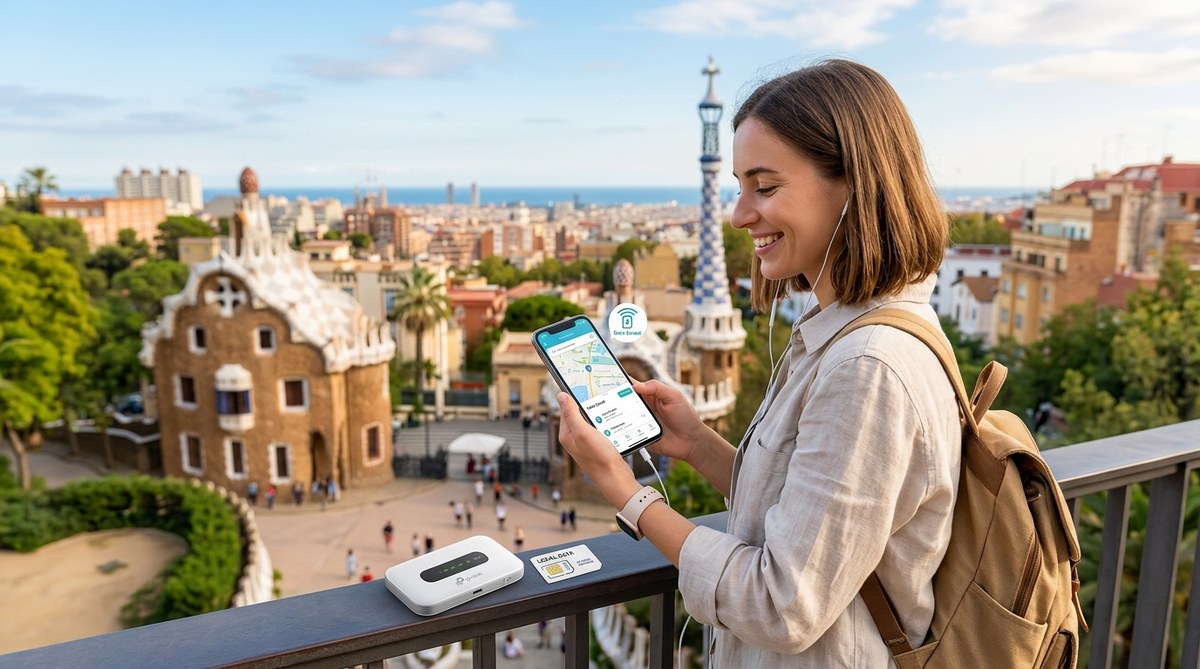
eSIMs have become the top choice for most travelers because they let you keep your home number active for calls and texts while using a separate data line. You can buy a plan before you leave and activate it the moment your plane touches down. Providers like Airalo, Holafly, and Nomad offer country-specific and regional plans at a fraction of roaming costs. A 7-day, 1GB plan for Japan might cost around $5, compared to $70 or more through a carrier day pass.

Most modern phones support eSIMs, including iPhones from the XR onward, Google Pixels, and Samsung Galaxy S20 and newer models. If your phone is unlocked, you are set. If it is locked to a carrier, you may still be able to use an eSIM as a secondary line, but check with your carrier first.

One small tip: download and install the eSIM profile before you leave. You need internet to activate it, and airport Wi-Fi can be spotty.

2. Local Prepaid SIM Cards

If you want the absolute lowest price and have an unlocked phone, buying a local SIM card is still the winner. A prepaid SIM from a local carrier often includes generous data allowances for a few dollars. In Thailand, for instance, an AIS tourist SIM with 15GB of data for 8 days costs around $8. In Europe, carriers like Vodafone, Orange, and TIM sell prepaid plans that work across multiple countries.

The downside is the hassle. You have to find a store, possibly show your passport, and swap out your home SIM. Keep your home SIM safe in a zippered pocket or a small case. Some travelers carry a cheap second phone just for this purpose.

3. Portable Wi-Fi Hotspots

Portable hotspots are small devices that create a private Wi-Fi network using a local data connection. You rent them before your trip or pick them up at the airport. Services like Pupuru and Solis offer global hotspots with daily data caps.

These devices work well for families or groups because multiple phones can connect to a single hotspot. The main drawbacks are the extra device to carry and charge, and the rental fees that can add up on longer trips.

4. Wi-Fi Only and Offline Maps

You can survive on Wi-Fi alone if you prepare properly. Download offline maps in Google Maps or Apple Maps for every city you plan to visit. Download your boarding passes, hotel confirmations, and any important documents ahead of time. Use messaging apps like WhatsApp or iMessage over Wi-Fi to stay in touch.

This method costs nothing, but it limits your flexibility. You cannot navigate while walking between Wi-Fi zones, and you cannot look up a restaurant recommendation on the fly. It works best for short trips or travelers who stick to cafes and hotels with reliable internet.

How to Set Up Your Phone Before You Leave

Follow these steps to avoid accidental charges the moment you step off the plane.

  1. Turn off data roaming in your settings. On an iPhone, go to Settings > Cellular > Cellular Data Options and toggle off Data Roaming. On Android, go to Settings > Connections > Mobile Networks and turn off Data Roaming.

  2. Disable background app refresh. Apps like email, social media, and weather will keep using data in the background unless you stop them. Turn off background data for every app that does not need real time updates.

  3. Turn on airplane mode when you land. This kills all cellular connections instantly. You can then manually turn Wi-Fi and Bluetooth back on without risking data roaming.

  4. Remove or disable your home SIM if using a local SIM. If you are swapping to a local SIM, physically remove your home SIM or disable it in the dual SIM settings.

  5. Test your eSIM or local SIM with a small data task. Open a web page or send a message to confirm everything works before you rely on it for navigation.

Expert Advice: “I always do a dry run before I leave. I turn on airplane mode, connect to Wi-Fi at home, and make sure my messaging apps work without my cellular line. That way I know my settings are correct before I even get to the airport.” — Sarah Liu, travel tech blogger at Nomad Nexus

Common Mistakes That Still Trigger Roaming Fees

Even with the best intentions, travelers accidentally rack up charges. Here are the most common slip ups and how to avoid them.

Mistake Why It Happens How to Fix It
Visual Voicemail downloads Your phone downloads voicemail over cellular when roaming is on Turn off data roaming before you leave
iMessage activation iMessage may try to activate or verify via SMS when you insert a new SIM Turn off iMessage before removing your home SIM
Automatic email fetch Email apps pull new messages over cellular data Set email to manual fetch or disable cellular data for the Mail app
System services Location services, time zone updates, and weather use data in the background Go to Settings > Privacy > Location Services > System Services and turn off most options
App store updates Apps update over cellular if not restricted Set App Store updates to Wi-Fi only

Choosing the Right Option for Your Trip

The best method depends on your destination, phone model, and travel style. Here is a simple breakdown.

  • You have an eSIM-compatible phone and want zero hassle: Buy an eSIM before you go. It works in over 190 countries and activates with a QR code.

  • You have an unlocked phone and want the cheapest data: Buy a local SIM when you arrive. It takes 15 minutes at the airport but saves you the most money.

  • You travel with family or a group: Rent a portable Wi-Fi hotspot. One device covers everyone and avoids the headache of setting up multiple SIMs.

  • Your trip is short and you stay near Wi-Fi: Use offline maps and free Wi-Fi. No cost, no setup.

If you are planning a longer trip through multiple countries, a regional eSIM or a Europe-wide prepaid SIM is usually the easiest option. Providers like Holafly offer plans that cover all of Europe, Southeast Asia, or Latin America with one installation.

What to Do When You Have No Signal at All

Sometimes you end up in a place with no cellular coverage and no Wi-Fi. Remote hiking trails, subway tunnels, and rural areas can leave you disconnected. Carry a backup plan.

Download offline maps for the entire region, not just the city center. Save your hotel address, embassy contact, and emergency numbers as plain text notes on your phone, not in the cloud. Consider carrying a small paper map as a last resort.

If you are traveling as a couple or group, agree on meeting points and times before you split up. A 15-minute delay in a subway tunnel is fine if everyone knows where to wait.

Internal Links for Deeper City Guides

Learning how to stay connected is just one part of planning a smooth trip. Once you have your data sorted, you can focus on what really matters: experiencing the city. Check out our guide on how to spend 48 hours in Tokyo without breaking the bank for a budget friendly itinerary. If you are heading to Europe, our tips on how to spend 5 days in Paris like a local will help you skip the tourist traps. For first timers in Italy, read the ultimate first-timer’s guide to navigating Rome like a local to make the most of your time.

Your Phone Should Work for You, Not Against You

Roaming charges are an unnecessary stress. With the right preparation, you can land in any country and have working data within minutes for a few dollars. An eSIM takes the guesswork out of the process, but a local SIM works just as well if you prefer tangible control.

Take five minutes before your next trip to turn off data roaming, download an eSIM or research local carriers, and save a few offline maps. That small investment of time will save you money and give you one less thing to worry about. Your vacation should be about the places you see, not the bill that shows up after you get home.
How to Spend 3 Perfect Days in Vienna on a Budget

Vienna has a reputation for being one of Europe’s pricier capitals. And yes, you can drop a lot of money on fancy coffee houses and opera tickets. But here is the truth: Vienna is also one of the most…

Vienna has a reputation for being one of Europe’s pricier capitals. And yes, you can drop a lot of money on fancy coffee houses and opera tickets. But here is the truth: Vienna is also one of the most walkable, park-filled, and publicly accessible cities in Europe. With a little planning, you can see the highlights, eat like a local, and sleep well without emptying your bank account. This guide shows you exactly how to spend 3 days in Vienna on a budget.

Key Takeaway

You can enjoy a full Vienna trip for under $150 per day per person if you use public transit, eat at markets and bakeries, book museum tickets online, and skip overpriced tours. This itinerary focuses on free landmarks, affordable food stalls, budget-friendly museums, and smart transportation choices that save both time and money.

Why Vienna Works for Budget Travelers

Vienna is compact. Most major sights sit inside the Ringstrasse, a circular boulevard that rings the old town. You can walk from one end to the other in about 30 minutes. That means you save on taxis and ride shares. The public transit system is clean, safe, and cheap. A 72-hour ticket costs around 17 euros and covers all trams, buses, and subways.

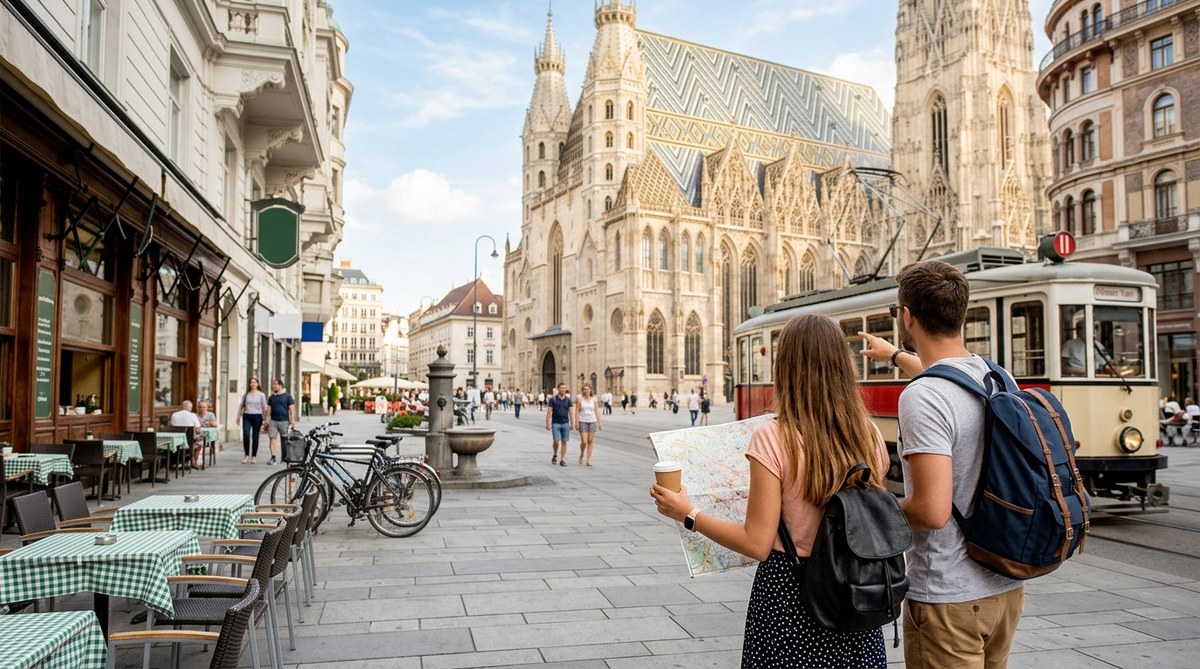
Many of Vienna’s best experiences are free. You can walk through the grounds of Schonbrunn Palace without paying. You can see St. Stephen’s Cathedral from the inside for free. You can hang out in the Stadtpark, watch the Danube flow by, and visit the Naschmarkt without spending a dime. The city is full of public art, street musicians, and green spaces that reward people who just wander.

Local tip from a Vienna resident: “Most tourists buy the Vienna Pass thinking it saves money. But if you are here for 3 days and move at a relaxed pace, you often spend less by picking two or three paid attractions and leaving the rest for free wandering. The pass only works if you visit five or more paid sites.”

How to Plan Your 3 Days in Vienna on a Budget

Follow these three steps before you go. They will save you both money and frustration.

  1. Book your accommodation in the 7th or 8th district. These neighborhoods are a 15 minute walk from the city center but cost half as much as hotels near St. Stephen’s. You get bakeries, local pubs, and a quieter vibe. Look for guesthouses or apartment rentals on side streets.
  2. Buy a 72-hour public transit ticket at the airport. Use the machine near the baggage claim. It covers trains into town and all city transport. Do not buy single tickets. The pass pays for itself by day two.
  3. Reserve museum tickets online at least 48 hours ahead. The Belvedere and the Hofburg offer lower prices for advance bookings. You also skip the line, which lets you see more in less time.

Day 1: The Imperial City Without the Imperial Price Tag

Morning: Schonbrunn Palace Grounds

Start your trip at Schonbrunn, the summer residence of the Habsburgs. The palace itself costs money to enter. The gardens, the hill, the fountains, and the hedge mazes are all free. Walk up to the Gloriette for a panoramic view of the city. This is one of the best free viewpoints in all of Vienna. Bring a coffee from a nearby supermarket and sit on a bench for a while. Locals do this every weekend.

If you want to see one paid room, choose the Grand Tour. It costs about 20 euros and shows you 40 rooms of imperial life. Book your slot online to save two euros per ticket.

Lunch: Naschmarkt

Take the U4 subway line to Kettenbruckengasse. The Naschmarkt is Vienna’s biggest outdoor food market. You can get a falafel wrap for 4 euros, a bowl of pasta for 6 euros, or a fresh juice for 3 euros. Walk the aisles and sample olives, cheese, and bread from the stalls. This is cheaper than any sit-down restaurant in the first district.

Afternoon: Hofburg Palace and the City Center

Walk from the Naschmarkt to the Hofburg Palace. The walk takes about 20 minutes and passes beautiful buildings along the Maria Theresien Platz. The Hofburg is the former imperial palace. You can enter the courtyards, the library square, and the public gardens for free. The Sisi Museum costs money, but you can skip it and still see plenty.

From the Hofburg, walk to the Rathaus (city hall). The square in front often holds free events. Then head to St. Stephen’s Cathedral. The main nave is free to enter. Climb the south tower for about 5 euros if you want the best view of the rooftops.

Evening: Dinner in the 7th District

The 7th district (Neubau) is full of affordable restaurants and bars. Go to Schleifmuhlgasse or Neustiftgasse. Look for places with chalkboard menus outside. A plate of schnitzel with potato salad costs about 12 euros. A beer is around 4 euros. Skip the restaurants right on the main shopping street. Walk one block sideways for better prices.

Day 2: Art, Parks, and the Famous Coffee Culture

Morning: Belvedere Palace

The Belvedere is a stunning baroque palace complex. The gardens are free and beautiful. The upper palace holds the main art collection. If you want to see Gustav Klimt’s “The Kiss,” you need a ticket. Book online for about 16 euros. The lower palace sometimes has free exhibitions. Check the calendar before you go.

Lunch: A Real Viennese Coffee House

You cannot visit Vienna without sitting in a coffee house. Find one in the 4th or 6th district away from the main tourist streets. Order a Melange (the local cappuccino) and a slice of cake. This costs about 8 to 10 euros total. Sit as long as you want. Bring a book or a journal. This is the Viennese way.

Afternoon: The Prater Park

Take the subway to Praterstern. The Prater is a huge public park with walking paths, meadows, and the famous Riesenrad ferris wheel. You do not need to ride the wheel. It costs 15 euros and the line is long. Instead, walk into the park and enjoy the green space. There are free public toilets, water fountains, and plenty of benches. On weekends, you might see free concerts or sports events in the park.

Evening: Free Music and Local Food

Vienna has a strong tradition of free classical music concerts. Check the website of the Musikverein or the Konzerthaus for free lunchtime or evening shows. Many churches also host free organ concerts. For dinner, try a Wurstelstand (sausage stand). A sausage with bread and mustard costs about 4 euros. It is filling and fast.

Common Mistake Budget Fix
Buying a Vienna Pass for 3 days Pick 2 paid attractions and enjoy free sights instead
Eating on the Graben (main tourist street) Walk 2 blocks away for half the price
Taking taxis from the airport Use the S7 train for 4 euros
Ordering water in restaurants Bring your own reusable bottle
Paying for a guided tour of the city Use a free walking tour app or map

Day 3: Neighborhoods, Hidden Views, and Leaving Room to Wander

Morning: The 8th District and the Volksgarten

Start your last day in the 8th district (Josefstadt). This is a quiet residential area with lovely courtyards and small cafes. Walk to the Volksgarten, a beautiful public garden with roses and a view of the Hofburg. It is free and usually not crowded. From there, walk toward the Parliament building and the Rathaus for photos.

Lunch: The Brunnenmarkt

Head to the 16th district for the Brunnenmarkt. This is a working-class market with Middle Eastern, Turkish, and Balkan food. You can get a huge plate of grilled meat with rice and salad for 6 euros. The area feels completely different from the center. It is authentic and full of energy.

Afternoon: Karlskirche and the Musikverein

Walk to Karlskirche (St. Charles Church). The church charges a small entry fee (about 8 euros) but the interior is stunning. If you want a free option, just sit on the grass by the pond in front of the church. The reflection is one of the most photographed scenes in Vienna.

If you have not seen a free concert yet, check the Musikverein box office for last minute standing tickets. These cost around 10 euros and let you hear world-class music for a fraction of the normal price.

Evening: A Final Walk Along the Danube Canal

End your trip with a walk along the Danube Canal. The canal has murals, street art, and casual bars under the bridges. You can find food trucks and pop up stands selling cheap drinks and snacks. The atmosphere is relaxed and young. This is where locals hang out on warm evenings.

Where to Save Money in Vienna

Here are the six biggest money savers for your trip.

  • Use the 72-hour transit pass. It covers everything and costs less than two taxi rides.
  • Eat lunch at markets. The Naschmarkt and Brunnenmarkt offer filling meals for under 7 euros.
  • Skip the hotel breakfast. Buy a pastry and coffee at a bakery for 4 euros instead.
  • Visit free museums on the first Sunday of the month. Many museums offer free entry that day.
  • Drink tap water. Vienna has some of the best tap water in Europe. Carry a bottle.
  • Walk everywhere in the center. You will see more and spend nothing.

A Note on Attraction Passes

Many first time visitors wonder about the Vienna Pass. It costs around 85 euros for 72 hours. You need to visit at least five paid attractions for it to pay off. If you move at a relaxed pace and enjoy walking around, you are better off picking two paid sites and skipping the rest. Check out this guide on whether city attraction passes are actually worth the money for a deeper breakdown.

For finding the best places to stay on a budget, read up on how to find budget-friendly hotels in Europe’s most expensive cities. The strategies there work especially well for Vienna.

Your Real Daily Budget for 3 Days in Vienna

Here is what you will actually spend if you follow this itinerary.

Category Estimated Cost per Day
Accommodation (shared or budget room) $50 to $70
Food (market breakfast, market lunch, pub dinner) $25 to $35
Transit (72 hour pass divided by 3) $6
Attractions (2 paid sites over 3 days) $10 to $15
Coffee and treats $5 to $8
Total per day $96 to $134

This leaves room for a souvenir or an extra beer. Vienna on a budget is not about deprivation. It is about making smart choices.

Making the Most of Your Time Without Spending More

The best thing about Vienna is that the city itself is the attraction. The architecture, the parks, the street art, the people watching. You do not need a ticket to enjoy the Ringstrasse. You do not need a guide to appreciate the Danube. You do not need a pass to sit in a coffee house and watch the world go by.

If you are someone who likes to find hidden spots, take a look at 15 hidden gems locals don’t want tourists to know about. Many of those ideas apply to Vienna too.

How to Eat Well Without Spending Much

Vienna’s food scene is surprisingly budget friendly if you know where to look. The city has hundreds of bakeries (backerei) where you can get fresh bread, pastries, and coffee for under 5 euros. The supermarkets like Spar and Billa sell prepared sandwiches, salads, and drinks for half the price of cafes.

For a full guide on saving money on food while traveling, check out budget eating in expensive cities: 15 strategies that actually work. Many of the tips apply directly to Vienna.

The One Splurge Worth Making

If you have room in your budget for one special experience, make it the Staatsoper (Vienna State Opera). Standing tickets cost as little as 10 euros. You get to see one of the world’s greatest opera houses for the price of a sandwich. Buy them at the box office about an hour before the show. Dress is casual. Do not worry about formal clothes. Just go and enjoy the music.

A Final Thought on Your 3 Days in Vienna

Vienna is a city that rewards people who take their time. You do not need to rush. You do not need to see everything. The magic of this place comes from the small moments: sitting in a park with a pastry, hearing music float out of a open window, watching the trams roll by on a quiet street. Those moments are free.

If you are planning more European trips on a budget, you might enjoy this guide on how to spend a perfect 3 days in Lisbon in 2026 or this budget backpacker’s two-week Europe itinerary covering 6 cities under $1500.

Go to Vienna. Walk the streets. Eat the sausage. Drink the coffee. And come home with money still in your pocket. That is the best souvenir of all.

A 3-Day Chicago Itinerary for Food Lovers and Architecture Enthusiasts

Chicago hits you right away. One minute you are stepping out of a cab on Michigan Avenue, and the next you are staring up at a canyon of steel and glass that seems to touch the clouds. The air smells …

Chicago hits you right away. One minute you are stepping out of a cab on Michigan Avenue, and the next you are staring up at a canyon of steel and glass that seems to touch the clouds. The air smells like lake water, hot dog stands, and something baking in a deep dish pan. This city does not ease you in. It greets you with a handshake and a slice of pizza. For travelers who love architecture and food, Chicago is a playground. The skyline tells a story of innovation, while every neighborhood has a signature dish or a family run spot that has been serving it for decades. A 3 day Chicago itinerary can feel tight, but with a little planning, you can taste the city and admire its design without rushing. Let me show you how.

Key Takeaway

This 3 day Chicago itinerary balances world class architecture with unforgettable food stops. You will ride a river cruise through the heart of the city, climb to the top of a famous skyscraper, eat deep dish pizza where it was invented, and explore neighborhoods that locals love. The plan works for first time visitors and return travelers alike. Each day mixes sightseeing with meals that matter, so you leave full in every sense.

Day One: The Skyline And A Slice Of History

Your first day in Chicago should start with a view. Head straight to the Chicago Riverwalk and find a spot near the intersection of Michigan Avenue. The sun hits the Wrigley Building and the Tribune Tower in a way that makes you reach for your phone. But do not linger too long. You have a boat to catch.

Morning Architecture River Cruise

The Chicago Architecture Foundation Center runs a 90 minute river cruise that covers more than 50 buildings along the Chicago River. This tour is the single best introduction to the city. You will glide past the Wills Tower, the Marina City towers (those corn cob shaped buildings), and the sleek Aqua building. The guides are volunteers who actually know the stories behind each structure. They will tell you about the Great Chicago Fire of 1871, the birth of the skyscraper, and why the city reinvented itself so many times.

Book the earliest tour of the day. Crowds are smaller, and the light is better for photos.

Lunch at a Classic Italian Beef Spot

After the cruise, walk north into River North for lunch. Al’s Beef on West Adams Street serves the original Italian beef sandwich. Order it “dipped” with hot giardiniera. The meat is thin, juicy, and piled high on a roll that somehow holds it all together. This is not a tourist trap. This is a working class lunch that Chicagoans have been eating since the 1930s.

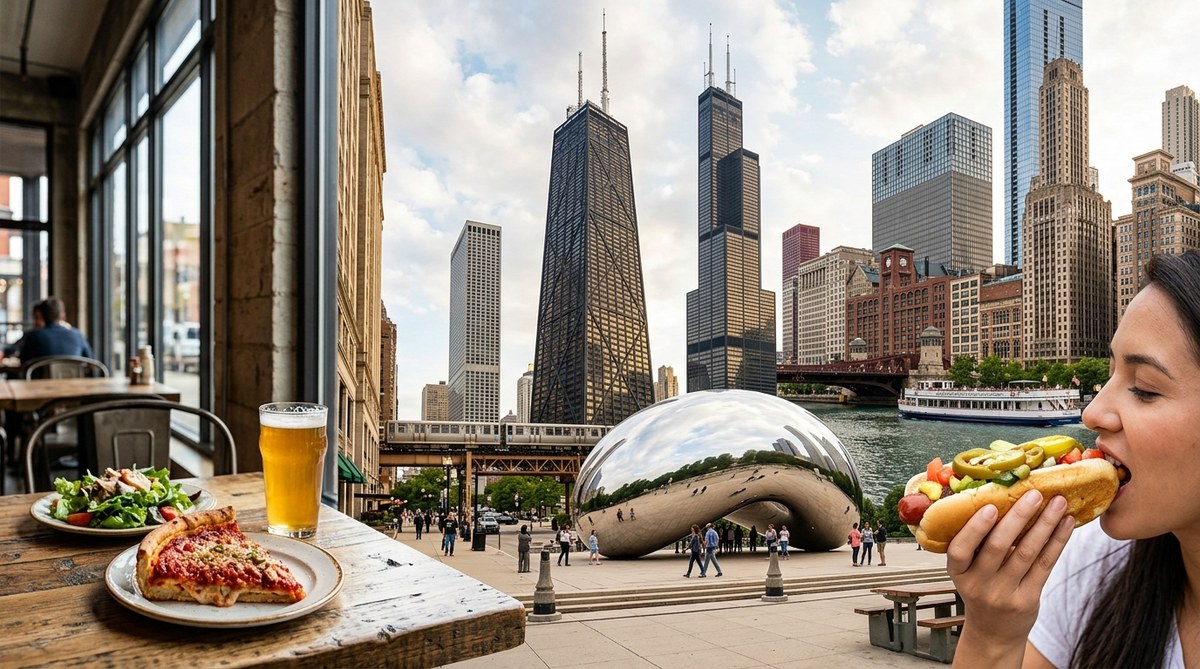
If you want something lighter, grab a Chicago style hot dog from a cart near Millennium Park. Remember the rules: no ketchup. Mustard, relish, onions, tomatoes, sport peppers, and a pickle spear. That is the Chicago way.

Afternoon at Millennium Park and The Art Institute

Millennium Park is home to Cloud Gate, which everyone calls The Bean. It is shiny, reflective, and way more fun to walk under than you expect. Spend 15 minutes here, take your photos, and then walk south to the Art Institute of Chicago. This museum has one of the best Impressionist collections in the world. You can see Monet’s Haystacks, Seurat’s A Sunday on La Grande Jatte, and Grant Wood’s American Gothic. Plan for two hours minimum.

Dinner: Deep Dish Done Right

You cannot visit Chicago without deep dish pizza. But skip the chains. Go to Lou Malnati’s on North Wells Street. The crust is buttery, the cheese is layered under the sauce (a signature move), and the sausage patty covers the entire pie. Order a small if you are alone or a medium for two. One slice will fill you up. Two slices mean no dessert.

“Deep dish is not pizza. It is a casserole that happens to have a crust. And it is glorious.” – A local server at Lou Malnati’s


Day Two: Neighborhoods, Skyscrapers, And A Second Slice

Day two goes deeper. You will leave the Loop and explore neighborhoods that define Chicago’s food and culture.

Morning in Wicker Park and Bucktown

Start your day with breakfast at The Bongo Room on Milwaukee Avenue. Their chocolate banana caramel French toast is famous for good reason. But the real move is the breakfast burrito with tomatillo salsa. After eating, walk north on Milwaukee Avenue and window shop the vintage stores and indie bookshops. This neighborhood feels like a small town inside a big city.

Midday: The 360 Chicago Observation Deck

Take the Blue Line back downtown and head to the 360 Chicago Observation Deck on the 94th floor of the John Hancock Center. The view is straight down the Magnificent Mile and across the lake. On a clear day, you can see four states. The TILT experience lets you lean out over the street at a 30 degree angle. It is not for the faint of heart, but it makes a great video.

Lunch in Chinatown

Chicago’s Chinatown is one of the oldest in the country. Take the Red Line to Cermak Road. Walk under the ornate gate and head to MingHin Cuisine for dim sum. The har gow (shrimp dumplings) and siu mai are as good as anything in San Francisco or New York. If you want something more casual, grab a bubble tea and a pork bun from Chiu Quon Bakery.

Afternoon Architecture Walk: The Loop

Spend the afternoon walking the Loop. Here are five buildings you should not miss:

  • The Rookery Building (209 S LaSalle Street) – Frank Lloyd Wright’s lobby renovation is stunning
  • The Marquette Building (140 S Dearborn Street) – A masterpiece of the Chicago School
  • The Chicago Board of Trade Building (141 W Jackson Boulevard) – Art Deco at its finest
  • The Monadnock Building (53 W Jackson Boulevard) – The tallest brick building in the world
  • The Harold Washington Library (400 S State Street) – A modern landmark with a giant owl on top

Dinner: A Taste Of The West Loop

The West Loop has become Chicago’s best food neighborhood. Go to Au Cheval for a burger that people argue about online. The single cheeseburger with bacon and an egg is worth the wait. No reservations. Expect a line. But the line moves, and the bar next door serves great cocktails while you wait.


Day Three: Neighborhood Gems And A Sweet Farewell

Your last day should be slower. You have seen the skyline and eaten the classics. Now it is time to find the hidden corners.

Morning in Hyde Park

Take the Metra Electric Line south to Hyde Park. This is where the University of Chicago sits, and the campus feels like Oxford dropped into the Midwest. Walk through the Main Quadrangle and then head to the Museum of Science and Industry. It is huge. Pick one exhibit (the U-505 submarine is incredible) and spend an hour there.

The real reason to come here is the food. Get a breaded steak sandwich from The Original Shrimp. It is a South Side specialty. Thin pounded beef, breaded and fried, served on a roll with hot sauce and pickles. It is messy. It is perfect.

Midday: Lincoln Park and The Zoo

Take the train back north and spend an hour at the Lincoln Park Zoo. It is free and beautifully maintained. The lions and polar bears are always popular. After the zoo, walk through the Lincoln Park Conservatory. The fern room smells like a rainforest.

Late Lunch at a Polish Kitchen

Chicago has one of the largest Polish populations in the world. Head to Podhalanka in the West Town neighborhood. This tiny counter serves pierogi (stuffed dumplings), kielbasa, and potato pancakes. The atmosphere is no frills. The food tastes like someone’s grandmother made it. That is because someone’s grandmother did.

Afternoon: The Last View

End your trip where it started: on the water. Rent a kayak on the Chicago Riverwalk and paddle through the heart of the city. You will see the buildings from below, and the reflections on the water create a second skyline. It is a peaceful way to say goodbye.

Final Dinner: A Modern Classic

For your last meal, book a table at Monteverde in the West Loop. Chef Sarah Grueneberg makes handmade pasta that changes with the seasons. The cacio e pepe is simple, rich, and unforgettable. Order a glass of wine and toast your trip.


How To Plan Your 3 Day Chicago Itinerary: A Step by Step Guide

Here is a simple process to lock in your plans before you arrive:

  1. Book your architecture river cruise at least two weeks in advance. Weekend slots sell out fast.
  2. Reserve dinner spots for Au Cheval and Monteverde as early as possible. Monteverde accepts reservations 30 days ahead.
  3. Purchase a Ventra card for the CTA trains and buses. You can load it at any station kiosk.
  4. Download the Chicago Architecture Center app for self guided walking tours.
  5. Pack layers. Chicago weather changes hour to hour. A jacket in the morning might feel heavy by lunch.

What To Eat And Where: A Handy Reference

Dish Best Place Neighborhood Why It Matters
Deep dish pizza Lou Malnati’s River North Buttery crust, perfect sauce to cheese ratio
Italian beef Al’s Beef Greektown Dipped and loaded with giardiniera
Chicago hot dog Portillo’s Multiple locations All the fixings, no ketchup
Breaded steak sandwich The Original Shrimp Hyde Park A South Side classic
Pierogi Podhalanka West Town Homestyle Polish cooking
Handmade pasta Monteverde West Loop Seasonal and sensational

Three Mistakes To Avoid On A Chicago Trip

  • Skipping the architecture cruise. You will see more from the water than from the sidewalk. Do not miss it.
  • Eating only deep dish. Chicago has world class pizza, but it also has Italian beef, Polish food, Mexican taquerias, and Asian bakeries. Try them all.
  • Staying only in the Loop. The neighborhoods are where the soul of the city lives. Wicker Park, Hyde Park, and Lincoln Park each offer something different.

Why This Itinerary Works For Food Lovers And Architecture Fans

Chicago is not a city you can see in a weekend. But you can taste it. You can stand under a Frank Lloyd Wright ceiling and then walk two blocks to a restaurant that has been serving the same recipe for 80 years. That combination of old and new, of heavy steel and delicate pasta, is what makes this city special. This 3 day Chicago itinerary gives you both sides. You will leave with photos of the skyline and a list of places you want to visit next time.

Pack comfortable shoes. Bring an open appetite. And when someone asks you about your trip, tell them about the moment you saw the sun set over the river while holding a slice of pizza. That is the Chicago moment you will remember.

For more travel inspiration, check out our guide to the ultimate first-timer’s guide to navigating Rome like a local or our tips on how to avoid tourist traps and overpriced restaurants in any city. And if you are planning more long weekends, our 48 hours in Amsterdam: the ultimate two-day city break is a great follow up read.