Choosing where to stay can make or break your city break. The hotel you pick shapes everything from your morning coffee to the neighborhood you call home for a few nights. Two very different options dominate the market: boutique hotels with their unique character and chain hotels with their reliable consistency. Each appeals to different travelers, budgets, and trip styles.
Boutique hotels offer personalized service, distinctive design, and local character, typically in smaller properties with 10-100 rooms. Chain hotels provide predictable amenities, loyalty rewards, and standardized service across hundreds of locations. Your choice depends on whether you prioritize unique experiences and neighborhood immersion or consistent quality and familiar comforts. Budget, trip purpose, and personal preferences all play crucial roles in this decision.
What defines a boutique hotel
Boutique hotels typically house fewer than 100 rooms, often closer to 20 or 30. Each property tells its own story through custom interior design, locally sourced artwork, and architecture that reflects the surrounding neighborhood.
The staff usually knows guests by name after one interaction. You won’t find identical properties in other cities. Each boutique hotel stands alone, often independently owned or part of a small collection with distinct personalities.
Design choices lean heavily on local culture. A boutique hotel in Barcelona might feature Gaudí-inspired tilework, while one in Portland could showcase reclaimed timber and craft beer on tap in the lobby.
These properties often occupy converted historic buildings. Former banks, factories, and mansions get new life as hotels, preserving architectural details that chain properties rarely maintain.
How chain hotels operate
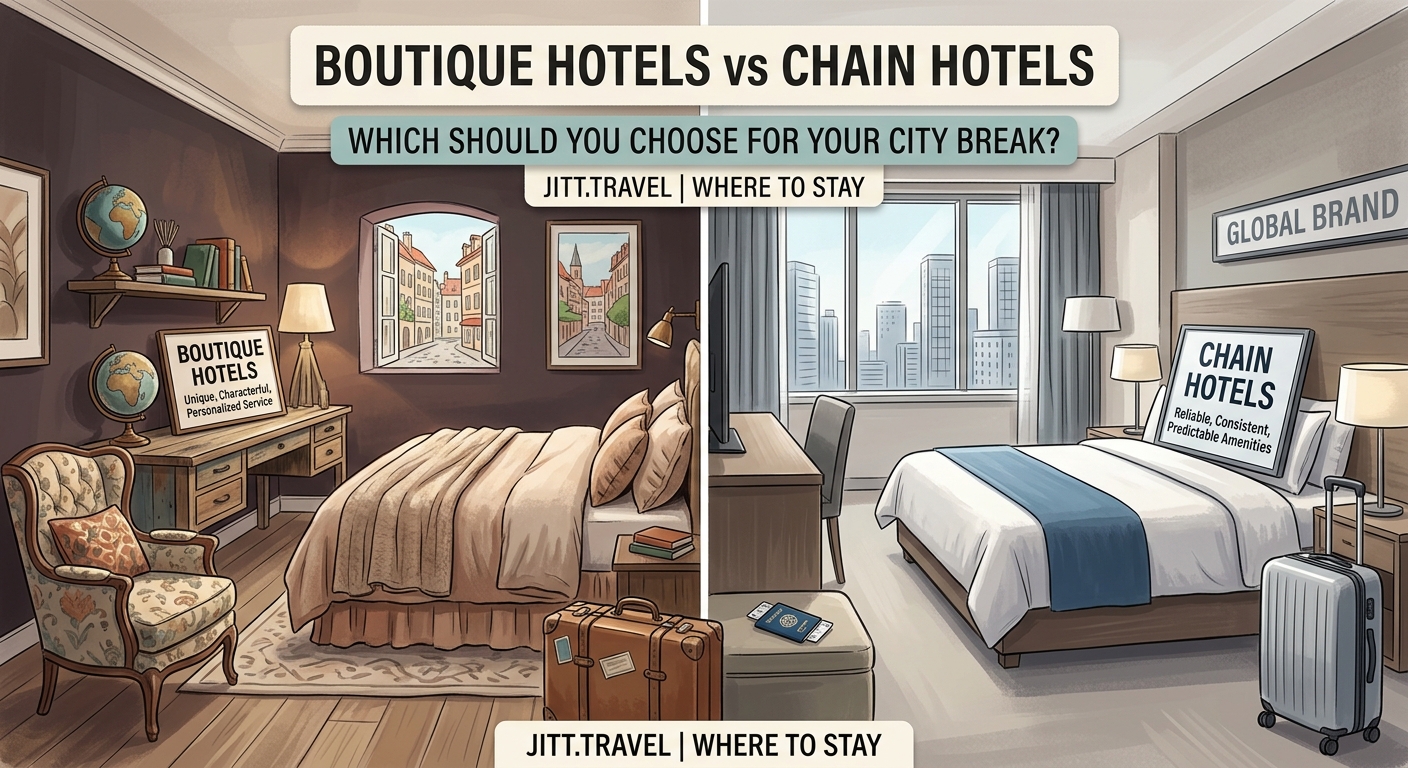
Chain hotels follow brand standards across every location. The lobby layout, room configuration, breakfast options, and even the pillow firmness match whether you’re in Miami or Manchester.
Major chains operate thousands of properties worldwide. Marriott, Hilton, IHG, and Accor manage multiple sub-brands targeting different price points and traveler types.
Consistency drives the model. Business travelers especially value knowing exactly what to expect. The shower pressure, wifi speed, and checkout time remain identical from one stay to the next.
Loyalty programs form the backbone of chain hotel strategy. Points accumulate across stays, unlocking free nights, room upgrades, and elite status benefits that boutique hotels rarely match.
Price comparison breakdown
Neither option automatically costs more. Boutique hotels range from budget-friendly gems to ultra-luxury hideaways. Chain hotels span the same spectrum.
Location impacts price more than hotel type. A boutique hotel in a secondary neighborhood might undercut a chain property in the city center, even with superior design and service.
| Factor | Boutique Hotels | Chain Hotels |
|---|---|---|
| Average nightly rate | $150-400 | $100-300 |
| Hidden fees | Less common | Resort fees, parking often extra |
| Seasonal pricing | More flexible | Algorithm-driven, less negotiable |
| Last-minute deals | Often available | Loyalty members get best rates |
| Package offerings | Curated local experiences | Standardized add-ons |
Boutique properties sometimes include perks that chains charge extra for. Complimentary wine hours, local snacks, and bike rentals often come standard.
Chain hotels nickel-and-dime certain amenities. Parking fees of $40 per night in major cities, resort fees covering pool access, and early check-in charges add up fast.
Service style differences
Boutique hotel staff often wear multiple hats. The person checking you in might also recommend dinner spots, arrange concert tickets, and remember your coffee order the next morning.
Personal touches define the boutique experience. Staff might leave handwritten welcome notes, offer neighborhood walking maps they created themselves, or adjust room temperature before arrival based on weather forecasts.
Chain hotels follow service scripts. Front desk interactions feel professional but formulaic. Staff turnover runs higher, making personal connections less likely.
Training programs at chains emphasize efficiency over personalization. Checking in 200 guests smoothly matters more than spending 10 minutes crafting the perfect itinerary for one traveler.
The best hotel choice depends on what you value most. If you want to feel like a local insider with personalized recommendations and unique spaces, boutique properties deliver. If you need reliable amenities, predictable quality, and rewards points, chains make more sense.
Room design and amenities
Boutique hotel rooms rarely look identical, even within the same property. Room 203 might feature exposed brick and a clawfoot tub, while Room 405 showcases floor-to-ceiling windows and mid-century furniture.
Quirky touches appear throughout boutique properties. Vinyl record players, locally roasted coffee, artisan bath products, and curated book selections create distinctive atmospheres.
Chain hotel rooms follow templates. The artwork, furniture layout, and color schemes repeat across properties. This consistency comforts some travelers and bores others.
Standard amenities at chains include mini-fridges, coffee makers, ironing boards, and hair dryers. These items appear in every room without exception.
Boutique hotels might skip standard items in favor of character. You might find a vintage typewriter but no coffee maker, or a record player but no television.
Location and neighborhood integration
Boutique hotels typically choose neighborhoods over tourist corridors. You’ll find them on residential streets where locals actually live, shop, and eat.
This location strategy immerses you in authentic city life. The cafe next door serves neighborhood regulars, not tour groups. The park across the street hosts local families, not just visitors.
Chain hotels cluster near convention centers, airports, and major attractions. Convenience for business travelers and tour groups drives these location choices.
Walking out of a boutique hotel often means immediate access to independent shops, family-run restaurants, and community gathering spots.
Chain properties frequently occupy areas where other chains cluster. You might find five major hotel brands within two blocks, surrounded by franchise restaurants and souvenir shops.
Loyalty programs and rewards
Chain hotel rewards programs offer clear value for frequent travelers. Free nights, room upgrades, late checkout, and bonus points accumulate across dozens of brands.
- Sign up for a free loyalty account before booking
- Book directly through the hotel website to earn points
- Link your account to credit cards offering bonus points
- Redeem points for free nights or transfer to airline partners
- Achieve elite status for additional perks like breakfast and upgrades
Boutique hotels rarely offer formal loyalty programs. Some small collections provide basic rewards, but nothing matching the scale of major chains.
The value equation shifts based on travel frequency. Someone taking two trips yearly gains little from chain loyalty programs. A traveler staying 30 nights annually can unlock significant benefits.
Boutique properties sometimes offer unofficial loyalty. Regular guests might receive complimentary upgrades, welcome amenities, or priority booking during high-demand periods.
Best scenarios for choosing boutique
Anniversary trips and special celebrations suit boutique hotels perfectly. The unique atmosphere and personalized service create memorable experiences.
Solo travelers often prefer boutique properties. Smaller lobbies and communal spaces make meeting other guests easier. Staff recommendations feel more trustworthy.
Photographers and social media enthusiasts gravitate toward boutique hotels. Every corner offers visual interest, from statement wallpaper to vintage furniture arrangements.
Travelers seeking local immersion benefit from boutique locations. You’ll eat where residents eat, shop where they shop, and experience the city beyond tourist zones.
Creative professionals appreciate boutique design inspiration. The thoughtful aesthetics and unique spaces often spark ideas and provide refreshing work environments.
Best scenarios for choosing chains
Business travel favors chain hotels. Reliable wifi, functional workspaces, predictable service, and proximity to meeting venues matter more than character.
Family trips with young children benefit from chain predictability. Knowing the pool hours, breakfast options, and room layout beforehand reduces stress.
Travelers with mobility needs find chains more accessible. ADA-compliant rooms follow consistent standards, and staff training on accessibility issues runs deeper.
International trips to unfamiliar destinations feel less risky with chains. Language barriers, unknown quality standards, and cultural differences become less daunting with a familiar brand.
Road trips and multi-city tours work well with chains. Booking several nights across different locations through one system simplifies planning.
Common misconceptions addressed
Boutique hotels always cost more: Many boutique properties undercut nearby chains, especially in emerging neighborhoods or secondary cities.
Chain hotels lack character: Some chain sub-brands now emphasize design and local touches. Brands like Canopy by Hilton and Tribute Portfolio by Marriott blur traditional lines.
Boutique hotels have poor wifi: Most boutique properties now offer excellent internet, recognizing that business travelers and digital nomads choose them too.
You need status for good chain service: Base-level service at chains meets standards, though elite members definitely receive preferential treatment.
Boutique hotels don’t accommodate families: Many boutique properties welcome children and offer connecting rooms, though they market less aggressively to families.
Making your decision
Consider these factors when choosing between boutique hotels vs chain hotels for your next trip:
- Trip purpose: Leisure favors boutique, business leans chain
- Travel frequency: Regular travelers benefit from chain loyalty
- Companion: Solo and couples often prefer boutique, families appreciate chain predictability
- Budget flexibility: Both options exist at every price point
- Neighborhood priorities: Boutique for local flavor, chain for tourist convenience
- Amenity needs: Chains for pools and gyms, boutique for unique experiences
- Booking timeline: Last-minute boutique deals often beat chain rates
Your personality matters too. Some people find comfort in consistency. Others crave novelty and local character.
Finding the right fit for every trip
Your accommodation choice shapes your entire city break experience. Boutique hotels deliver personality, local connection, and spaces worth photographing. Chain hotels provide reliability, rewards, and familiar comforts across the globe.
Neither option wins universally. The best choice changes based on your specific trip, travel companions, and personal preferences. Try both styles across different trips. You might discover that business travel calls for chains while weekend getaways demand boutique character. Mix and match based on what each journey needs, and your accommodation will enhance rather than just house your adventures.