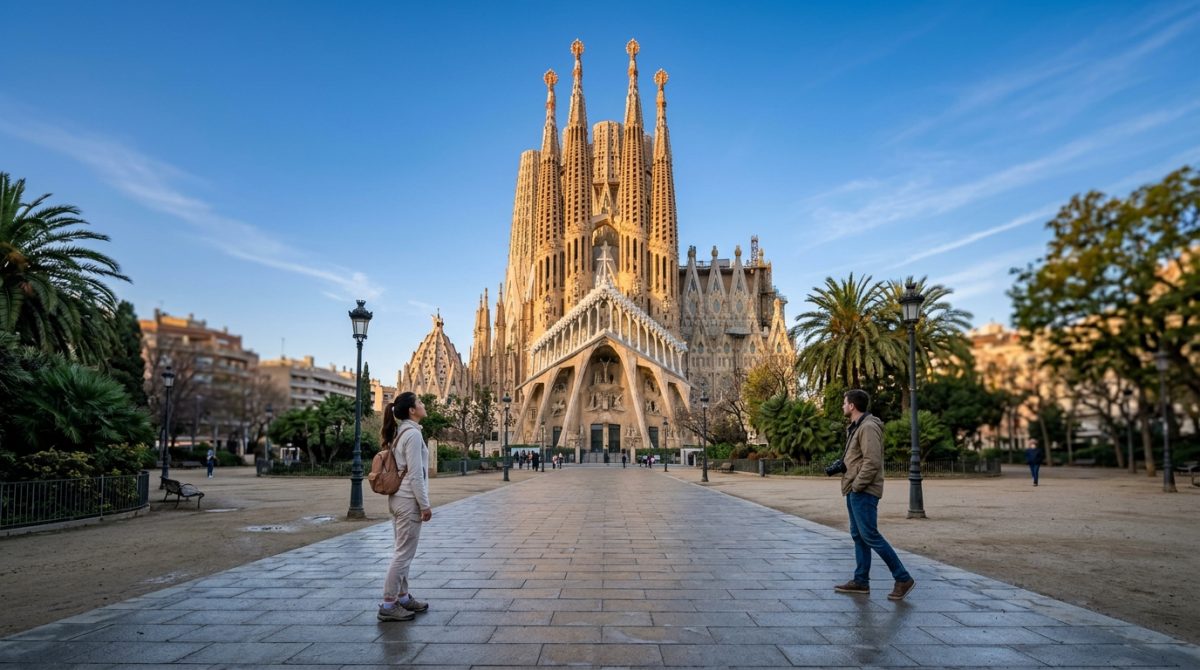
Visiting famous landmarks should feel magical, not like standing in an endless line while elbows bump into you from every direction. The difference between a memorable experience and a frustrating one often comes down to timing. Most travelers book trips around holidays and summer breaks, creating predictable waves of congestion at popular sites. But if you understand when crowds thin out and why, you can see the same attractions with breathing room.
The best time to visit attractions without crowds is during shoulder seasons, weekday mornings, and off-peak hours when schools are in session. Avoid summer vacations, major holidays, and weekends. Arrive at opening time or late afternoon, check local event calendars, and use weather to your advantage. Strategic timing transforms crowded landmarks into peaceful experiences worth remembering.
Understanding Peak Season Patterns
Tourist attractions follow predictable rhythms tied to school calendars, weather, and cultural holidays. Summer months from June through August see the highest visitor numbers at most destinations worldwide. Families travel when kids are out of school, creating massive spikes at theme parks, museums, and historical sites.
Spring break in March and April brings another wave. College students and families flood warm-weather destinations and major cities. Fall break in October creates smaller but noticeable increases.
Winter holidays around Christmas and New Year pack attractions despite cold weather in many regions. People use vacation days and travel to celebrate, filling hotels and tourist sites.
Understanding these patterns helps you identify gaps. The periods between these peaks offer significantly better experiences.
Shoulder Season Advantages
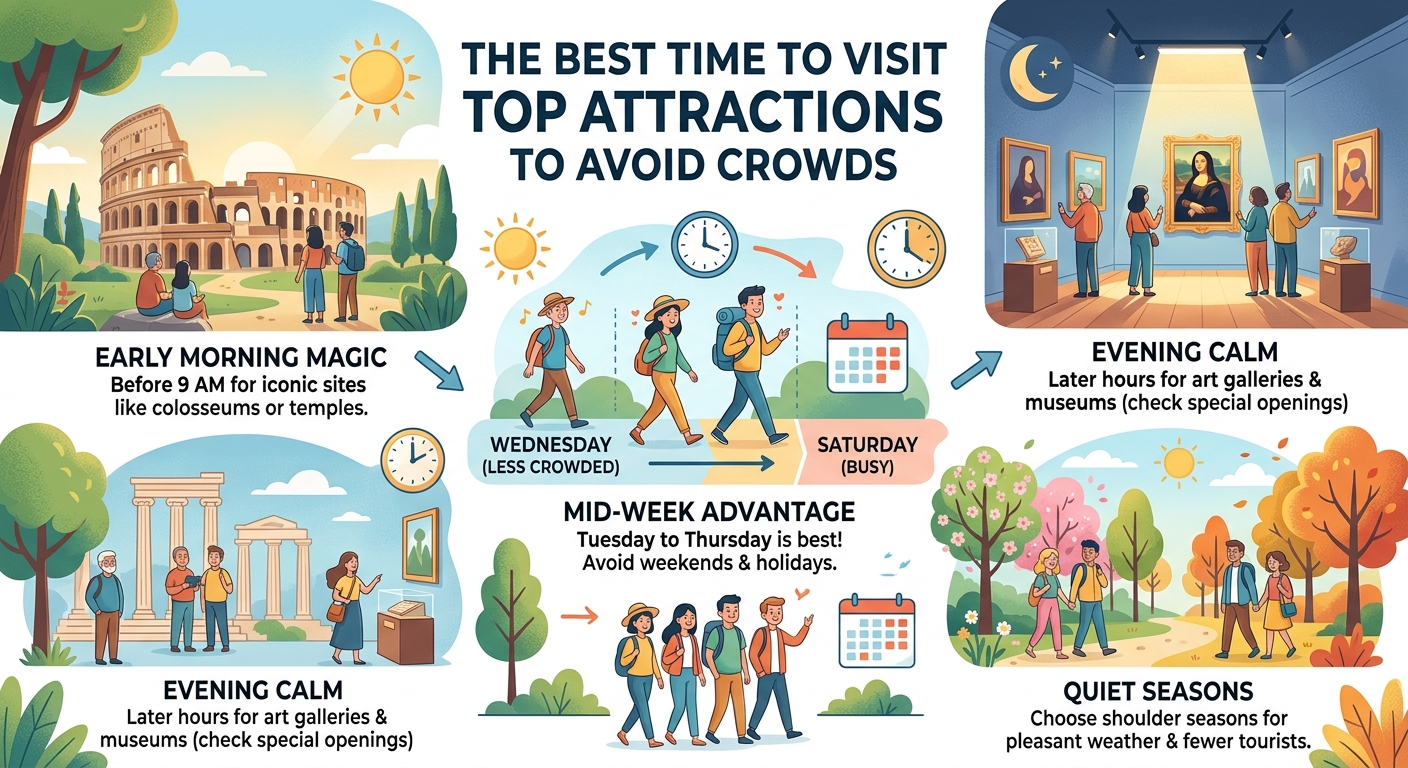
Shoulder seasons fall between peak and off-peak periods. For most destinations, this means late April to early June and September to early November.
Weather remains pleasant during these months in many locations. You avoid extreme summer heat or winter cold while enjoying comfortable conditions for sightseeing.
Prices drop noticeably. Hotels, flights, and tour packages cost less when demand decreases. Your budget stretches further, allowing longer stays or nicer accommodations.
Local businesses are less rushed. Restaurant staff, tour guides, and museum workers have more time to engage with visitors. You get better service and more personalized attention.
Attractions feel more authentic. When you can actually see artwork without craning your neck over someone’s selfie stick, museums become places of contemplation rather than obstacle courses.
Weekday vs Weekend Timing
Weekends bring local crowds on top of tourists. Residents visit attractions in their own cities on Saturdays and Sundays, doubling the congestion.
Tuesday through Thursday typically see the lightest foot traffic. Mondays can be busy as people extend weekend trips or start vacations.
This pattern holds especially true for urban attractions. Art museums, observation decks, and historic neighborhoods fill up on weekends but quiet down midweek.
Some attractions close on specific weekdays. Always verify operating hours before planning around a particular day. Museums often close Mondays or Tuesdays for maintenance.
Business districts reverse this pattern. Areas that thrive on office workers feel empty on weekends, making them perfect for peaceful exploration.
Daily Timing Strategies
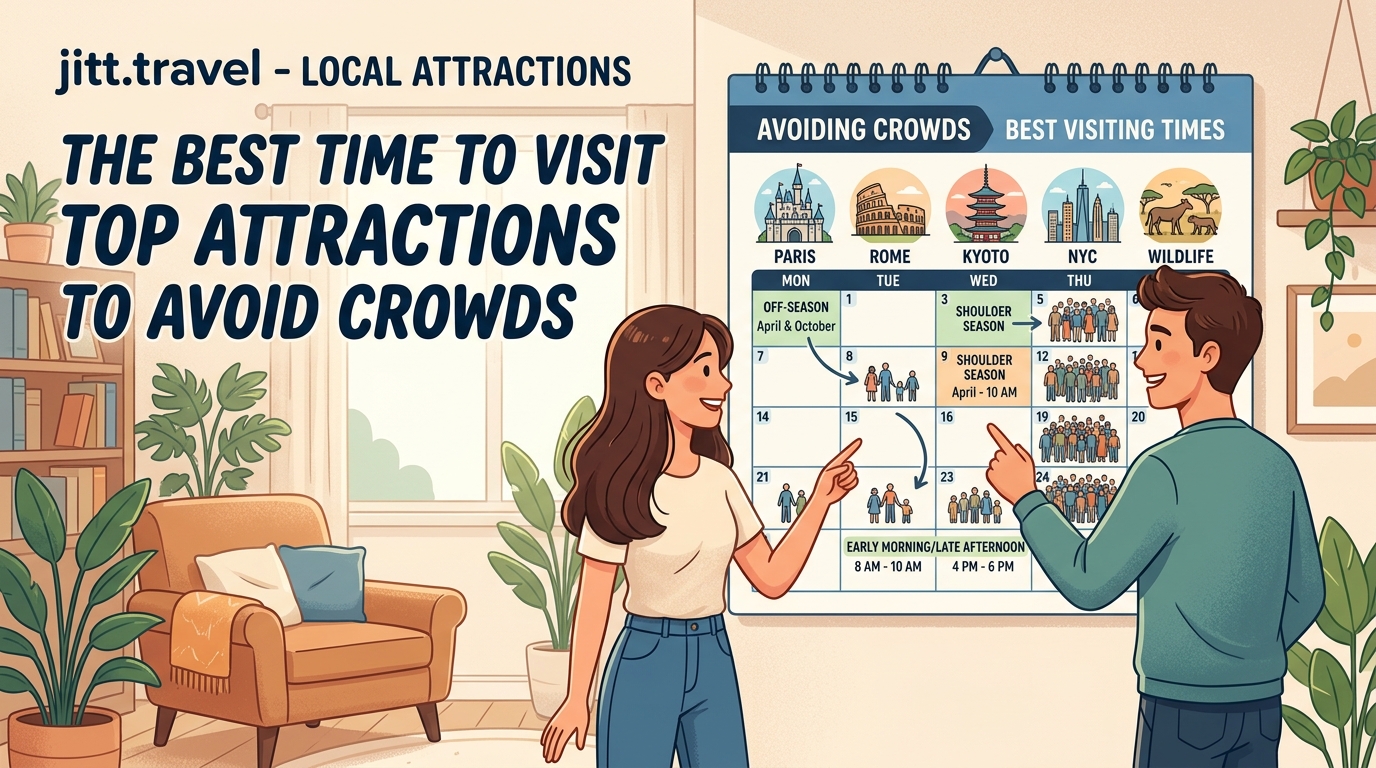
Opening hours matter enormously. The first 90 minutes after gates open see the smallest crowds. Most visitors sleep in or take their time over breakfast.
Arrive 15 minutes before official opening time. You’ll be among the first inside when doors open. Popular attractions like the Louvre or Sistine Chapel feel completely different when you’re in the first wave.
Late afternoon creates another window. Many tourists leave by 3 or 4 PM to rest, eat dinner, or move to their next activity. If an attraction stays open until 6 or 7 PM, those final hours offer unexpected calm.
Lunchtime from noon to 2 PM sees moderate dips at some sites. People leave to eat, creating temporary breathing room. This works better at outdoor attractions than museums with cafeterias.
The best photographs come from the best timing, not the best camera. Empty backgrounds make your travel photos look professional and let the architecture shine through without distractions.
Seasonal Weather as Your Ally
Rain keeps casual tourists away but doesn’t ruin all experiences. Indoor museums become perfect rainy day destinations with fewer visitors than sunny days bring.
Extreme heat in July and August drives people indoors during midday. Outdoor archaeological sites and gardens see dramatic drops in foot traffic between 11 AM and 3 PM.
Cold winter months thin crowds at outdoor attractions significantly. Bundle up and you’ll have castle grounds, sculpture gardens, and historic districts nearly to yourself.
Shoulder season weather unpredictability works in your favor. The possibility of rain or cool temperatures deters fair-weather travelers but often delivers perfectly pleasant days.
School Calendar Intelligence
Track school schedules in major tourist-generating regions. American schools typically run late August through early June. European schools often break in July and August.
When schools are in session, family travel drops dramatically. Theme parks, zoos, and interactive museums become accessible again.
Teacher planning days and conference days create unexpected mini-peaks. A random Thursday in October might bring local school groups on field trips.
University breaks differ from K-12 schedules. Spring break for colleges happens in March, while high schools might break in April. Stagger your visit between these periods.
International school calendars vary widely. Research patterns from countries that send many tourists to your destination. Chinese New Year, for example, creates massive travel waves in Asia.
Holiday and Event Awareness
Major holidays crush popular destinations. Christmas markets, New Year celebrations, and national holidays bring both tourists and locals.
Religious holidays affect different regions uniquely. Easter week in Europe fills churches and historic sites. Ramadan changes patterns in Muslim-majority countries.
Local festivals and events create surprise crowds. A city might host a marathon, concert series, or cultural celebration that doubles hotel prices and fills streets.
Check event calendars three months before booking. City tourism websites list major happenings. This research prevents you from accidentally arriving during the busiest weekend of the year.
Some events are worth the crowds. Decide whether you’re traveling to participate in a specific festival or to see attractions peacefully. Don’t accidentally do both.
Practical Steps for Crowd-Free Visits
Follow this process to time your attraction visits perfectly:
- Identify your must-see destinations and create a prioritized list of attractions.
- Research each attraction’s peak season, typical daily patterns, and special events that draw crowds.
- Build your itinerary around shoulder season dates, selecting weekdays over weekends whenever possible.
- Book accommodations near your top attractions to maximize early morning arrival opportunities.
- Set alarms to arrive at opening time for your highest-priority sites.
- Monitor weather forecasts and adjust plans to take advantage of rainy days at indoor venues.
- Purchase timed entry tickets in advance to guarantee access during less crowded time slots.
Booking and Reservation Tactics
Timed entry tickets control crowd flow at popular attractions. Book the earliest available slot, typically 9 or 10 AM.
Skip-the-line passes cost extra but save hours at major sites. When you factor in your vacation time value, they often make financial sense.
Some attractions offer special early access tours. These VIP experiences let you enter before general admission opens. The premium price buys you empty galleries and better photos.
Reserve restaurants for off-peak dining times. Eat lunch at 11 AM or 2 PM, dinner at 5 PM or 9 PM. You’ll get tables easily and enjoy faster service.
Crowd Indicators and Real-Time Tools
Google Maps shows live crowd data for many attractions. The “Popular Times” feature displays typical busy periods and current activity levels.
Social media location tags reveal real-time conditions. Check Instagram or Twitter posts from the past hour to see how packed a site looks.
Official attraction apps sometimes display current wait times or capacity warnings. Download these before your trip.
Webcams provide direct visual confirmation. Many famous landmarks have public webcams showing current conditions.
Ask hotel concierges for local insight. They know which days and times see lighter traffic based on years of guest feedback.
Common Timing Mistakes to Avoid
| Mistake | Why It Backfires | Better Approach |
|---|---|---|
| Visiting on free admission days | Everyone else has the same idea | Pay regular admission for a better experience |
| Sleeping in on vacation | You miss the calmest hours | Set an alarm and arrive at opening time |
| Following the same schedule as tour groups | You encounter buses of tourists everywhere | Ask hotels when tour groups typically visit |
| Assuming winter is always quiet | Holiday periods bring massive crowds | Check specific dates against school and work holidays |
| Booking the cheapest travel dates | Low prices often indicate peak season | Compare crowd calendars with flight prices |
Regional Variations in Crowd Patterns
Mediterranean destinations peak in July and August but offer beautiful weather in May, June, September, and October. Summer heat actually makes shoulder season more comfortable.
Tropical locations follow rainy and dry seasons rather than temperature changes. Dry season brings crowds. Light rain during wet season keeps prices low without ruining days.
Northern European cities see summer peaks but winter holiday charm. December markets draw crowds, but January through March stay quiet despite cold.
Asian destinations vary by monsoon patterns and regional holidays. Research specific countries rather than assuming continent-wide patterns.
North American national parks crush capacity in summer. Spring and fall offer wildlife activity, colorful scenery, and accessible trails without the crowds.
Attraction-Specific Strategies
Art museums need opening-hour visits. Blockbuster exhibitions draw lines that stretch around buildings by midday.
Theme parks require rope-drop strategy. Arrive before opening, head to popular rides first, and save shows for afternoon when ride lines peak.
Historical sites often allow sunset visits. Evening light creates beautiful photography conditions with fewer people.
Observation decks work well at sunrise. Early birds get clear views before haze builds and crowds arrive.
Religious sites respect service times. Visit outside worship hours to avoid both crowds and disrupting active congregations.
Budget Benefits of Off-Peak Travel
Flight prices drop 30-50% outside peak season. The same route costs dramatically less in November than July.
Hotels offer better rates and free upgrades when occupancy is low. You might score a suite for the price of a standard room.
Restaurants provide early bird specials and lunch menus that cost half the dinner price for similar food.
Tour operators discount packages during slow periods. Group tours, private guides, and transportation all become more affordable.
Your overall trip budget stretches further, allowing you to stay longer, eat better, or splurge on special experiences.
Making Peace with Imperfect Timing
Sometimes you can’t avoid crowds. Work schedules, family obligations, or special events lock you into specific dates.
Accept this reality and adjust expectations. Focus on less-famous attractions that see lighter traffic even during peak times.
Use crowd management strategies within your constrained dates. Still arrive early, visit on weekdays if possible, and choose less popular hours.
Consider alternative destinations. If Paris feels overwhelming in August, nearby cities offer similar charm with fraction of the tourists.
Remember that even crowded attractions hold value. The Eiffel Tower remains impressive regardless of how many people surround you.
Your Path to Better Travel Experiences
Timing transforms travel from stressful to sublime. The same landmark that frustrates you at noon on a Saturday in July becomes peaceful at 9 AM on a Tuesday in October.
Start planning your next trip with crowd avoidance as a primary factor. Check school calendars, book shoulder season dates, and set those early alarms. Your photos will look better, your stress levels will drop, and you’ll actually remember the attractions instead of just the crowds.
The world’s most famous sites built their reputations on beauty, history, and cultural significance. Experience them the way they deserve to be seen, with space to breathe and time to appreciate what makes them special.