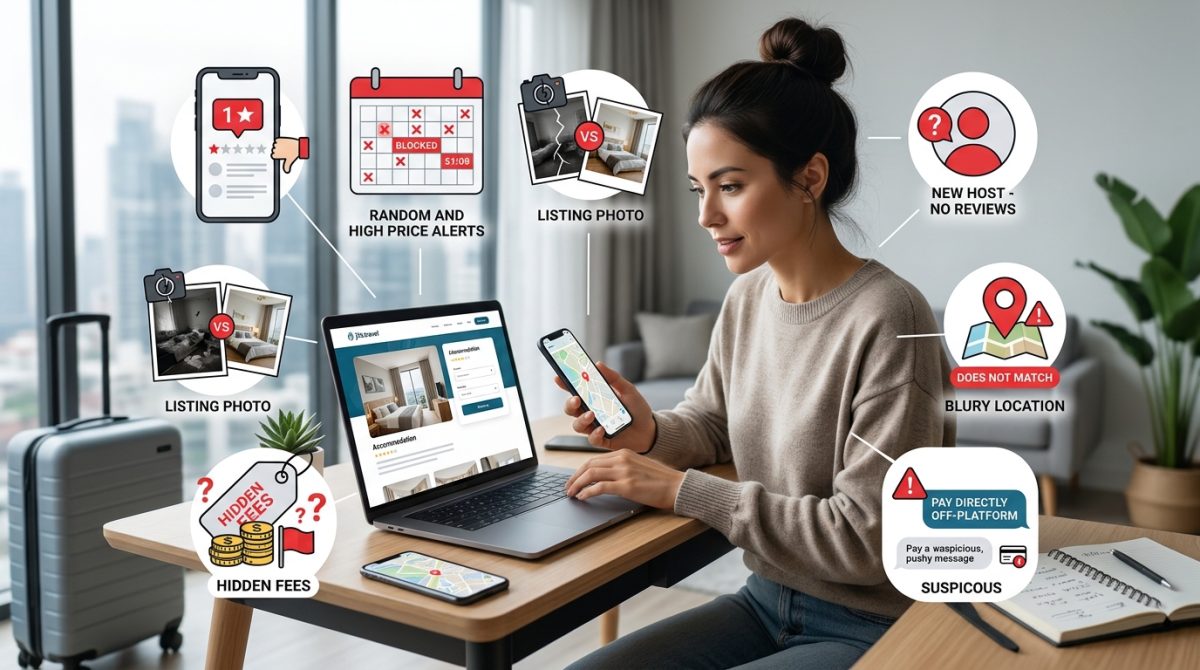
Booking a hotel or vacation rental should feel exciting, not stressful. But scammers and dishonest hosts have made the process riskier than ever. One wrong click can cost you hundreds of dollars and ruin your entire trip.
The good news? Most fraudulent listings share common warning signs. Once you know what to look for, you can protect yourself from scams, bait-and-switch tactics, and properties that look nothing like their photos.
Red flags booking accommodations online include suspiciously low prices, vague property descriptions, limited or stock photos, brand new host profiles, requests for [off-platform payment](https://consumer.ftc.gov/articles/rental-listing-scams), lack of verified reviews, and missing cancellation policies. Recognizing these warning signs helps travelers avoid scams, fake listings, and disappointing stays that waste money and ruin trips.
Prices That Seem Too Good to Be True
A beachfront villa for $50 per night? A luxury penthouse at budget hotel rates? These deals aren’t bargains. They’re traps.
Scammers use unrealistically low prices to attract desperate travelers. Once you show interest, they’ll claim the listing has “technical issues” and ask you to pay through a different channel. Or they’ll take your money and disappear entirely.
Compare similar properties in the same area. If one listing costs half the price of everything around it, something is wrong. Real hosts price competitively, but not absurdly low.
Seasonal pricing should make sense too. Beach rentals cost more in summer. Ski chalets charge premium rates during winter holidays. A listing that ignores these patterns is likely fake.
Vague or Copy-Pasted Descriptions
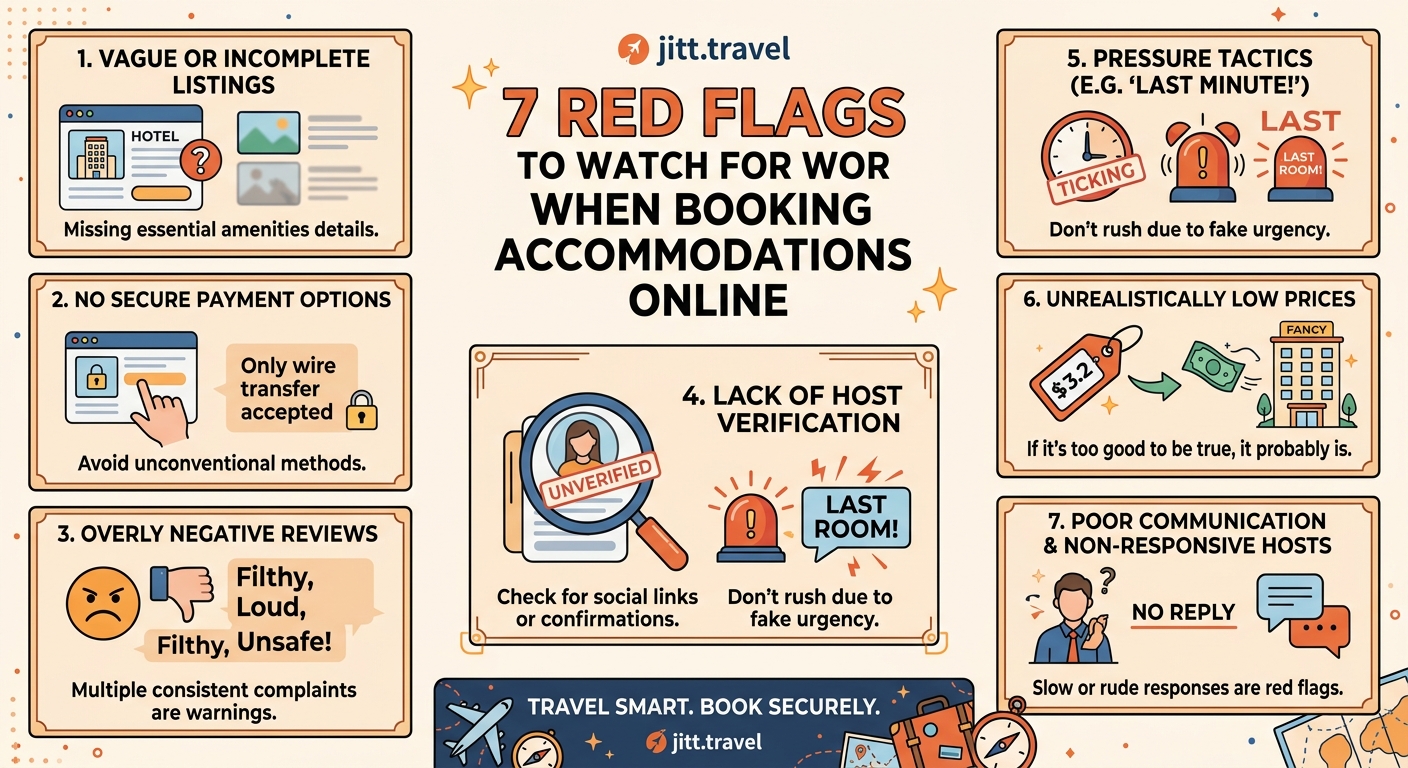
Legitimate hosts know their properties inside and out. They mention specific details: the brand of the coffee maker, the view from the balcony, the walking distance to the metro station.
Fraudulent listings use generic descriptions that could apply to any property. Watch for phrases like “cozy space,” “great location,” or “perfect for families” without any supporting details.
Some scammers copy descriptions from other listings. Paste suspicious text into a search engine. If identical wording appears on multiple sites, you’ve found a scam.
Missing information is equally concerning. Professional hosts explain:
- Exact sleeping arrangements
- Bathroom count and configuration
- Parking availability and cost
- Check-in procedures
- House rules and restrictions
- Neighborhood characteristics
Vague listings leave these details out intentionally. They’re hoping you’ll book before asking questions.
Limited Photos or Stock Images
Photos tell the truth that words can hide. Scammers know this, so they use as few images as possible or steal photos from other sources.
Count the photos. Legitimate listings typically include 15 to 30 images showing every room, outdoor spaces, and building exteriors. Fewer than 10 photos suggests the host is hiding something.
Look at photo quality and consistency. Professional vacation rentals often have styled, well-lit images. But they should all show the same property with consistent decor and layout.
Run a reverse image search on suspicious photos. Right-click any image and select “Search image with Google.” If the same photo appears on multiple unrelated listings or stock photo websites, you’ve caught a scammer.
Watch for these photo red flags:
- Only exterior shots with no interior views
- Blurry or low-resolution images
- Photos taken at odd angles that hide room size
- Heavily filtered images that distort colors
- Mismatched furniture or decor between photos
- No photos of bathrooms or kitchens
Some hosts use 3D renderings or floor plans. These are fine as supplements, but never as replacements for actual photos.
Brand New Profiles with Zero History
Everyone starts somewhere, but new hosts on established platforms deserve extra scrutiny. Scammers constantly create fresh accounts after previous ones get banned.
Check the host’s join date and listing history. An account created last week with one property and zero reviews could be legitimate. But it could also be a scammer testing the waters.
Look at the host’s verification status. Platforms like Airbnb and Vrbo offer identity verification, phone confirmation, and email validation. Legitimate hosts complete these steps. Scammers avoid them.
Read the host’s profile description. Real people share details about themselves, their property ownership story, and their hosting philosophy. Generic profiles with minimal information suggest fake accounts.
New hosts with multiple listings raise immediate concerns. Building a vacation rental portfolio takes time and capital. Someone with five properties and zero reviews is almost certainly running a scam.
If you must book with a new host, take extra precautions:
- Verify the property exists using Google Maps street view
- Search the address to confirm it’s a real location
- Request a video call to see the property in real time
- Use platform messaging exclusively to maintain records
- Pay only through the official booking platform
Requests for Off-Platform Payment
This is the biggest red flag of all. Legitimate hosts never ask you to pay outside the booking platform.
Scammers want you to wire money, send gift cards, or use peer-to-peer payment apps. These methods offer zero protection. Once the money leaves your account, it’s gone forever.
Common excuses scammers use:
- “The platform charges high fees, so pay me directly for a discount”
- “Our system is down, send payment via wire transfer”
- “Pay half now through Venmo to hold your reservation”
- “Use PayPal Friends and Family to avoid processing fees”
Booking platforms charge fees for a reason. They provide fraud protection, dispute resolution, and payment security. Avoiding these systems means losing all those protections.
Some scammers compromise legitimate host accounts and message previous guests with payment requests. If a host you’ve worked with before suddenly asks for unusual payment methods, their account may be hacked.
Never, under any circumstances, send money outside the official booking platform. Real hosts understand that platform policies protect both parties. Anyone pressuring you to bypass these systems is running a scam.
Missing or Suspicious Reviews
Reviews are your best defense against bad bookings. But scammers have learned to manipulate review systems too.
Zero reviews on an older listing is suspicious. Properties that have been available for months should have at least a few bookings. Empty review sections suggest the listing is fake or the host deletes negative feedback by recreating listings.
Look at review timing and patterns. Five glowing reviews all posted on the same day? Probably fake. Reviews that use identical phrases or writing styles? Definitely fake.
Read negative reviews carefully. One bad review among dozens of good ones might reflect a picky guest. But multiple complaints about the same issues (cleanliness, accuracy, safety) indicate real problems.
Check reviewer profiles too. Fake reviews often come from accounts with no profile photos, no other review history, and generic usernames. Real travelers have varied review histories across multiple properties.
Be wary of reviews that seem overly promotional or use marketing language. Real guests write conversational reviews: “The kitchen was bigger than expected and the host responded to our questions within an hour.” Fake reviews sound like advertisements: “This amazing property exceeded all expectations with its stunning amenities and unbeatable location!”
Unclear Cancellation and Refund Policies
Professional hosts clearly state their cancellation terms upfront. Scammers keep policies vague or omit them entirely.
Before booking, confirm:
- Full refund deadline (usually 48 hours to 30 days before check-in)
- Partial refund timeline and percentage
- Non-refundable fees or deposits
- Weather or emergency cancellation exceptions
- Host cancellation penalties
Listings without clear policies give hosts unlimited power to keep your money regardless of circumstances. Some will cancel your reservation days before arrival and refuse refunds.
Compare the host’s stated policy against the platform’s standard options. If they don’t match, contact support before booking. Hosts sometimes try to enforce stricter rules than the platform allows.
Read the fine print on fees. Some listings advertise low nightly rates but add excessive cleaning fees, service charges, or “resort fees” that double the total cost. All fees should be clearly disclosed before you confirm payment.
| Warning Sign | Why It Matters | What to Do |
|---|---|---|
| Price 50%+ below comparable properties | Likely scam or bait-and-switch | Compare 5+ similar listings in the area |
| Fewer than 10 photos | Hiding property condition or using fake images | Request additional photos or video tour |
| Host joined within last month | Possibly scammer with new account after ban | Check verification badges and request video call |
| Requests payment via Venmo, wire, or gift cards | Removes all buyer protections | Report immediately and cancel booking |
| No reviews after 6+ months active | Fake listing or host deletes negative feedback | Only book properties with verified reviews |
| Vague cancellation policy | Host can keep your money unfairly | Confirm policy matches platform standards |
Protecting Yourself Beyond the Red Flags
Recognizing warning signs is half the battle. Smart booking habits provide additional protection.
Always book through established platforms rather than responding to Craigslist ads or direct emails. Platforms offer dispute resolution, payment protection, and host accountability that independent bookings lack.
Screenshot everything. Save the listing description, photos, amenity list, and all messages with the host. If the property doesn’t match what was advertised, you’ll need this evidence for refunds or disputes.
Verify the property address before booking. Search it on Google Maps and check street view. Confirm the building exists and matches the listing photos. Some scammers use addresses of vacant lots or commercial buildings.
Read the entire listing twice before booking. Hosts sometimes bury important restrictions in the middle of long descriptions: no air conditioning, construction noise, shared bathrooms, or limited hot water.
Message the host with specific questions before booking. Their response time and helpfulness indicate how they’ll treat you during your stay. Hosts who ignore messages or give evasive answers will likely disappear when problems arise.
Use credit cards for payment whenever possible. Credit card companies offer chargeback protection that debit cards and bank transfers don’t provide. If you discover fraud, you can dispute the charge and potentially recover your money.
Book refundable rates when traveling during uncertain times. The extra cost is worth the flexibility if your plans change or you discover problems with the property.
Trust your instincts. If something feels off about a listing, host, or booking process, walk away. Plenty of legitimate properties exist. Don’t let desperation or time pressure push you into a bad decision.
Spotting Trouble Before It Ruins Your Trip
Learning to recognize red flags booking accommodations online turns you into a savvy traveler instead of an easy target. Scammers rely on rushed decisions and wishful thinking. Taking time to verify listings, read reviews carefully, and question suspicious details protects your money and your vacation.
Start with price comparisons and photo verification. Move on to host profiles and review analysis. Finish by confirming cancellation policies and payment methods. This systematic approach catches most scams before you hand over any money.
The few extra minutes spent scrutinizing a listing can save you from arriving at a property that doesn’t exist, looks nothing like the photos, or comes with a host who refuses to help when things go wrong. Your trip deserves better than that.