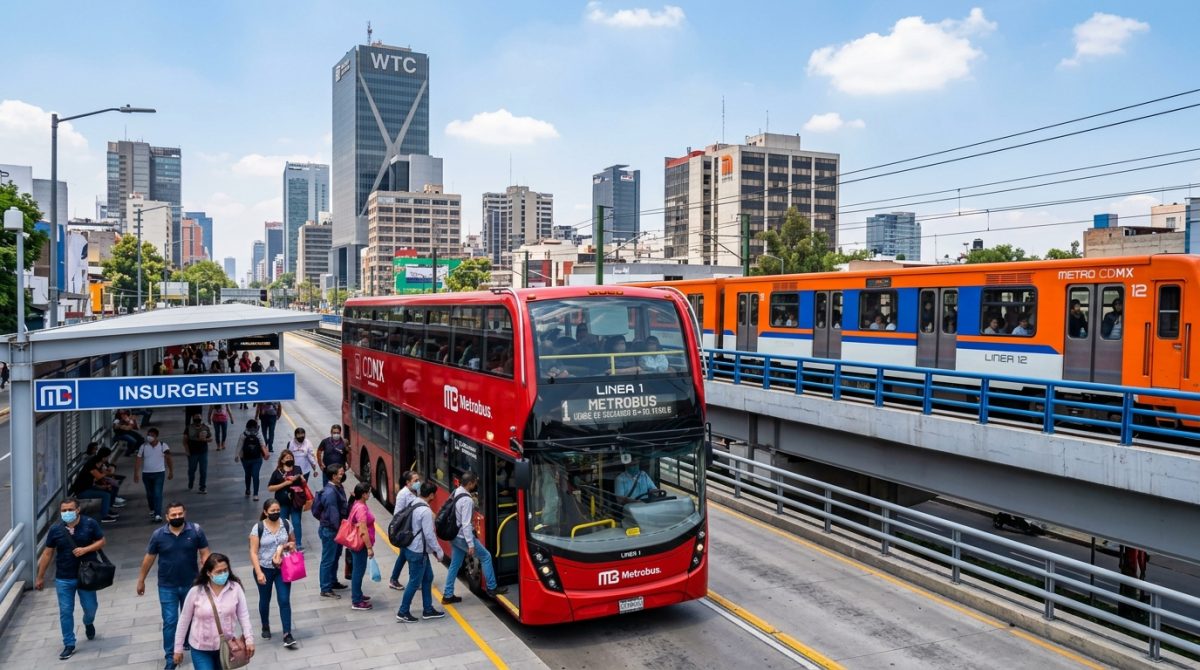
Mexico City moves 12 million people every day through one of the world’s largest transit networks. The system spans 226 metro stations, thousands of bus routes, and dedicated bus rapid transit lanes that stretch across the sprawling capital.
Getting around feels overwhelming at first. Signs switch between Spanish and symbols. Stations connect through underground tunnels that seem to go on forever. Rush hour packs cars so tight you’ll wonder if physics still applies.
But here’s the truth: millions of tourists navigate this system successfully every year. You can too.
Mexico City’s public transportation includes the Metro (5 pesos per ride), Metrobús (6 pesos), and local buses. Purchase a rechargeable card for seamless travel. Avoid rush hours between 7-9 AM and 6-8 PM. Download the Metro CDMX app for real-time updates. Keep valuables secure in crowded spaces. The system covers nearly every tourist destination affordably and efficiently.
Understanding the Metro System
The Mexico City Metro runs 12 color-coded lines connecting 195 stations across the metropolitan area. Each line has a number and color. Line 1 appears pink on maps. Line 3 shows up olive green.
Stations use pictograms alongside names. Pino Suárez shows a pine tree. Coyoacán displays a coyote head. This visual system helps riders who can’t read Spanish navigate confidently.
Trains arrive every 2-3 minutes during peak hours. Service runs from 5 AM to midnight on weekdays, 6 AM to midnight on Saturdays, and 7 AM to midnight on Sundays.
The cost stays fixed at 5 pesos per ride, regardless of distance. That’s roughly 25 cents USD. You can travel from one end of the city to the other for less than a cup of coffee.
How to Buy Metro Tickets
Walk up to any ticket booth inside a station. These glass-enclosed kiosks have attendants who sell rechargeable cards and single-ride tickets.
Point to the card and say “una tarjeta, por favor.” The attendant will hand you a plastic card for 10 pesos. This includes a 5-peso deposit that stays on the card.
Add money by saying the amount you want to load. “Cincuenta pesos” gets you 50 pesos of credit. The card works across the Metro and Metrobús systems.
Single-ride paper tickets also exist, but they create waste and require standing in line for every trip. Get the rechargeable card.
Reading Metro Maps and Transfers
Free paper maps sit in dispensers near station entrances. Grab one. The map shows all 12 lines with transfer stations marked by connection symbols.
Transfer stations let you switch lines without paying again. Pantitlán connects five different lines. Tacubaya links three lines together.
Follow the color-coded signs overhead. Want Line 3? Look for olive green signs with the number 3. The direction matters too. Trains display their final destination on the front and sides.
Correspondencia means transfer. Follow these signs to reach connecting platforms. Some transfers require walking through long tunnels. Budget an extra 5-10 minutes for complex transfers.
Riding the Metrobús
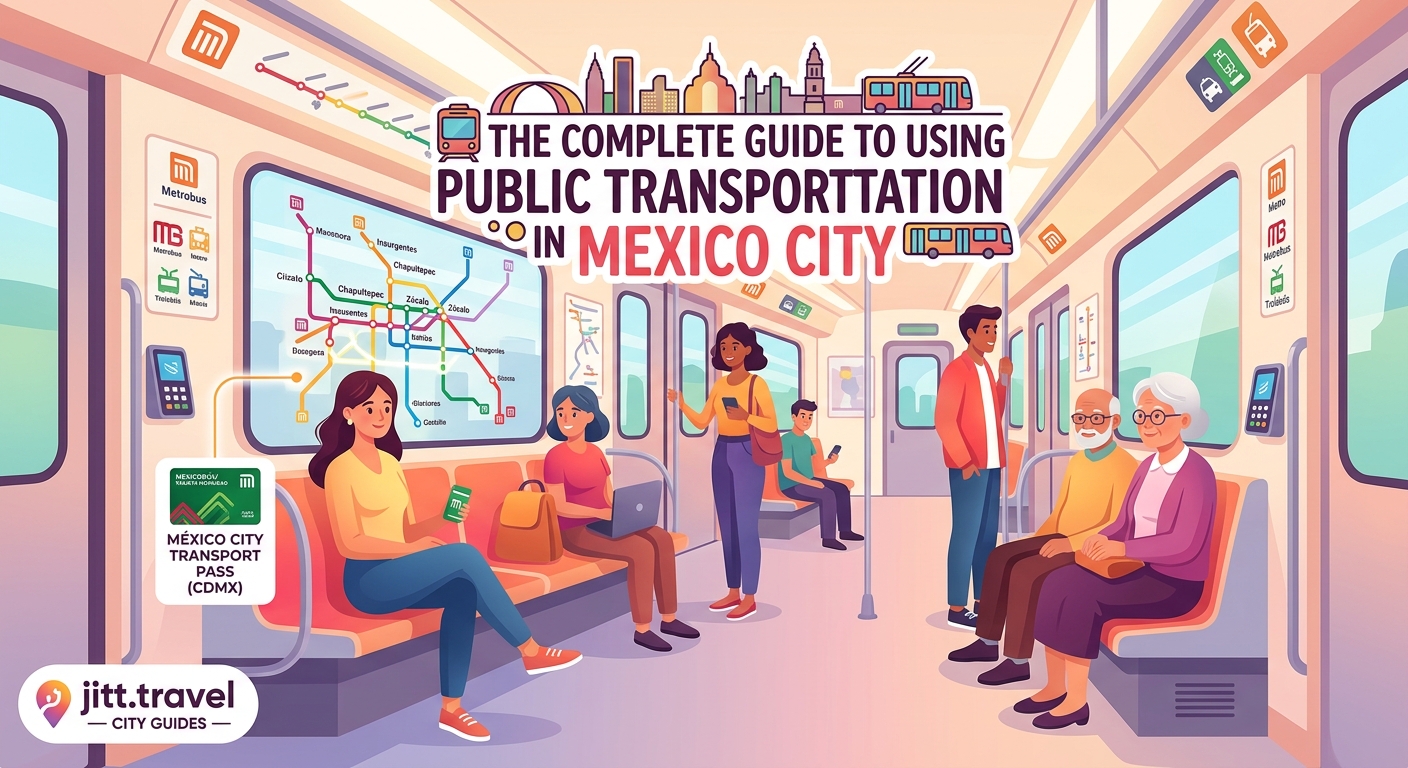
The Metrobús operates like a subway on wheels. Dedicated bus lanes run down major avenues, separated from regular traffic by concrete barriers.
Seven lines cover key corridors. Line 1 runs along Avenida Insurgentes, the longest avenue in the city. Line 4 connects the airport to downtown.
Stations have raised platforms level with bus doors. This speeds up boarding dramatically compared to regular buses.
Payment and Access
You need the same rechargeable card used for the Metro. Metrobús rides cost 6 pesos. Tap your card on the turnstile reader when entering the station.
Load your card at machines inside Metrobús stations. These accept coins and bills up to 100 pesos. The interface offers English as a language option.
Buses arrive every 3-5 minutes during the day. Real-time screens at stations show how many minutes until the next bus arrives.
Which Lines Serve Tourist Areas
Line 1 passes near Zona Rosa, Roma, and Condesa neighborhoods. Get off at Insurgentes station for the central nightlife district.
Line 4 stops at Terminal Aérea, right outside the domestic airport terminal. This provides the cheapest airport connection at 6 pesos.
Line 7 runs through Reforma, passing the Angel of Independence monument and Chapultepec Park. Exit at Auditorio for the park’s main entrance.
Navigating Regular Buses and Microbuses
Thousands of green and white buses (called peseros or microbuses) fill routes the Metro doesn’t cover. These privately operated vehicles follow fixed routes but stop anywhere along the way.
Routes display on the windshield. “Metro Taxqueña – Xochimilco” means the bus runs between Taxqueña Metro station and Xochimilco.
Flag down a bus by extending your arm. The driver will stop if space remains inside. Fares range from 6-10 pesos depending on distance.
Pay the driver or an attendant sitting near the front. They make change but prefer exact amounts. Say “bajan” (getting off) when you want to exit. The driver will stop at the next safe spot.
These buses get confusing fast. Stick to them only after you understand the Metro and Metrobús systems.
Getting Around Safely
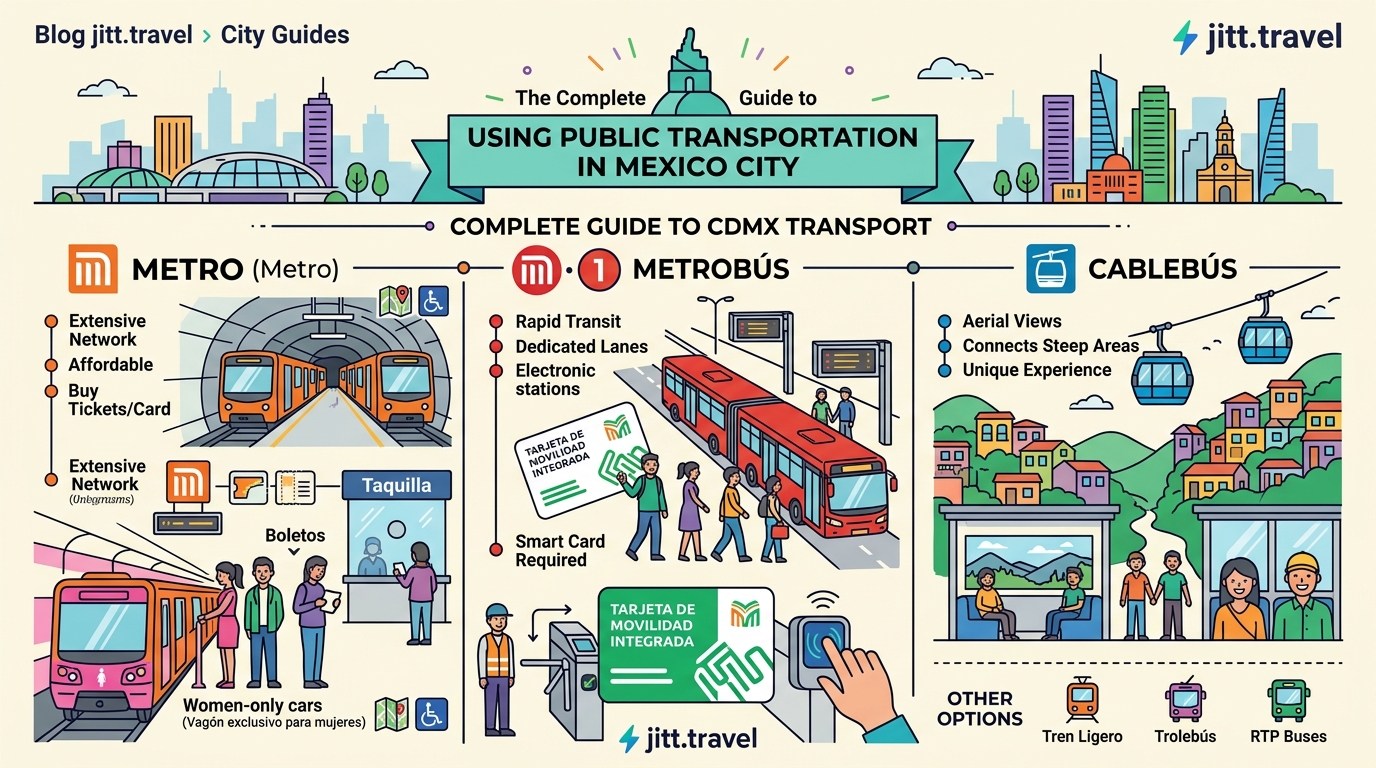
Mexico City transit sees pickpocketing, especially during crowded rush hours. Keep your awareness up and valuables secure.
Wear backpacks on your front in packed trains. Zip all pockets. Keep phones in front pockets or hands, never back pockets.
Women-only cars operate during rush hours on the Metro. Look for pink signs marked “Exclusivo Mujeres.” These front cars provide safer, less crowded spaces for women and children.
Avoid displaying expensive jewelry, cameras, or electronics unnecessarily. Thieves target obvious tourists.
Travel during daylight when possible. The system stays generally safe, but late-night rides carry higher risks.
“I rode the Metro daily for three months and never had problems. I kept my bag zipped, stayed aware of my surroundings, and avoided showing off my phone. Common sense goes a long way.” — Sarah, travel blogger
Money-Saving Strategies
| Strategy | Savings | Best For |
|---|---|---|
| Rechargeable card | No per-ride fees | Everyone |
| Avoid taxis from tourist zones | 80-90% vs. taxi | Budget travelers |
| Travel off-peak | Less crowded, same price | Flexible schedules |
| Combine walking + transit | Reduces total rides | Short distances |
| Buy snacks before traveling | 50% vs. station vendors | Long travel days |
Load your card with 100-200 pesos at once. This covers multiple days of travel and saves repeated trips to ticket windows.
Walking 10-15 minutes to a Metro station instead of taking a taxi saves 50-80 pesos per trip. Mexico City’s grid layout makes walking straightforward in central areas.
Planning Your Routes
The Metro CDMX app (available for iOS and Android) shows real-time service updates, station closures, and route planning. Download it before your trip.
Google Maps integrates Mexico City transit directions. Enter your destination and select the transit icon. The app shows which lines to take, where to transfer, and total travel time.
Allow extra time for your first few trips. Getting oriented in large transfer stations takes longer than expected.
Weekend service changes happen regularly. Check the Metro CDMX app Saturday and Sunday mornings for line closures or delays.
Connecting to Major Destinations
Here’s how to reach popular tourist spots using public transit:
- Zócalo (Historic Center): Take Line 2 to Zócalo station. Exit directly into the main plaza.
- Chapultepec Castle: Ride Line 1 to Chapultepec station. Walk 15 minutes uphill through the park.
- Coyoacán: Take Line 3 to Coyoacán station. The neighborhood center sits 10 minutes away on foot.
- Xochimilco: Ride Line 2 to Tasqueña, then catch a bus or light rail to Xochimilco (8 pesos).
- Basilica de Guadalupe: Take Line 6 to La Villa-Basilica. The church stands right outside the station.
The airport connects via Line 5 (Terminal Aérea station) or Line 4 Metrobús. Both cost under 10 pesos total.
Timing Your Travels
Rush hour transforms the transit system into a sardine can. Avoid these windows if possible:
- Morning: 7:00 AM to 9:30 AM
- Evening: 6:00 PM to 8:30 PM
Midday travel (10 AM to 4 PM) offers comfortable rides with available seats. You can actually see the city passing by through bus windows.
Friday evenings see the worst crowds. Everyone heads home or out for the weekend simultaneously.
Sunday mornings provide the emptiest trains and buses. Perfect for first-time riders who want to practice without pressure.
What to Do When Things Go Wrong
Stations close occasionally for maintenance. The Metro CDMX app announces closures, but sometimes you’ll arrive at a shuttered entrance.
Look for signs directing you to alternate stations. Staff usually stand outside closed entrances pointing passengers toward nearby options.
Lost your rechargeable card? Buy a new one at any ticket booth for 10 pesos. The old balance disappears, so load only what you’ll use.
Missed your stop? Stay on until the next station, exit, cross to the opposite platform, and ride back one stop. The system allows this without additional payment if you don’t leave the turnstiles.
Cards occasionally fail to scan. Tap firmly on the reader’s center. If it still fails, show the attendant your card. They’ll usually wave you through or help troubleshoot.
Apps and Tools That Help
Beyond the official Metro CDMX app, several tools make navigation easier:
- Moovit: Combines all transit types (Metro, Metrobús, buses) into one route planner
- Citymapper: Offers step-by-step navigation with real-time updates
- Google Translate: Download Spanish for offline translation of signs and announcements
Screenshot your route before descending into Metro stations. Cell service disappears underground, but saved images remain accessible.
Accessibility Considerations
Many older Metro stations lack elevators. Lines 1, 2, and 3 have the fewest accessible stations. Line 12 (the newest) includes elevators at every stop.
Metrobús stations all have level boarding, making them easier for travelers with mobility challenges. No steps exist between platform and bus.
Priority seating appears near doors in both Metro cars and buses. Blue seats indicate these reserved spaces for elderly passengers, pregnant women, and people with disabilities.
Wheelchairs fit through wider turnstiles at most stations. Look for gates marked with wheelchair symbols. Press the button and an attendant will open the gate.
Your First Ride Checklist
Before heading out, make sure you have:
- Rechargeable transit card loaded with at least 50 pesos
- Metro map (paper or screenshot)
- Destination address written in Spanish
- Small bills for emergencies (no card readers on regular buses)
- Bag that zips completely closed
- Comfortable walking shoes (stations involve lots of stairs)
Start with a simple route. Ride three or four stops, get off, and ride back. This builds confidence without the pressure of reaching a specific destination on time.
Making Transit Work for Your Trip
Mexico City’s public transportation moves you anywhere in the metropolitan area for pennies. The Metro alone covers 140 miles of track.
Yes, it gets crowded. Yes, navigation takes practice. But the system works remarkably well for a city of 22 million people.
Load your card, download the app, and give yourself extra time for the first few journeys. By day three, you’ll board trains and transfers without thinking twice.
The money you save on transportation means better meals, more museum entries, and extra days in one of the world’s most fascinating cities.