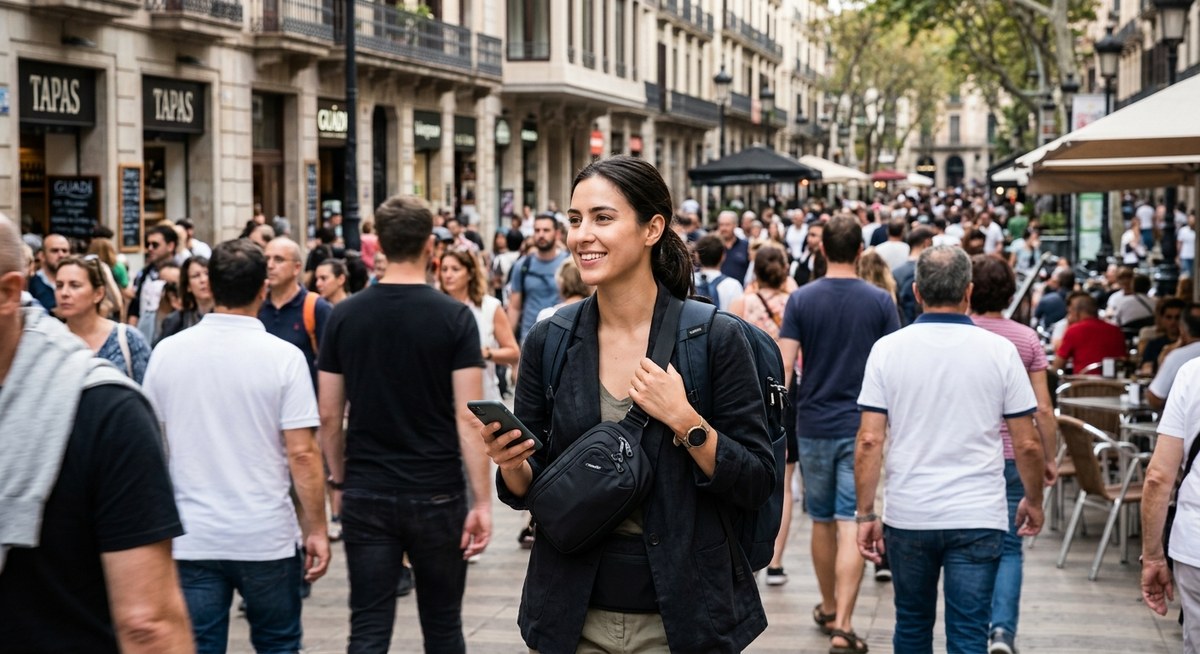
You step off the metro in Barcelona, and the platform is packed. You grip your bag a little tighter. Your phone is in your front pocket, your passport zipped inside your jacket. You feel prepared, but so did thousands of other tourists before a skilled pickpocket proved them wrong. The truth is, keeping valuables safe while traveling isn’t about paranoia. It’s about smart habits that become second nature. Whether you are navigating the narrow alleys of Marrakech, riding the subway in New York, or wandering through a street market in Bangkok, the same principles apply. This guide covers ten real-world methods that travelers use to protect wallets, phones, passports, and peace of mind.
Staying safe in busy cities means layering your defenses: leave high-risk items at home, carry only what you need for the day, use hidden pockets or a money belt, keep one hand on your bag in crowds, and back up digital copies of critical documents. These small steps dramatically reduce your risk of theft or loss, no matter where you travel.
The Real Cost of Distraction in Crowded Urban Spaces
Thieves are not superhumans. They are opportunists. They look for the tourist who is checking a map, juggling a coffee, or posing for a selfie with their backpack wide open. The most effective way to keep valuables safe while traveling is to remove the opportunity entirely. That starts before you even leave home.
What You Leave Behind is What You Keep Safest
Before packing, ask yourself one question: “Would I be upset if I lost this?” If the answer is yes, leave it at home. Expensive jewelry, designer watches, and irreplaceable family heirlooms belong in a safety deposit box, not a hostel dorm or a crowded square. The same goes for extra credit cards and documents you will not use. Carry one debit card, one credit card, and a photocopy of your passport (or a digital scan). Store the rest in your accommodation’s secure locker, not the flimsy room safe.
The Three-Step Check Before You Leave Your Hotel
- Tap your pockets. Phone in front left. Wallet in front right. Keys in jacket.
- Check your bag. Zippers closed. Water bottle in side pocket, not in main compartment.
- Lock the door. Use the deadbolt or a portable door stop. Then do a quick scan of the room.
This routine takes fifteen seconds. It prevents the classic “I left my passport on the bed” panic.
Gear That Actually Helps (and What to Skip)
Not all “anti-theft” products are worth the money. Some are bulky, uncomfortable, or give a false sense of security. Here is a breakdown of what works and what does not.
| Technique | Common Mistake | Better Approach |
|---|---|---|
| Money belt | Wearing it under loose clothing that bulges | Choose a slim, sweat-resistant belt worn at the waist, not the neck |
| Locking backpack | Using a cheap combination lock that jams | Get a TSA-approved padlock with a cable to secure zippers together |
| Hidden pocket | Putting phone in the same pocket every day | Alternate which pocket holds your phone, or use a zippered inner pocket |
| Hotel safe | Assuming it is fully secure | Use it only for items you do not need during the day, and always test the lock |
Five Practical Tactics to Keep Valuables Safe While Traveling
1. Use a Decoy Wallet
A decoy wallet is an old trick that works. Put a small amount of local cash and an expired card into a cheap wallet. Keep it in your back pocket. If someone tries to lift it, they get a decoy. Your real cash, cards, and ID stay in a hidden front pocket or money belt. This technique is especially useful in cities known for pedestrian traffic, like Paris or Rome, where you can learn more about navigating the city like a local in our guide on how to experience Rome without the rush.
2. Master the “Hand on Bag” Rule
Whenever you are in a crowd, place one hand on the zipper of your bag. This does two things: it physically blocks access, and it signals to a potential thief that you are aware. Do this on the metro, at a food market, and while waiting in line for attractions. For more crowd‑dodging strategies, read our list of ways to skip lines at popular spots.
3. Keep Your Phone in a Crossbody Case
Phones are the number one target for grab‑and‑run theft. A crossbody case worn diagonally across your chest keeps the phone against your body. Avoid using a loop that hangs loosely from your wrist. If someone grabs it, you are either dragged or left holding a broken strap. A crossbody case with a metal cable inside is even better.
4. Digitize Everything Before You Go
Take photos of your passport, visa, driver’s license, and all credit cards (front and back). Email them to yourself or save them in a secure cloud folder. Also save the phone numbers of your bank and the nearest embassy. If your wallet is stolen, you have instant access to the information you need to cancel cards and get an emergency passport. This is not just for international trips. Even domestic travelers in big US cities benefit from this habit.
5. Dress to Blend In
Loud logos, bright sneakers, and a map held high scream “tourist.” If you look like a local, you become a less appealing target. Wear neutral colors, avoid flashy accessories, and use your phone’s map discreetly instead of holding it out. You do not need to buy new clothes. Just pick outfits that are common in the region you are visiting.
“I have traveled to over 60 countries, and the only times I had issues were when I let my guard down because I felt safe in a ‘nice’ area. Opportunistic theft happens everywhere. The best defense is to stay alert and keep your valuables close to your body, not in a bag swinging behind you.” — Maria R., former tour guide and travel safety consultant
Common Mistakes That Put Your Valuables at Risk
- Putting your wallet in a back pocket. It is the easiest target. Use front pockets or a money belt.
- Hanging your bag on the back of a chair. In cafes and restaurants, keep the strap around your leg or on your lap.
- Using the same password for all accounts. If your phone is stolen, a lockscreen password is useless if your bank app has the same code. Use a password manager and two‑factor authentication.
- Leaving valuables in a checked bag. Always carry your passport, money, and electronics in your personal item. Checked bags get lost, searched, or stolen.
How to Protect Yourself on Public Transit
Buses and subways are where most thefts happen. Thieves work in teams. One person blocks the door while another bumps into you. Here is a numbered process to follow every time you board:
- Hold your bag in front of you, not on your back.
- Keep your phone in your hand or a zippered pocket. Do not put it in your jacket pocket.
- Stand with your back against a wall or a pole. This gives you a 180‑degree view.
- Avoid using headphones. They distract you and signal that you have a valuable device.
- Get off the train if you feel uncomfortable. It is better to wait for the next one than to risk a theft.
If you are planning a trip to a city with a complex metro system, check our guide to using public transportation in Mexico City for station‑specific safety tips.
The Role of Travel Insurance and Tracking Devices
Travel insurance is not a prevention method, but it is a safety net. Make sure your policy covers theft of personal items, not just medical emergencies. Some policies require you to file a police report within 24 hours. Know the process before you travel.
Tracking devices like Apple AirTags or Tile trackers can help you locate a stolen bag, but they are not perfect. Police in many countries will not act on the location alone. Use them to monitor your luggage if it goes missing during a flight or train transfer, not to chase a thief. For a more thorough breakdown of gear, see our packing tips for a week in a personal item bag.
Your Safety Mindset is the Best Travel Companion
You do not need to be paranoid to keep valuables safe while traveling. You just need to build small habits. A decoy wallet, a crossbody phone case, and a habit of scanning your surroundings are free, lightweight, and effective. The best cities for travel are the ones where you feel present, not anxious. When you trust your systems, you can relax and actually enjoy the street art, the food markets, and the sunset over the river.
Next time you board a crowded metro or step into a bustling plaza, take a breath. Check your pockets. Keep a hand on your bag. And remember: most travelers never have a problem. Those who do were often distracted, unprepared, or carrying too much. You now know how to avoid all three. Safe travels.