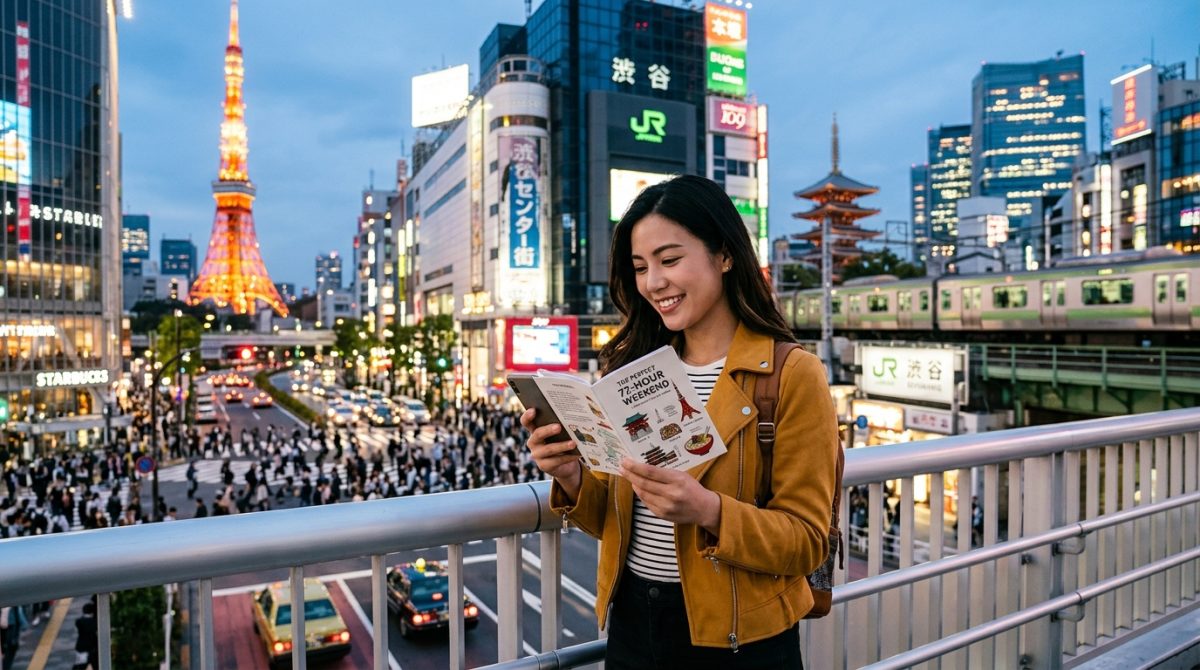
Tokyo moves at a pace that feels both exhilarating and overwhelming. Three days gives you just enough time to experience the city’s contrasts: ancient temples next to neon skyscrapers, quiet gardens steps from bustling intersections, traditional kaiseki meals followed by late-night ramen runs. This itinerary balances the must-see landmarks with authentic neighborhood experiences, giving you a genuine taste of Tokyo without the exhausting sprint through tourist traps.
This 72-hour Tokyo itinerary covers three distinct days: Shibuya and Harajuku’s modern culture, historic Asakusa and traditional gardens, and Tsukiji Market through Ginza’s shopping districts. You’ll experience major temples, observation decks, local food scenes, and efficient transit connections. Budget around $400-600 per person for attractions, meals, and transportation. Book accommodations near Shinjuku or Shibuya for central access to all neighborhoods.
Day One: Modern Tokyo and Urban Energy
Start your first morning in Shibuya. Arrive at Shibuya Crossing around 8am before the crowds multiply. The famous intersection looks impressive even without thousands of people, and you can grab breakfast at one of the nearby cafes without waiting.
Walk five minutes to Hachiko statue and snap your photo with Tokyo’s most loyal dog memorial. From here, head to Shibuya Sky, the observation deck that opened in 2019. The 360-degree views from the rooftop give you perspective on Tokyo’s sprawl. Go early to avoid afternoon tour groups.
Harajuku and Meiji Shrine
Take the train two stops to Harajuku Station. Walk through the towering torii gate into Meiji Shrine’s forested grounds. The gravel paths and sake barrels create a peaceful contrast to the urban chaos outside. Spend 45 minutes here, watching wedding processions if you’re lucky.
Exit toward Takeshita Street for the opposite experience. This narrow pedestrian lane packs in crepe stands, vintage clothing shops, and enough visual stimulation to exhaust your camera roll. Grab a rainbow crepe or fluffy pancakes, but skip the overpriced tourist trinkets.
Lunch recommendation: Head to Omotesando for better food options. The tree-lined avenue has basement food halls in most department stores. Tokyu Plaza’s rooftop terrace offers free city views.
Afternoon in Shinjuku
Shinjuku Station connects more train lines than any other station worldwide. Navigate to the west exit for Tokyo Metropolitan Government Building. The free observation decks on the 45th floor rival paid alternatives, with clear views to Mount Fuji on sunny days.
Walk back through Shinjuku’s department stores. Isetan’s basement food floor showcases Japanese culinary precision: perfectly arranged fruit, intricate bento boxes, and samples if you look interested. Buy snacks for later.
As evening approaches, find your way to Omoide Yokocho, the narrow alley of tiny yakitori joints. Most seats about eight people maximum. Order chicken skewers, beer, and whatever the chef recommends. Expect smoke, tight quarters, and authentic atmosphere.
End your night in Kabukicho, Tokyo’s entertainment district. You don’t need to enter any establishments to appreciate the neon density and people-watching opportunities. Golden Gai, a cluster of miniature bars, sits nearby if you want a nightcap in a space smaller than most closets.
Day Two: Traditional Tokyo and Historic Districts
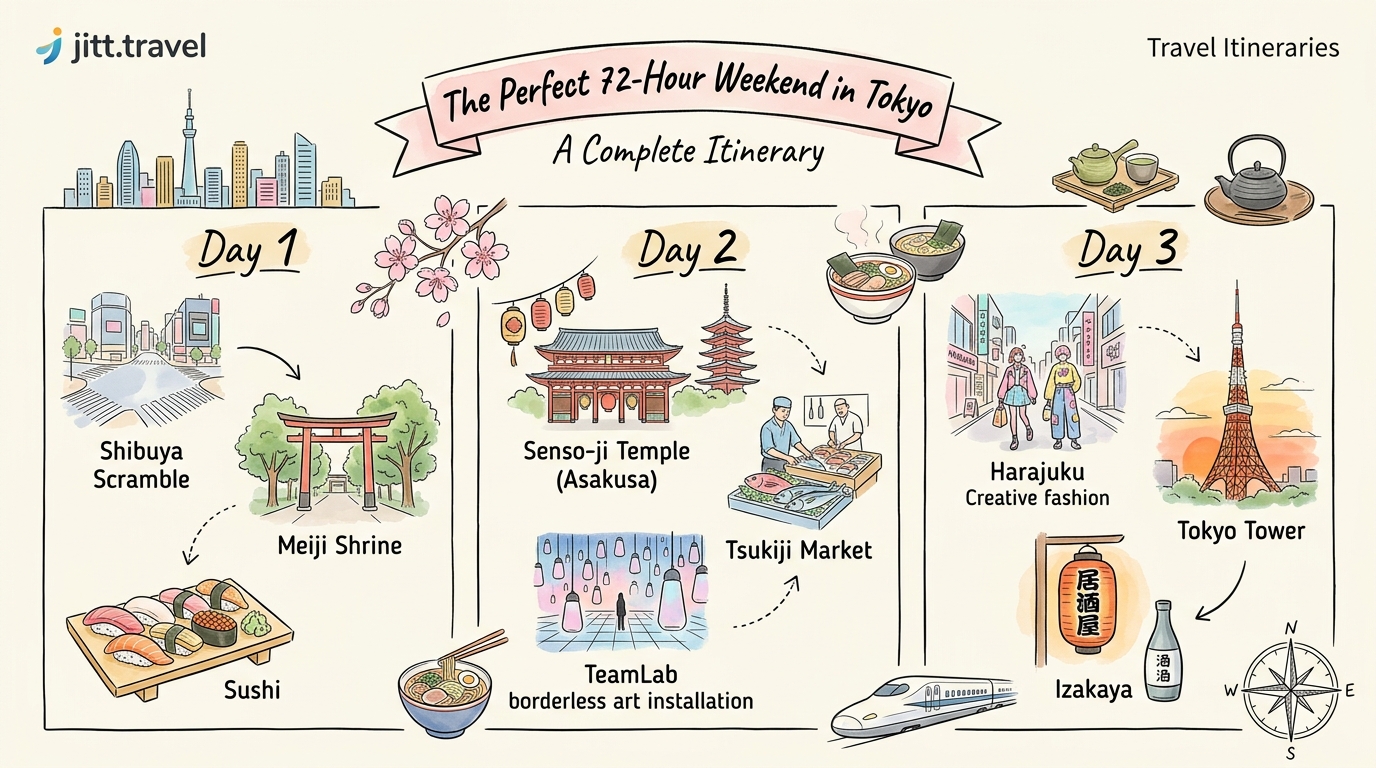
Wake up early for Tsukiji Outer Market. The famous tuna auctions moved to Toyosu, but the outer market still thrives with vendors selling kitchen tools, dried goods, and ready-to-eat seafood. Arrive by 7am for the freshest sushi breakfast. Multiple small restaurants serve omakase sets that cost a fraction of dinner prices.
Asakusa and Senso-ji Temple
Take the subway to Asakusa. Kaminarimon Gate, with its massive red lantern, marks the entrance to Nakamise Shopping Street. This 250-meter approach to Senso-ji Temple lines up souvenir shops, rice cracker vendors, and kimono rental stores.
Senso-ji itself dates to 628 AD, making it Tokyo’s oldest temple. The main hall impresses with its scale and detail. Arrive before 10am to appreciate it without shoulder-to-shoulder crowds. Draw an omikuji fortune for 100 yen.
Walk to the Sumida River for views of Tokyo Skytree. You can visit the tower’s observation decks, though the 2,000-3,000 yen admission adds up. The surrounding Solamachi shopping complex offers free entertainment and lunch options.
Gardens and Imperial Grounds
Head to the East Gardens of the Imperial Palace. These former castle grounds open to the public most days except Mondays and Fridays. The stone walls, moats, and carefully maintained landscapes show Japanese garden design principles. Free admission, peaceful walking paths, and historical significance make this worth two hours.
Timing note: The gardens close at 4pm November through February, 5pm March through mid-April and September through October, and 6pm mid-April through August.
Nearby Hibiya Park provides another green space option if you need a break from pavement. The park connects to Ginza in a 15-minute walk.
Evening in Ginza
Ginza represents Tokyo’s upscale shopping district. Window shop along Chuo-dori, closed to vehicles on weekend afternoons. The Apple Store, Uniqlo flagship, and international luxury brands create a different Tokyo vibe than yesterday’s neighborhoods.
For dinner, try a depachika (department store basement) food hall. Mitsukoshi or Matsuya offer prepared foods, sweets, and ingredients that double as dinner and a cultural experience. Grab items to go and picnic in a nearby park, or eat at the standing counters.
Alternatively, book a reservation at a traditional izakaya. These Japanese pubs serve small plates designed for sharing. Order edamame, karaage fried chicken, grilled fish, and whatever seasonal specials the menu lists.
Day Three: Markets, Museums, and Final Experiences
Your last morning should start at a neighborhood you haven’t visited. Shimokitazawa offers vintage shopping and indie coffee shops. Nakameguro has canal-side cafes and boutiques. Kichijoji provides access to Inokashira Park and the Ghibli Museum (requires advance tickets).
Museum Options
Tokyo’s museum scene deserves attention if you have specific interests:
- teamLab Borderless or Planets: Digital art installations that photograph beautifully
- Tokyo National Museum: Japanese art and archaeology in Ueno Park
- Mori Art Museum: Contemporary art in Roppongi Hills
- Nezu Museum: Traditional art with an exceptional garden
Most museums close Mondays and cost 1,000-2,400 yen for adults.
Shopping and Souvenirs
Your final afternoon should include souvenir shopping. Here’s what works and what doesn’t:
| Item Type | Good Buys | Skip These |
|---|---|---|
| Food | Kit Kats (unique flavors), rice crackers, matcha products | Generic cookies with Tokyo labels |
| Traditional | Tenugui cloths, ceramics from Kappabashi | Mass-produced “kimono” items |
| Practical | Stationery, skincare products, socks | Cheap plastic toys |
| Unique | Gashapon capsule toys, anime goods | Overpriced “Japanese” electronics |
Don Quijote (nicknamed Donki) sells everything at decent prices. The Shibuya location stays open 24 hours. Bring cash, as some vendors don’t accept cards.
Final Evening Recommendations
Choose your last dinner based on what you haven’t tried:
- Conveyor belt sushi: Casual, affordable, fun for trying varieties
- Tonkatsu: Breaded pork cutlet with shredded cabbage
- Ramen: Each shop specializes in different broth styles
- Tempura: Lightly battered vegetables and seafood
- Okonomiyaki: Savory pancakes cooked on your table
“Tokyo rewards curiosity more than planning. The best experiences often happen when you follow an interesting side street, smell something delicious, or notice locals lining up somewhere. Stay flexible with your afternoon schedule.” — Yuki Tanaka, Tokyo tour guide
Practical Information You Need
Getting Around
Buy a Suica or Pasmo card at any station. These rechargeable cards work on all trains, subways, buses, and many vending machines. Load 2,000-3,000 yen initially.
Google Maps works perfectly for Tokyo transit. It shows platform numbers, exit strategies, and accurate timing. Download offline maps as backup.
Transit costs: Most trips cost 170-320 yen. A day of sightseeing runs about 1,000-1,500 yen in fares.
Money Matters
Japan still runs on cash more than most developed countries. Withdraw yen from 7-Eleven ATMs, which accept international cards without drama. Carry 10,000-20,000 yen daily.
Many restaurants, small shops, and temples only take cash. Hotels and department stores accept cards reliably.
Common Mistakes to Avoid
- Wearing shoes indoors: Remove shoes at temples, some restaurants, and traditional accommodations
- Eating while walking: Considered rude; find a spot to stand or sit
- Talking on trains: Keep phone conversations off public transit
- Tipping: Never tip; it confuses or offends service staff
- Rush hour trains: Avoid 7:30-9am and 5:30-7pm if possible
Accommodation Strategy
Stay in Shinjuku or Shibuya for central access to everything on this itinerary. Asakusa offers cheaper options but requires more transit time. Capsule hotels provide unique experiences for solo travelers comfortable with minimal space.
Book three months ahead for better rates and selection. Weekend prices jump significantly.
Packing Essentials
- Comfortable walking shoes (you’ll log 15,000-20,000 steps daily)
- Portable phone charger
- Small bag for shoes (temples require removal)
- Light layers (buildings overheat, streets stay cool)
- Coin purse (vending machines and small purchases)
Making Your 72 Hours Count
Tokyo doesn’t reveal itself in three days. You’ll miss entire neighborhoods, skip famous attractions, and leave wanting more. That’s normal and expected.
This itinerary prioritizes variety over depth. You’ll see modern and traditional Tokyo, eat at different restaurant styles, use various transit methods, and visit multiple neighborhoods. Some travelers prefer camping in one area and really understanding it. Others want the highlight reel. This plan leans toward the latter while leaving room for spontaneous detours.
The city rewards repeat visitors. Your first trip teaches you how Tokyo works: the transit system, the unwritten social rules, the neighborhood personalities, the food ordering systems. Your second trip lets you actually enjoy it.
Take photos, but put your phone down regularly. Tokyo’s energy comes through best when you’re present for it. Watch the organized chaos of Shibuya Crossing. Smell the incense at Senso-ji. Hear the train station melodies. Taste the difference between convenience store onigiri and restaurant-made versions.
Three days gives you enough time to fall for Tokyo and start planning your return trip before you even leave.