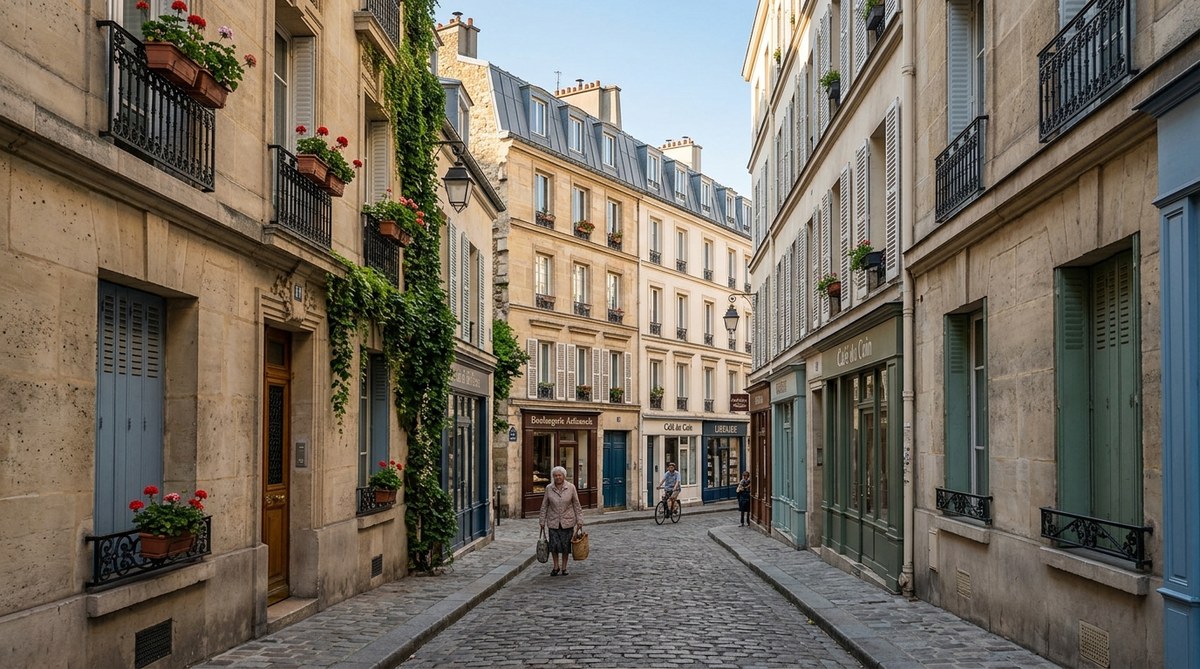
Paris has a secret life that most visitors never witness. While thousands crowd around the Eiffel Tower and shuffle through the Louvre, entire neighborhoods hum with authentic Parisian rhythms just blocks away.
These aren’t the Paris postcard districts. They’re the places where locals buy their morning croissants, where artists rent affordable studios, and where you’ll hear more French than English on the streets.
Paris holds dozens of authentic neighborhoods that most tourists never visit. Areas like La Campagne à Paris, Butte aux Cailles, and Canal Saint-Martin offer genuine local experiences, charming cafés, street art, and peaceful streets without tour bus crowds. These districts reveal the real Paris where residents actually live, work, and socialize daily. Skip the tourist traps and spend time where Parisians do.
Why Most Travelers Miss the Real Paris
Tourist itineraries follow the same tired loop. Champs-Élysées. Notre-Dame. Montmartre’s Sacré-Cœur.
Nothing wrong with those landmarks. But they represent maybe 5% of what Paris actually offers.
The problem? Guidebooks repeat the same dozen neighborhoods. Travel blogs copy each other. Everyone ends up in the same spots, wondering why Paris feels so crowded and expensive.
Meanwhile, entire arrondissements remain virtually tourist-free. Places with better food, lower prices, and actual character.
La Campagne à Paris: The Village That Time Forgot
Tucked in the 20th arrondissement, La Campagne à Paris feels like someone dropped a provincial village into the middle of the city.
Cobblestone lanes wind between ivy-covered cottages. Gardens spill over low fences. Birds actually outnumber car horns.
Built in the 1920s as worker housing, the neighborhood maintains strict architectural codes. No buildings over two stories. No modern facades. The result feels more like rural Provence than urban Paris.
Getting there requires intention. No metro stops sit directly in the neighborhood. That’s exactly why it stays peaceful.
Walk along Rue Jules Siegfried or Rue Irénée Blanc. You’ll pass maybe three other people. All locals.
Butte aux Cailles: Street Art and Revolutionary Spirit
This hilltop neighborhood in the 13th arrondissement has always marched to its own beat.
During the Paris Commune of 1871, residents here held out longer than anywhere else. That independent streak never left.
Today, street art covers nearly every surface. Not random tags, but actual murals by talented artists. The neighborhood has become an open-air gallery.
Rue de la Butte aux Cailles forms the main artery. Small bars and restaurants line the street, most family-owned for decades.
Try Le Temps des Cerises, a cooperative restaurant run by its workers since 1976. The food’s solid, the prices fair, and the vibe genuinely local.
The neighborhood also has natural swimming pools fed by artesian wells. Piscine de la Butte aux Cailles lets you swim in 28°C water year-round, no chemicals added.
Canal Saint-Martin: Where Young Parisians Actually Hang Out
Technically, Canal Saint-Martin isn’t unknown. But most tourists only see the Instagram-famous locks near République.
Walk north past those crowds. The canal stretches for kilometers, and the further you go, the better it gets.
Around Quai de Jemmapes and Quai de Valmy, locals spread out on the stone banks. They bring wine, cheese, and speakers. Especially on summer evenings.
The neighborhood attracts a younger, creative crowd. Vintage shops, record stores, and independent bookstores cluster along the side streets.
Café Craft on Rue des Vinaigriers serves excellent coffee without the tourist markup. Chez Prune remains a neighborhood institution, though it’s gotten busier in recent years.
For food, try the side streets. Rue Beaurepaire and Rue Yves Toudic hide excellent restaurants that change seasonally.
La Mouzaïa: Another Secret Village
Like La Campagne à Paris, La Mouzaïa in the 19th arrondissement feels impossibly rural for central Paris.
The neighborhood consists of narrow pedestrian passages lined with small houses. Each has a tiny garden, many overflowing with roses and wisteria.
Villa de Bellevue, Villa Alexandre Ribot, and Villa du Borrégo form the heart of the area. These aren’t grand villas but modest workers’ cottages built in the late 1800s.
Hardly anyone visits. Even Parisians from other arrondissements often haven’t heard of it.
The neighborhood sits near Parc des Buttes-Chaumont, one of Paris’s most beautiful parks and itself relatively tourist-free.
Batignolles: The Organic Market District
The 17th arrondissement doesn’t make many Paris itineraries. That’s a mistake.
Batignolles centers around Rue des Batignolles, a market street that’s been serving locals since the 1800s.
Every Saturday, the organic market takes over Boulevard des Batignolles. It’s one of Paris’s best, with producers coming directly from surrounding farms.
The neighborhood has a village feel despite being fully urban. Small squares host neighborhood gatherings. Cafés know their regulars by name.
Parc Martin Luther King, opened in 2007, gives the area green space. It’s modern, well-designed, and almost never crowded.
For coffee, head to KB CaféShop on Rue des Dames. For dinner, try Le Réciproque on Rue Legendre.
How to Choose Which Neighborhood to Visit
Not every hidden neighborhood will suit every traveler. Here’s how to match your interests:
| Interest | Best Neighborhood | Why |
|---|---|---|
| Street art | Butte aux Cailles | Murals cover entire buildings |
| Quiet walks | La Campagne à Paris | Feels rural, almost no traffic |
| Local nightlife | Canal Saint-Martin | Young crowd, casual bars |
| Markets | Batignolles | Excellent organic market |
| Architecture | La Mouzaïa | Unique cottage-style houses |
Common Mistakes When Seeking Authentic Paris
Even travelers who know to avoid tourist traps make predictable errors:
- Going at peak times. Visit neighborhoods on weekday mornings when locals run errands.
- Expecting English everywhere. These areas cater to Parisians. Brush up on basic French.
- Looking for “hidden gems” on Instagram. If it has 50,000 posts, it’s not hidden anymore.
- Rushing through. Authentic neighborhoods reveal themselves slowly. Spend at least half a day.
- Only visiting one. Paris has dozens of these areas. See several to understand the pattern.
Getting Around These Neighborhoods
Most hidden neighborhoods in Paris connect well to metro lines, just not always to the most famous stations.
- Buy a carnet of 10 metro tickets. It’s cheaper than buying individually and you’ll use them all.
- Download the RATP app for real-time transit information in English.
- Consider renting a Vélib bike for longer distances between neighborhoods.
- Walk whenever possible. These areas reward wandering.
- Save offline maps on your phone. Cell service works fine, but offline maps don’t drain battery.
The metro might drop you a 10-minute walk from the actual neighborhood. That’s intentional. The walk is part of the experience.
What to Do Once You Arrive
Forget structured itineraries. These neighborhoods work differently.
Find a café and sit for an hour. Watch how locals interact. Notice the pace.
Walk the residential streets, not just the commercial ones. Peer into courtyards. Admire doorways. Architecture tells stories.
If you see a market, wander through even if you’re not buying. Markets reveal what people actually eat, not what restaurants think tourists want.
Strike up conversations if you speak French. Parisians in these neighborhoods are generally friendlier than those in tourist zones. They’re not exhausted from answering the same questions 50 times daily.
“The real Paris exists in the neighborhoods where people live their actual lives. Not the Paris of monuments and museums, but the Paris of morning bread runs and evening aperitifs. That Paris welcomes curious visitors who show genuine interest.” — Long-time Paris resident
Best Times to Visit These Areas
Timing matters more in residential neighborhoods than tourist districts.
Weekday mornings (8am to 11am) offer the most authentic experience. Locals shop at markets, sit in cafés, and move through their routines.
Weekend afternoons work well for neighborhoods with park space. Families come out, creating a lively but relaxed atmosphere.
Avoid Monday mornings. Many small shops and restaurants close Mondays.
Summer evenings along Canal Saint-Martin get crowded with locals. That’s actually good. You’re seeing genuine Parisian social life, not a tourist simulation.
Neighborhoods to Pair Together
Some hidden areas sit close enough to visit in one day:
- La Campagne à Paris and Butte aux Cailles both sit in the east, connected by a pleasant 30-minute walk.
- La Mouzaïa and Parc des Buttes-Chaumont form a natural pairing in the 19th arrondissement.
- Batignolles and the quieter parts of Montmartre (not Sacré-Cœur) share the 17th and 18th arrondissements.
Don’t try to see more than two or three in a day. The point is to slow down, not check boxes.
Food in Local Neighborhoods
Tourist districts charge tourist prices. These neighborhoods don’t.
Look for:
- Small restaurants with handwritten menus
- Cafés where locals read newspapers for hours
- Bakeries with lines of neighborhood residents
- Wine bars with natural wine selections
- Markets where producers sell directly
Avoid:
- Places with picture menus in five languages
- Restaurants with staff standing outside recruiting customers
- Anywhere advertising “traditional French food”
- Spots with tourist-friendly pricing in dollars or pounds
A good rule: if you hear more English than French, keep walking.
Safety and Practical Concerns
These neighborhoods are generally safer than tourist hotspots. Pickpockets target crowds, and these areas don’t have crowds.
Standard city awareness applies:
- Keep valuables secured and out of sight
- Stay aware of your surroundings
- Avoid poorly lit areas late at night
- Trust your instincts
The biggest “danger” is getting pleasantly lost. Bring a charged phone with offline maps.
Some areas have limited English signage. That’s part of the appeal, but it means doing homework beforehand.
Beyond the Neighborhoods Listed Here
Paris has dozens more areas worth visiting:
- Ménilmontant in the 20th
- Charonne near Père Lachaise
- The quiet parts of the 13th near Bibliothèque François Mitterrand
- Pernety in the 14th
- The villages of Belleville
Each arrondissement has pockets that tourists miss. The pattern repeats: residential streets, local shops, neighborhood cafés, authentic life.
Once you understand what to look for, you’ll spot these areas everywhere.
Planning Your Off-the-Beaten-Path Paris Trip
Start by choosing two or three neighborhoods that match your interests. Research their locations and nearby metro stops.
Book accommodations outside the tourist center. The 10th, 11th, 19th, and 20th arrondissements offer better value and more authentic experiences.
Build flexibility into your schedule. The joy of these neighborhoods comes from wandering, not rushing between planned activities.
Learn basic French phrases. Even failed attempts earn goodwill in areas where English isn’t assumed.
Lower your expectations for Instagram-worthy moments. These neighborhoods photograph beautifully, but they’re not designed for social media. They’re designed for living.
Where Parisians Actually Spend Their Time
The hidden neighborhoods in Paris share common traits. They’re residential first, commercial second. They developed organically over decades or centuries. They serve local needs before tourist desires.
Most importantly, they remind you that Paris is a living city, not a museum.
Millions of people wake up here every day, send their kids to school, commain about work, meet friends for drinks, and go to bed. That Paris, the everyday Paris, is more interesting than any monument.
It’s also more welcoming. Once you step off the tourist circuit, you stop being a walking wallet. You become a curious visitor, and Parisians respond differently to that.
Give these neighborhoods the time they deserve. Sit longer. Walk slower. Talk more. You’ll leave with better stories than anyone who spent their whole trip waiting in line at Versailles.